

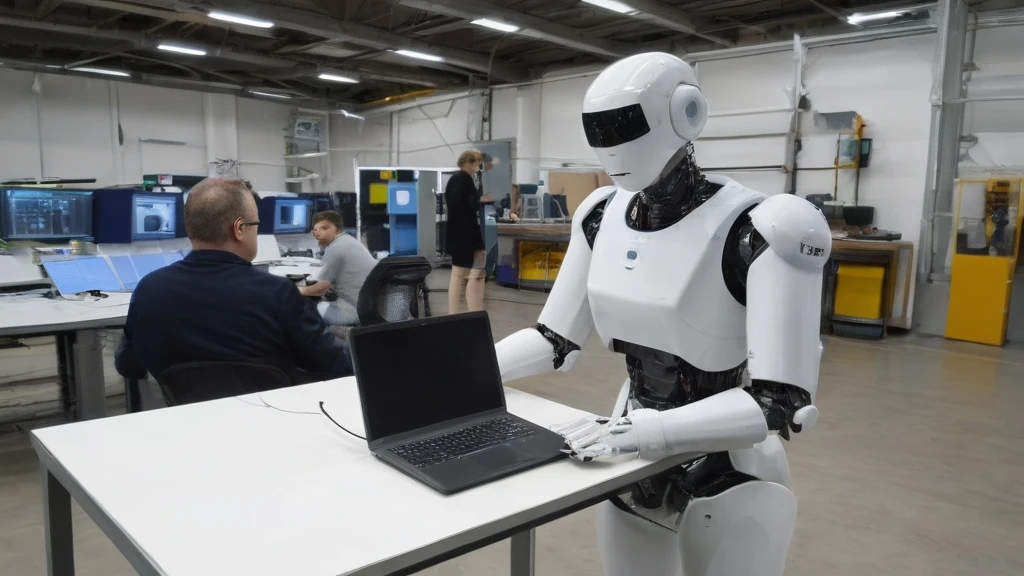
Development of robotic systems for open areas
DLR is developing advanced robotic systems designed to operate in open areas - places that are difficult to access and have a variable and unpredictable nature. Their design uses comprehensive integration of technologies: environmental perception, autonomous navigation, manipulation and cooperation between different platforms - both land-based and aerial. These solutions are not just theoretical - they have real applications in post-disaster situations, industrial inspections or ecosystem monitoring.
A key feature of DLR projects is their ability to operate in conditions that are difficult for humans. To this end, technologies originally developed as part of planetary exploration missions are used - such as autonomous navigation in unknown terrain or communication between robots without constant access to the network.
Cooperation of multiple robots as a basis for solutions
Many of the systems developed by DLR are based on the cooperation of several robots, which may have different functions - for example, one can perform inspections, another transport equipment, and a third analyze data from the air. This approach allows for flexibility and resilience: if one robot fails, another can take over its task. Many solutions are built in this way - as teams of robots with different or similar capabilities.
This model of cooperation is particularly useful in post-disaster scenarios, where speed and reliability are key. Thanks to this, the system can operate without direct human support, which significantly increases its effectiveness in difficult conditions.
Tests in a real environment - from Etna to industrial areas
One of the most well-known examples of practical testing is the Ardea mission on Mount Etna. The research conducted in this extreme terrain shows how robotic systems cope with difficult conditions - from uneven surfaces to changing weather conditions. An image from the volcano, published by DLR, is proof that the technologies are being tested not only in the laboratory but also in real-world conditions.
Although there is no information about the full deployment of these systems on a commercial or public scale, their demonstration on Etna confirms that they are ready for further testing and potential applications in the real world - especially where people cannot operate without significant risk.
Development of robotic systems for open areas
In the context of the solutions being developed by DLR, it is not only the ability to operate in a difficult environment that is important, but also the possibility of adapting to changing conditions. These systems are designed so that they can independently assess the terrain, adjust their movement trajectories and react to unforeseen obstacles - features that are essential both in the event of disasters and in complex industrial areas. By using technologies from space exploration, such as three-dimensional mapping of the terrain without access to GPS or communication between robots in conditions of limited network bandwidth, DLR systems can operate independently and effectively even in isolated areas. This makes it possible to increase the safety of people who would otherwise have to enter these areas, and also significantly speeds up response times in crisis situations.
In addition, the development of these systems takes into account economic aspects and scalability. Although they are not yet fully implemented on a commercial scale, their tests on Etna and in other real-world conditions show the potential for rapid development in the future. In particular, the possibility of integration with existing monitoring and infrastructure management systems makes it possible to create comprehensive solutions for sectors such as energy, mining or transport. Thanks to this, DLR field robots are not only a tool for exploration, but also a potential element of a modern, digital economy based on autonomy and system resilience.