

Delta Robots
Extreme speed and precision!
Ideal for sorting and packaging
Delta - A dynamic solution for industry
Maximum efficiency in light applications
Delta Robots - Automation at the highest level
Precision and speed in one system
Delta robots are ultra-lightweight and extremely fast automation systems, ideal for sorting, packing, and assembling small components. Thanks to their design, they provide the highest precision and maximum efficiency in the food, pharmaceutical, and electronics industries.
Contact us Watch the videoExtreme Speed and Precision in Pick & Place
Delta Robots
Delta robots are structures characterized by three (or four) parallel arms attached to a common upper platform. This solution enables the performance of ultra-fast pick & place operations in a limited working area. For this reason, Delta robots have dominated industries where very short cycle times are key, and primarily small, light objects are handled (e.g., food, pharmaceutical, electronics).
Why Consider Delta Robots?
Unmatched Speed and Dynamics:
Thanks to the specific kinematics and low mass of the moving arms, Delta robots can achieve several dozen (or even over a hundred) cycles per minute with relatively high repeatability.
Precision in Pick & Place Operations:
They work perfectly in tasks requiring fast transfer of small elements from point A to point B, while ensuring high positioning accuracy.
Compact Design:
The upper platform, along with the arms, is usually mounted above the work area, which saves space in the hall and facilitates integration with conveyors or packing stations.
Delta Robots
Construction and Operating Principle
Delta robots attract attention not only with their high operating speed but also with their distinctive design, which enables them to perform lightning-fast movements in the working area. Below is a discussion of the most important elements of their construction and how they function.
Mechanical Design
- Upper Platform Most of the drive components (motors, gears) are located on the upper platform, which is stationary relative to the ground. This means that the mass of the moving arms is small, which translates into high dynamic movement.
- Parallel Arms (3 or 4) Each arm is attached to the upper platform and to a common connector (lower platform), where the gripper is located. Their length and angle of inclination determine the maximum operating area of the robot.
- Lower Platform (End Effector) The lower platform is most often equipped with a gripper, vacuum suction cup, or other tool. Its movement is caused by the simultaneous action of the arms, which - by changing their position - move the platform along and across the working area.
Movement Method
- Parallel Kinematics In a Delta robot, all arms work in parallel, changing their angle of inclination in such a way as to move the end effector (lower platform) to a specific position in space.
- Low Moving Mass Since the motors and gears remain on top, the mass of the moving elements is relatively small. As a result, the robot can perform very fast movements while maintaining precision.
- Working Area Most often it has the shape of a dome (hemisphere) or truncated cone. The reach of the robot depends on the length of the arms and the maximum angles of their deflection.
- Control and Software Delta robots work with popular PLC systems, but they also require precise software to control the movement of the parallel arms. In pick & place applications, vision systems are often used to identify and track products in motion (e.g., on a conveyor belt).
- Low mass of moving elements: only light arms and the lower platform need to move.
- Parallel drive system: the arms work simultaneously, performing synchronized movements.
- Optimal kinematics for fast, short movements: ideal for large volumes of small parts (e.g., in the food industry).
Key Advantages
Key Advantages of Delta Robots
Delta robots may seem quite specialized, but their design provides undeniable advantages, especially in processes with high frequency and repeatability.
- Record-Breaking Short Cycle Times Thanks to their low moving mass and parallel kinematics, Delta robots can perform dozens - or even hundreds - of operations per minute. This makes them unbeatable in ultra-dynamic packaging or sorting lines.
- High Positioning Accuracy Despite the high speeds, Delta robots usually maintain accuracy at the level of tenths of a millimeter (or even better). This allows for precise placement of small components, e.g., in the electronics or cosmetics industry.
- Small Size and Top Mounting A typical Delta robot is mounted directly above the work area, without taking up space on the factory floor. This saves valuable space and makes it easier to organize workstations.
- Easy Integration with Vision Systems In high-throughput lines, cameras are often used to recognize the position or orientation of products on a conveyor belt. The Delta robot works perfectly with such a system, correcting its movements in real time.
- Minimization of Vibrations and Stable Construction Motors mounted on a stationary upper platform reduce the risk of uncontrolled vibrations during movement, which affects the smoothness of operation and the lifespan of components.
Applications in Industry
Delta Robots
Delta robots are invaluable in industries and processes where fast, repetitive transfer and placement of light components is important. Although their main advantage is ultra-fast pick & place, they are also suitable for a number of other tasks related to sorting, assembly or quality control.
Ultra-Fast Pick & Place
Packaging and Sorting Lines
Delta robots can pick up and place hundreds of small products per minute (e.g., cookies, candies, pharmaceutical capsules) with almost unbelievable precision.
Placement on a Conveyor Belt
Thanks to vision systems that recognize the position, Delta can pick up products from a chaotic arrangement and place them at equal intervals, which improves subsequent packaging stages.
Assembly of Small Components
Electronics and Micromontage
Many manufacturers of small electronics use Delta robots for fast placement of components (e.g., in the telecommunications or consumer electronics industry).
Toy and Gadget Assembly
Small-sized and lightweight components (plastic, polymers) are ideal material for fast manipulation in Delta robots.
Food and Pharmaceutical Industry
Food Product Packaging
Cookies, chocolates, candies - light, small, and delicate. A Delta robot can quickly transfer them to packaging, minimizing contact with human hands.
Handling Blisters, Ampoules or Capsules
In the pharmaceutical industry, precision and speed are essential. Delta guarantees an appropriate pace while maintaining hygiene requirements.
Visual Inspection and Sorting
Vision Systems
Connecting it to a camera allows the Delta robot to select products based on color, shape, or defects.
Sorting and Categorization
It can quickly separate items onto different production lines, increasing the efficiency of warehousing and product packaging.
Laboratory and Research Applications
Sample Transfer
Thanks to its high speed and precision, Delta can automate sample transport processes in laboratories, for large-scale analyses (e.g., in the medical industry).
Prototype Assembly
In small-batch production or prototyping - especially for small parts - a Delta robot will speed up repetitive tasks, reducing human error.
Delta Robots
Industries in Which Delta Robots Are Most Often Used
Thanks to their unique features - lightning-fast movements, low moving mass and top mounting - Delta robots have become an integral part of automation in many industrial sectors. Below are the key industries where these machines dominate:

Packaging, sorting and arranging products into collective packaging.
Transferring delicate confectionery or bakery products.

Rapid transfer of capsules, tablets, ampoules to blisters or bottles.
High hygiene and process safety thanks to a small contact area with the product.

Arranging and assembling small components on an assembly line.
Precise placement of elements in PCB sockets, sorting microelements.


Fast sorting of small packages, letters, shipments (especially in e-commerce).
Automation of packaging and order fulfillment processes for small items.
Almost everywhere where the main goal is fast and repeatable transfer of light elements, Delta robots are an optimal solution. Thanks to their compact design, high speed and cooperation with vision systems, they perfectly accelerate production and packaging lines.
Delta Robots
Technical Requirements and Integration
Delta robots, despite their spectacular speed and efficiency, require proper adaptation to the production process and appropriate line planning. Below we present key aspects that should be considered before implementation.
Operating Parameters
Reach and Working Area
A Delta robot usually moves in a space resembling a dome or truncated cone. The length of the arms and the angle of their operation should be adapted to the size of the elements and the distance between pick & place points.
Load Capacity and Speed
Typical designs handle small masses (a few to a dozen kilograms), which is sufficient for most pick & place applications. It is also important to maintain a balance between speed and stability of movement.
Accuracy and Repeatability
In many processes (e.g., pharmaceutical sorting), precision at the level of hundredths of a millimeter is required. Therefore, it is worth choosing a model that provides adequate positioning accuracy.
Integration with Control Systems
Controllers and Interfaces
Delta robots cooperate with popular protocols (EtherCAT, Profinet, Modbus), which facilitates connection to a PLC or master computer.
Vision Systems
In dynamic pick & place lines, it is crucial to recognize the position of products "on the fly". For this reason, the Delta robot often connects to cameras, which allows correcting the trajectory in real time.
Software and Calibration
At high speeds, regular calibration and precise motor parameters are essential. Specialized software provided by manufacturers usually contains dedicated kinematic algorithms for parallel arms.
Environmental Conditions
Hygiene and Certificates
In the food and pharmaceutical industries, appropriate anti-corrosion coatings or certificates allowing contact with food (FDA) may be required.
Temperature and Cleanliness
Small moving mass means less inertia, which in turn means less susceptibility to overheating. Nevertheless, in demanding conditions (high humidity, dust), dedicated covers are necessary.
Safety
Protective Zone
At high speeds, the work area should be appropriately fenced or marked to eliminate the risk of human-robot collisions.
Sensors and Warning Signals
In lines with very high throughput, it is recommended to use additional optical barriers, signal lamps, or emergency stop buttons.
Delta Robots
Comparison with Other Types of Robots
Delta robots are unique devices designed for tasks requiring maximum speed and precision in three-dimensional movement. Thanks to their lightweight construction and innovative geometry, they are ideal for applications such as sorting, packaging, or assembly. To better understand their advantages, it is worth comparing them with other types of industrial robots to find the best solution for your production processes.
Delta vs. Cartesian (XYZ)
Kinematics and Range of Motion
Delta robots are built with three (sometimes four) arms attached to a common upper platform, allowing them to perform very fast and precise movements in a limited area. Cartesian (XYZ) robots operate in three linear axes, which provides a simple and predictable movement pattern, although significantly less dynamic. Delta robots achieve exceptionally short cycle times, but usually within a relatively small working area.
Applications
Delta robots excel in lightning-fast pick & place operations for lightweight objects, e.g., in the food or pharmaceutical industry. Cartesian robots stand out due to their stable movements along the X, Y, and Z axes, making them suitable for larger work areas, e.g., in 3D printing, milling, or assembly of components on a large plane.
When to Choose?
If your priority is ultra-fast transfer of small parts and a high number of cycles per minute, Delta will be an invaluable solution. However, if you need to handle a larger work area and straightforward kinematics, a Cartesian robot may prove to be more stable and versatile.
Delta vs. SCARA
Speed and Dynamics
Both Delta and SCARA robots specialize in fast assembly and pick & place operations. Delta robots can achieve slightly higher speeds, especially with very lightweight objects, while SCARA robots often stand out due to their better stability of movement in the horizontal plane and a rigid Z-axis.
Applications and Construction
SCARA robots are characterized by two rotary joints in the horizontal plane, which makes them easy to integrate and suitable for assembly or screwing tasks. Delta robots have a more complex arm and platform structure, which translates into high speed, but can also complicate maintenance and parts replacement.
When to Choose?
If your goal is the highest possible pick & place operation speed and you are dealing with small, lightweight components, Delta wins. SCARA robots will perform better in slightly more demanding assembly tasks, where precision in the vertical axis and minimal deviations when tightening components are important.
Delta vs. Articulated (Robotic)
Freedom of Movement vs. Ultra-Fast Cycle Times
Articulated (robotic) robots offer 4-6 rotary axes, which guarantees high flexibility in working at different angles and manipulating objects with complex shapes. Delta robots focus on the fastest possible movements in a limited spatial range - ideal for sorting and packing small products, but do not provide the same freedom of movement in 3D as articulated robots.
Load Capacity and Applications
Articulated robots can handle heavier loads and various processes, from welding or painting to assembly and machine operation. Delta robots usually move small objects (e.g., up to a few hundred grams or kilograms), but at a speed unattainable by most other kinematics.
When to Choose?
If you need to perform multi-plane tasks, manipulate larger components, or weld at different angles, an articulated robot is the right choice. However, if the work focuses on quickly moving small objects from point A to point B, Delta will provide the best cycle times and high accuracy with small dimensions.
Delta vs. Cylindrical
Kinematics and Range of Motion
Cylindrical robots usually move along a rotational axis (around the vertical) and a vertical axis (Z), sometimes with an additional horizontal reach. Delta robots are based on three (or four) arms attached to a common platform, which allows them to achieve very high speeds and precision with a small payload mass. Cylindrical robots have a simplified motion by design - rotation around their own axis and up-down movement - so it is difficult for them to match the dynamics and versatility of Delta robots in pick & place applications.
Applications
Delta robots excel in ultra-fast operations with light elements - such as packaging, sorting, and arranging small objects in the food or medical industry. Cylindrical robots perform better in slower, more predictable rotational-vertical tasks (e.g., picking up items from a drum, transferring them to a machine located within the range of motion).
When to Choose?
If the highest possible pick & place cycle speed is a priority, Delta wins. However, where the layout of workstations is arranged around a vertical axis of rotation and slower, simpler movements are sufficient, a cylindrical robot may be sufficient and more economical.
Delta vs. Cobots (Collaborative Robots)
The Idea of Safe Collaboration vs. Ultra-Fast Cycles
Cobots (collaborative robots) are designed to work in the immediate vicinity of humans, offering safety features (collision sensors, low speeds in collaboration mode). Delta robots, on the other hand, are optimized for maximum speed and precision in the working area, so they usually operate in a separate safety zone, especially at high speeds.
Applications
Cobots are great for tasks where the operator and robot complement each other (e.g., alternating assembly work), often in smaller companies or with low-volume production. Delta robots dominate in mass production lines, where there is a need to sort or pack hundreds of small products per minute, without human involvement in the immediate working area.
When to Choose?
Choose Delta when performance and fast pick & place of light components are key. If you need a flexible robot that can share space with an operator and easily change tasks, a cobot will be a better choice - although usually at the cost of lower speed.
Delta vs. Gantry (Bridge)
Design and Working Range
A gantry system is a large structure that allows for the transport of large and heavy loads along several linear axes (X, Y, sometimes Z) over a vast working area, such as an entire hall. Delta, on the other hand, focuses on a limited working area where it can perform lightning-fast pick & place movements for light components.
Applications
Gantry robots are found in heavy industry, high-bay warehouses, or when moving large items. Delta robots specialize in ultra-fast transfer of products over a small area, such as on a conveyor belt in a food processing plant. Gantry cannot achieve such speeds, but it can handle loads that are inaccessible to Delta.
When to Choose?
Gantry is a solution for processes requiring a vast working area and high lifting capacity. If your priority is extreme speed and light assortment (e.g., sorting small items), a Delta robot will be much more efficient and easier to use on a daily basis.
Delta robots stand out due to their incredible speed and precision in handling lightweight components, making them invaluable in highly automated production the food, pharmaceutical, or electronics industries). However, if you need to move heavier loads, collaborate with a human, or cover large distances, other types of robots (cobots, gantry robots, articulated robots, etc.) may be a better choice. The selection of the optimal solution always depends on the type of products, process requirements, and business priorities.
Frequently Asked Questions
Frequently Asked Questions about Delta Robots
Depending on the model and the weight of the component, Delta robots can achieve over 100-120 cycles per minute. For lighter objects and short distances, speed is often a key advantage of this kinematics.
Programming is similar to other industrial robots, although it requires appropriate kinematic algorithms provided by the manufacturer. In pick & place lines, special graphical interfaces and integration with vision systems are often used.
Standard models usually handle from 1 to 5 kg, although there are versions that support up to several kilograms. However, exceeding a certain weight limit results in losing some of the advantage in terms of ultra-high speed.
Yes, it is actually a typical solution. A Delta robot often works with a camera (2D or 3D), scanning the position of objects on a conveyor belt or recognizing their orientation. This allows it to correct its movement in real time.
If the assembly requires fast, repetitive placement of small parts, then yes. However, for more complex tasks (welding, multi-axis machining), it is better to choose an articulated robot or another type of kinematics.
Delta robots work best with light components (up to a few kilograms). For heavy or large items, other robots (e.g., articulated, Gantry) provide higher load capacity and greater reach.
There are models designed for cleanrooms, used mainly in the pharmaceutical and electronics industries (e.g., for semiconductor assembly), with appropriate certificates and protective covers to protect the product and the mechanism itself.
They have an impact on them. m.in- range and speed of movement, accuracy, integration with a vision system, or special coatings for the food industry. Basic models can be affordable, but with the most advanced configurations (with AI, dynamic tracking of multiple objects), costs increase.
Due to its "top-down" mounting and light movable structure, relocation can be easier than with heavy articulated robots. However, recalibration is required, as well as adjusting the movement path to the new application.
Some models offer a so-called "4th axis" (wrist rotation axis), which allows for horizontal orientation of the gripper. This is useful for placing products in a specific position or assembling components that require specific angles.

Do you have more questions?
Contact us or visit the FAQ section to get detailed answers to all your questions about Delta robots.
Why NexaRob?
Choosing Delta robots is an investment in highly efficient automation solutions, but equally important is choosing the right implementation partner. At NexaRob, we offer not only advanced technologies, but also many years of experience in robot integration and comprehensive support at every stage.
- Extensive Industry Experience We cooperate with companies from the food, pharmaceutical, electronics and many other sectors, which allows us to efficiently adapt Delta robots to the specifics of production lines and the requirements of a given industry.
- Individual Consulting and Advisory Services Before recommending specific models, we thoroughly analyze the process: from the type of products and required speed, to environmental conditions. Thanks to this, you can be sure that the solution will be tailored to your application.
- Comprehensive Project Support From the design and simulation phase, through integration with existing vision systems, to crew training and service - NexaRob guarantees full support. With us, you gain confidence that the Delta robot will quickly translate into increased efficiency.
- Industry 4.0 Technologies We design systems with the future in mind - our Delta robots can be easily integrated into an IoT ecosystem, using remote monitoring or analytical data, which helps in continuous process improvement.
- Flexible Financing Options Purchasing a robot is a significant investment, so we offer various financing models (leasing, rental, Robot-as-a-Service), allowing you to spread the costs and fully utilize the potential of automation.

NexaRob is a company with an established position in markets around the world. Thanks to our extensive network of partners and regional offices, we can effectively support customers regardless of their location.
Automate Your Business with NexaRob - Contact Us!
Global Reach
We operate globally, support locally
NexaRob is a company with international reach, operating in over 100 countries. Whether you run a local production plant or are part of a global corporation, we guarantee:
- Versatile Know-how We share knowledge and experience gained from implementations in over 100 countries, taking into account various regulations, standards and industry norms.
- Fast Service Response A global network of service technicians enables timely inspections and repairs of robots, minimizing the risk of downtime and delays in production.
- Adaptation to Local Needs Knowledge of regional conditions, customs and formal requirements ensures that the implementation of the Delta robot runs smoothly and efficiently.
Cooperation with NexaRob is not only about modern automation but also the assurance that in case of any technical challenges, you can count on support - always and everywhere, wherever you conduct your business.

United States

China

Japan

Germany

India

United Kingdom

France

Italy

Canada

South Korea

Brazil

Australia

Spain

Mexico

Indonesia

Netherlands

Saudi Arabia

Turkey

Switzerland

Taiwan

Poland

Sweden

Belgium

Thailand

Ireland

Austria

Norway

Israel

United Arab Emirates

Argentina

South Africa

Denmark

Philippines

Singapore

Malaysia

Colombia

Bangladesh

Egypt

Chile

Finland

Vietnam

Portugal

Czech Republic

Romania

New Zealand

Peru

Greece

Ukraine

Slovakia

Hungary

Slovenia

Croatia

Serbia

Bulgaria

Estonia

Latvia

Lithuania

Iceland

Luxembourg

Malta

Cyprus

Morocco

Algeria

Tunisia

Nigeria

Kenya

Ethiopia

Ghana

Tanzania

Uganda

Angola

Senegal

Qatar

Kuwait

Oman

Pakistan

Sri Lanka

Nepal

Kazakhstan

Uzbekistan

Mongolia

Russia

Cambodia

Myanmar

Laos

Fiji

Papua New Guinea

Venezuela

Ecuador

Uruguay

Paraguay

Bolivia

Costa Rica

Panama

Dominican Republic

Guatemala

Cuba

Jordan

Lebanon

Iran
Additional countries in Europe
These countries are hidden in readable mode so that the map is not cluttered. Click on a country to open contact information, email, and a description of the area of cooperation.
Additional countries in Asia
These countries are hidden in readable mode so that the map is not cluttered. Click on a country to open contact information, email, and a description of the area of cooperation.
Additional countries in the Americas
These countries are hidden in readable mode so that the map is not cluttered. Click on a country to open contact information, email, and a description of the area of cooperation.
Additional countries in Africa
These countries are hidden in readable mode so that the map is not cluttered. Click on a country to open contact information, email, and a description of the area of cooperation.
Additional countries in Oceania
These countries are hidden in readable mode so that the map is not cluttered. Click on a country to open contact information, email, and a description of the area of cooperation.
Albania
Andorra
Belarus
Bosnia and Herzegovina
Montenegro
Liechtenstein
North Macedonia
Monaco
Moldova
San Marino
Afghanistan
Armenia
Azerbaijan
Bahrain
Bhutan
Brunei
Georgia
Iraq
Yemen
Kyrgyzstan
North Korea
Maldives
Syria
Tajikistan
East Timor
Turkmenistan
Antigua and Barbuda
Bahamas
Barbados
Belize
Dominica
Grenada
Guyana
Haiti
Honduras
Jamaica
Nicaragua
Saint Kitts and Nevis
Saint Lucia
Saint Vincent and the Grenadines
El Salvador
Suriname
Trinidad and Tobago
Benin
Botswana
Burkina Faso
Burundi
Cape Verde
Chad
Democratic Republic of the Congo
Djibouti
Eritrea
Eswatini
Gabon
Gambia
Guinea
Guinea-Bissau
Equatorial Guinea
Cameroon
Comoros
Congo
Lesotho
Liberia
Libya
Madagascar
Malawi
Mali
Mauritania
Mauritius
Mozambique
Namibia
Niger
Central African Republic
Rwanda
Seychelles
Sierra Leone
Somalia
Sudan
South Sudan
Togo
Ivory Coast
Sao Tome and Principe
Zambia
Zimbabwe
Kiribati
Micronesia
Nauru
Palau
Samoa
Tonga
Tuvalu
Vanuatu
Marshall Islands
Solomon Islands
NexaRob
Do you want to become our Partner?
At NexaRob, we believe that the development of the robotics industry requires the involvement of many specialists and companies that together shape the future of automation. If you have an idea, product or service complementary to Delta robots or other solutions - we invite you to discuss potential cooperation!
Why is it worth cooperating with NexaRob?
Joint Development and Innovation
We cooperate with manufacturers, vision system integrators, AI companies and suppliers of Industry 4.0 solutions to create the most innovative applications in the field of ultra-fast pick & place.
Comprehensive Technical Support
We organize technical training sessions, joint presentations at trade fairs and events, and also provide promotional materials and marketing support. Our team of engineers is ready to share their knowledge and experience in integrating Delta robots.
Access to New Markets
Thanks to the global NexaRob network, partners can introduce their solutions to various regions and industries, sharing success with us and gaining valuable business contacts.
Who are we looking for?
- Companies that create specialized grippers and tools for ultra-dynamic operations.
- Suppliers of vision systems and artificial intelligence that enable precise product recognition.
- Integrators and manufacturers of diagnostic software, reporting systems and production analytics.
- Anyone who wants to jointly develop the field of automation and robotics!
Join the NexaRob network!
Contact us regarding a partnership so that we can discuss the details and together build the future in which Delta robots set new standards for efficiency and precision.
Interesting facts from around the world
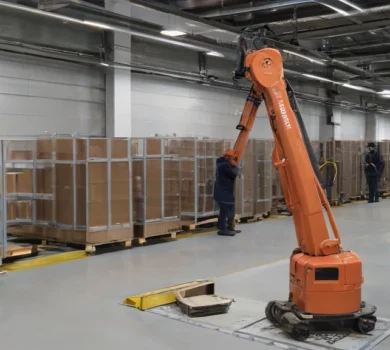
GAM: a new basic model for robotic manipulation in industry.
Amazon introduced the Generalized Action Model (GAM) - an advanced foundational model for robotic manipulation, which

Fraunhofer IPA presents robotics for the circular economy at the European Parliament
On September 2, 2026, the Fraunhofer Institute for Manufacturing Engineering and Automation IPA (IPA)
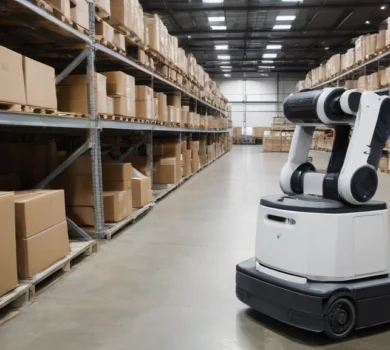
A new method helps people predict errors in self-driving cars
Researchers from MIT and Motional have developed a system that allows people to predict errors in self-driving cars.
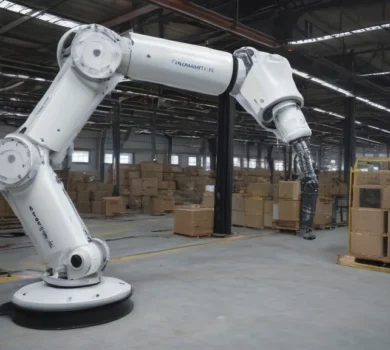
How intelligent memory coding can save energy in autonomous vehicles
A new method called MotiMem-Omega can reduce energy consumption in the memory interface of an autonomous vehicle by
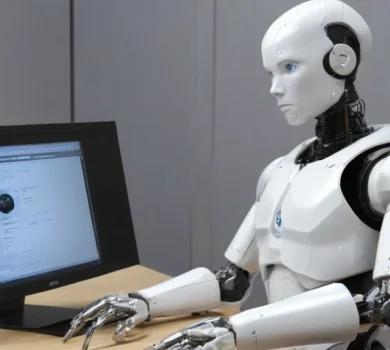
KEENON unveiled the KOM 3.0 at WRC 2026: robots think before they act
At the World Robot Conference 2026, KEENON Robotics presented KOM 3.0 - a new generation of AI architecture,