

Humanoid Robot STAR1
STAR1 - Speed and precision of movement
Humanoid with natural gait
Advanced mechanics and AI
STAR1 - Dynamic and agile robot
Innovative technology from Robotera
Humanoid robot ready for challenges
STAR1 is a humanoid robot from Robotera, equipped with 55 degrees of freedom and capable of dynamic movement at speeds up to 3.6 m/s. Thanks to advanced mechanics and artificial intelligence, it can stably walk, run, and perform complex movements, setting a new standard in humanoid robotics.
Contact us Watch the videoSTAR1 - Robotera
Humanoid Robot STAR1
The Star1 robot from Robotera is a bipedal humanoid designed to support people in everyday service tasks, educational activities, and light warehouse work. According to the manufacturer, Star1 combines the ability to walk stably in human-designed environments with basic manipulation functions based on intelligent control algorithms. The bipedal design allows it to move in spaces arranged according to human ergonomics - stairs, narrow corridors, or standard-sized passages.
Robotera, the company responsible for the Star1 project, emphasizes the importance of artificial intelligence in recognizing the environment, interpreting commands, and ensuring safe collaboration with humans. The robot is equipped with a set of cameras and sensors, which enables it to map the environment and detect obstacles. Thanks to this, Star1 can be used as an assistant in service points, in customer service, or in light logistics tasks requiring bipedal mobility. The manufacturer also sees it as a platform for research on human-machine interaction in real conditions.
History and Development
History of the Humanoid Robot Star1
Robotera is a relatively young player in the humanoid robotics market, which began its operations with experimental prototypes capable of walking on two legs. Below is a brief introduction to the process of creating Star1 - from initial assumptions to the prospect of commercialization.
The concept of a universal humanoid
- Robotera recognized the need for humanoids capable of navigating spaces designed for humans, while also performing manipulation tasks such as moving small packages or operating control panels.
- In the conceptual phase, the company decided that Robot Star1 would have to combine the features of classical robotic manipulators (arms and grippers) with stable, dynamic bipedal locomotion.
Early prototypes and tests in service environments.
- The first units, which still lacked their final housing and some sensors, were tested in laboratory conditions. The main focus was on testing the robot's ability to walk up stairs, maintain balance on small ramps, and engage in light interaction with its surroundings.
- Robotera has partnered with several service, museums) to test the prototypes in real-world scenarios. The goal was to determine whether the humanoid robot could operate safely alongside staff and customers.
Official announcements and presentations.
- Robotera first publicly presented Star1 at an industry conference in Asia, where it generated interest mainly due to its ability to independently maintain balance during somewhat more dynamic movements.
- During the demonstrations, the company revealed plans to integrate the robot with computer vision and speech recognition systems, which would enable better collaboration with staff in hotels, restaurants or stores.
Current phase and future plans.
- Robot Star1 is offered in limited pilot deployments, aimed at companies and universities that want to test the humanoid in various environments. Robotera has not yet published official information about a wide distribution or a full price list.
- The manufacturer announces further work on increasing the lifting capacity of the arms, improving battery life, and developing AI algorithms responsible for processing speech and gestures. The robot is ultimately intended to become a multi-purpose companion that will assist people with simple physical tasks and repetitive activities.
According to Robotera's plans, Robot Star1 is intended to open up new possibilities in the automation of services and internal logistics, and also constitute a promising area for research on human-humanoid interaction in everyday working conditions.
Technical Specifications
Technical Specification of the Star1 Humanoid Robot
The following information is based on publicly available materials from the manufacturer Robotera. The STAR1 robot is an advanced humanoid platform designed for interaction with people and performing various tasks in service, industrial, and educational environments. The manufacturer focuses on developing the robot's motor, manipulation, and perception capabilities, using the latest technologies in artificial intelligence and robotics.
| Parameter | Value | Notes |
|---|---|---|
| Height | 171 cm | Robot designed to match the height of an average person. |
| Weight | 63 kg | Weight may vary depending on the components used. |
| Degrees of freedom (DOF) | 55 | A large number of degrees of freedom enables advanced movements. |
| Maximum joint speed | 25 rad/s | Ensures smooth and precise movements. |
| Maximum joint torque | 400 Nm | Enables the performance of force-based operations. |
| Arm load capacity | >20 kg | Can lift relatively heavy objects compared to other robots. |
| Hands | 12 DOF per hand, tactile sensors | Enable delicate manipulation and tactile interaction. |
| Sensors | Depth cameras, microphones, interactive screens, tactile sensors | They support perception of the environment and interaction with users. |
| Maximum movement speed | Up to 6 m/s | The dynamic drive system allows for quick movement. |
| Torso and neck | 3 DOF in the torso, 2 DOF in the neck | They enable flexible movements and natural motion. |
| Computing power | 275 TOPS, supports external connections | It uses Intel processors and the Nvidia Orin platform for AI. |
The STAR1 robot is an example of modern humanoid robotics, combining efficient mechanical systems with advanced artificial intelligence. Thanks to a large number of degrees of freedom, perceptual sensors and significant computing power, it has the potential for applications in many industries, from logistics to services and education. The manufacturer is constantly developing the project, striving to improve the robot's mobility, interaction and autonomy in a dynamic working environment.
Star1
Applications and Examples of Use
Robotera, by creating the Robot Star1, aims for multifunctional use of the humanoid in the service sector, customer service, as well as in school and research environments. Although the project is still under development, and the publicly presented prototypes were of a prototype nature, the following potential areas of implementation can be identified:
Reception and Information Points
Greeting Guests and Directing Traffic: The Star1 robot, with moderate lifting capacity and the ability to engage in simple voice interaction, can support reception staff by indicating the way to the appropriate departments or handing out leaflets.
Registration Support: In hotels or shopping centers, the robot can be integrated into a guest identification system, for example, by reading QR codes or initiating conversations with visitors.
Supporting Retail Staff
Moving Light Products: The robot will be useful in replenishing shelves and display cases, moving small packages, or sorting small items in an auxiliary warehouse.
Providing Information: In versions with advanced speech recognition algorithms, the robot can answer customer questions by searching for product information in the store's database.
Education and R&D Laboratories
Platform for Learning Programming and Robotics: Students can use the Robot Star1 to practice designing movement sequences, implementing AI algorithms, or testing robot safety systems in an environment similar to real-world conditions.
Research on Human-Robot Interaction: The bipedal shape and manipulators with a basic gripper make the robot a good candidate for experiments on the coexistence of humanoids with humans.
Light Tasks in Warehouses and Distribution Centers
Moving Packages: The robot can assist staff to a limited extent in transporting shipments between shelves, especially where AGVs have navigation problems or it is necessary to go up stairs.
Operating Doors and Control Panels: Thanks to its human-like form, the robot can handle doorknobs and switches designed for humans.
Tests in the Service and Entertainment Industry
Presentations and Events: The Star1 robot, acting as a hostess, handing out flyers to guests or engaging in basic dialogues, can be an attractive element of industry events or trade show booths.
Marketing Interactions: In selected entertainment centers or theme parks, the humanoid can perform the tasks of a guide, providing guests with interesting information about the exhibition or attractions.
Although Robot Star1 has not yet undergone extensive testing in production and service environments, Robotera presents the vision of a universal humanoid that, in the long term, is intended to facilitate tasks requiring bipedal mobility and simple manipulation. In further development, the company plans to expand speech recognition functions, integrate with building management systems, and introduce options for greater lifting capacity, which may bring benefits in many sectors of the economy.
Technology and Innovation, Safety
Star1
The Star1 robot, developed by Robotera, focuses on combining stable bipedal mechanics with functions controlled by artificial intelligence algorithms. The manufacturer aims to achieve friendly interaction with the environment, including staff and customers in service areas. Below are the most important technological elements and the approach to safety issues:
Bipedal Mechanics and Stabilization System
- Electric Drives: The Star1 robot is designed to use specially designed actuators in the joints of the legs and torso, which allows for adaptive adjustment of movements in more difficult conditions (e.g., stairs, ramps).
- Dynamic Balance: The use of advanced sensors (gyroscopes, accelerometers) and a real-time control system enables the robot to correct its gait to avoid tipping over when changing limb position or during minor collisions.
Manipulators and Grip Sensors
- Upper Limbs for Light Tasks: In the current version, the Star1 robot is equipped with arms capable of handling small tools and carrying light loads.
- Force and Pressure Sensors: The plans include mounting sensors in the hands to enable adjustment of grip force, so that the robot can also manipulate objects sensitive to pressure, such as plastic packaging.
Artificial Intelligence and Perception
- Image and Speech Recognition: The manufacturer is developing algorithms for facial recognition, person detection, and reading simple voice commands (mainly in Chinese).
- Motion Planning and Obstacle Avoidance: The robot can map its surroundings using cameras (2D/3D) and depth sensors, which allows it to avoid people, shelves, or other elements of the space.
Safety and Human-Robot Collaboration
- Force Limiters and Collision Detection System: The Star1 robot has built-in mechanisms that control the force in the joints, so that in the event of unexpected contact with a human, it minimizes the risk of an accident.
- E-Stop: A standard button allows for immediate shutdown of the robot's drives in a hazardous situation, which is crucial in areas where humans and machines work together.
Star1
Integration and Compatibility, Personalization and Customization of Solutions
Robotera designed the Robot Star1 in a way that enables flexible adaptation to the requirements of various environments - from warehouses and reception points to educational laboratories. The key aspects of integration and personalization are presented below:
Open Programming Interfaces (API)
- Creating Dedicated Applications: The manufacturer announces that the Robot Star1 will be programmable based on the available API and developer toolkits. This will allow customers and R&D partners to create their own motion sequences or manipulation tasks.
- Integration with Cloud Services: Synchronization of external AI systems (e.g., in the area of speech and image recognition) will allow the robot to continuously improve its algorithms and support more complex scenarios.
Connectivity and Monitoring
- Remote Management: The robot can be equipped with Wi-Fi modules and (optionally) Ethernet, which enables remote access to the control panel and software updates.
- Integration with WMS/MES/ERP Systems: In warehouse and production environments, the Star1 robot can receive transport or service orders in real time from task management systems and report on progress.
Hardware and Software Customization
- Gripper Configurations: Depending on the type of items transported by the robot, it will be possible to equip it with standard two- or three-finger grippers, and in the future - with more advanced manipulators with pressure sensors.
- Visual Customization: In reception or marketing services, customers can choose the color scheme and markings for the robot (e.g., logo, decorative panels), which strengthens the consistency of the company's image.
Collaboration with R&D Partners and Pilot Programs
- Pilot Implementation Projects: Robotera offers, on a limited basis, collaboration with companies and institutions that want to test the robot in their processes - e.g., hotel, conference or school settings.
- Educational Support: Universities and research centers can receive access to advanced development tools to develop their own applications and experiments using the humanoid in various scenarios.
Development in the Field of AI and Autonomy
- Software Updates: The Star1 robot is to be systematically enriched with new machine learning algorithms and tools for interpreting sensory data, which should improve interaction with humans and the environment.
- Increased Manipulative Capabilities and Autonomy: In subsequent versions, Leju Robotics plans to increase the robot's lifting capacity and extend battery life, as well as develop navigation functions in a changing environment.
Thanks to these assumptions and an open architecture, Robot Star1 it may become not only a support for services and light warehouse tasks in the future, but also a flexible research and educational platform, capable of integrating with advanced artificial intelligence systems or network services.
Star1 Robot
Benefits for Customers
The Star1 Robot from Robotera can revolutionize many areas of activity where interaction with people and bipedal mobility are a significant added value. Although the project is still under development, it is already possible to indicate the benefits that it can bring to companies and institutions:
- Improved Efficiency and Reduced Staff Burden In logistics or service tasks, the Star1 Robot can take over repetitive, physical activities, freeing employees from monotonous duties. The humanoid, with human-sized dimensions, does not require significant modifications to the environment, which speeds up the process of implementing robotics within existing infrastructure.
- Better Customer Service and Enhanced Image Placing a humanoid in reception areas, shopping malls or at promotional events can attract the attention of guests and the media, emphasizing the company's innovation. The Star1 Robot, with its basic communication skills and ability to manipulate small objects, can improve service standards in hotels or conference centers.
- Ability to Collaborate with Smart Infrastructure Planned open API and integration with management systems (WMS, MES, ERP) mean that the Star1 Robot will be able to operate within larger IT ecosystems. Data collected by the robot about processes, material flow or customer interactions can be analyzed in the cloud, providing valuable information to managers and R&D teams.
- Reduced Hazards and Difficult Tasks A properly designed humanoid can perform some tasks that involve the risk of injury or are physically strenuous for personnel. In environments where bipedal locomotion and fine manipulation are necessary, the Star1 Robot can replace or support the operator, reducing the risk of muscle strain or accidents resulting from monotony.
- Educational and Development Platform For universities and research centers, the Star1 Robot is becoming an attractive platform for experiments on human-machine communication, autonomous control or the development of artificial intelligence algorithms. Young people and students can develop programming and engineering skills by working with a robot that mimics human posture and movements.
FAQ - 9 frequently asked questions
Phoenix Humanoid Robot
Below, we present brief answers to the most frequently asked questions about the Star1 robot. If you need more detailed information or are looking for support regarding humanoid deployments, please contact us and refer to the full FAQ section.
The manufacturer offers a limited number of units for pilot deployments and R&D projects. Plans for mass distribution have not been announced, and final availability depends on development progress and Robotera's distribution policy.
Robotera does not publish an official price list. The total cost depends on the configuration (type of grippers, AI level, service package) and the number of units ordered. To obtain a quote, please contact the manufacturer or distribution partner directly.
Under moderate load, the Star1 robot can operate for several hours. Intensive tasks, such as continuous object handling, may shorten the actual operating time. Robotera plans to further improve the battery.
Currently, the upper limbs allow for carrying light objects (a few kilograms). The manufacturer is considering increasing the lifting capacity in future versions, which may require modifications to the actuators and arms.
Prototype versions focus primarily on speech recognition in Chinese. Expansion to other languages is planned, but requires integration of external AI services and appropriate software.
The robot is equipped with standard safety mechanisms, such as force limiters and an E-Stop button. Working in the same work area requires standard health and safety procedures, but the robot's design and software minimize the risk of collisions and excessive pressure.
Robotera designed the bipedal system with the intention of navigating standard stairs. In tests, the robot successfully handled moderate inclines and uneven surfaces, although its effectiveness may be limited in challenging outdoor terrain.
The robot does not require special ramps or elevators, as it is humanoid and uses space designed for humans. However, power supply and provision of battery charging zones are necessary, as well as a stable network connection in case of advanced integration with IT systems.
Yes, the manufacturer plans to provide an open API and developer tools, which will allow communication with WMS, MES or ERP systems in real time, in order to receive tasks and report completion.

More questions?
If you would like to learn more about humanoid robots, we invite you to browse our complete FAQ section. You will find additional questions, detailed instructions, and helpful tips there.
Why NexaRob?
Your Trusted Partner in the Field of Humanoid Robotics - Knowledge, Passion, and Innovation
NexaRob closely monitors the development of humanoids such as Robot Star1, in order to offer customers the latest and most optimal solutions in the field of automation and artificial intelligence. Our mission is to provide comprehensive services - from initial consultations, through implementation, to after-sales support - so that every investment in humanoid robots results in measurable business and organizational benefits.
- Expertise in Humanoid Robotics NexaRob cooperates with various manufacturers and research centers, which allows us to have a complete picture of the market. Thanks to this, we can advise whether Robot Star1 or another humanoid will best meet your needs and working conditions.
- Individual Approach to Projects Each robot implementation requires an understanding of the specifics of a given industry and company. Our consultants conduct audits of processes and infrastructure, indicating in which areas Robot Star1 can bring the greatest improvements.
- Implementation Support and Integration NexaRob offers not only the selection of the appropriate solution, but also full integration with IT systems and staff training. This reduces the risk of problems during the implementation phase and ensures a smooth transition to a new working model.
- Innovation and Development We actively participate in R&D projects, monitoring the improvements of humanoid robots and AI algorithms. Together with our partners, we strive to implement innovations that meet real market needs and guarantee the highest business value.
If you are considering introducing the Star1 Robot into your company, educational institution or other area, contact NexaRob. Together we will assess the potential of such an implementation, propose an optimal cooperation model and ensure effective use of the humanoid in everyday practice.
Automate Your Business with NexaRob - Contact Us!
Join NexaRob and Together Let's Develop Humanoid Robotics
Do you want to become our Partner?
NexaRob is constantly expanding its network of partnerships, striving to make innovative humanoid robots - such as the Star1 Robot - available in various sectors and bring measurable benefits. We believe that the future of automation and human-machine collaboration lies with bipedal robots capable of moving and manipulating in environments designed for humans.

United States

China

Japan

Germany

India

United Kingdom

France

Italy

Canada

South Korea

Brazil

Australia

Spain

Mexico

Indonesia

Netherlands

Saudi Arabia

Turkey

Switzerland

Taiwan

Poland

Sweden

Belgium

Thailand

Ireland

Austria

Norway

Israel

United Arab Emirates

Argentina

South Africa

Denmark

Philippines

Singapore

Malaysia

Colombia

Bangladesh

Egypt

Chile

Finland

Vietnam

Portugal

Czech Republic

Romania

New Zealand

Peru

Greece

Ukraine

Slovakia

Hungary

Slovenia

Croatia

Serbia

Bulgaria

Estonia

Latvia

Lithuania

Iceland

Luxembourg

Malta

Cyprus

Morocco

Algeria

Tunisia

Nigeria

Kenya

Ethiopia

Ghana

Tanzania

Uganda

Angola

Senegal

Qatar

Kuwait

Oman

Pakistan

Sri Lanka

Nepal

Kazakhstan

Uzbekistan

Mongolia

Russia

Cambodia

Myanmar

Laos

Fiji

Papua New Guinea

Venezuela

Ecuador

Uruguay

Paraguay

Bolivia

Costa Rica

Panama

Dominican Republic

Guatemala

Cuba

Jordan

Lebanon

Iran
Additional countries in Europe
These countries are hidden in readable mode so that the map is not cluttered. Click on a country to open contact information, email, and a description of the area of cooperation.
Additional countries in Asia
These countries are hidden in readable mode so that the map is not cluttered. Click on a country to open contact information, email, and a description of the area of cooperation.
Additional countries in the Americas
These countries are hidden in readable mode so that the map is not cluttered. Click on a country to open contact information, email, and a description of the area of cooperation.
Additional countries in Africa
These countries are hidden in readable mode so that the map is not cluttered. Click on a country to open contact information, email, and a description of the area of cooperation.
Additional countries in Oceania
These countries are hidden in readable mode so that the map is not cluttered. Click on a country to open contact information, email, and a description of the area of cooperation.
Albania
Andorra
Belarus
Bosnia and Herzegovina
Montenegro
Liechtenstein
North Macedonia
Monaco
Moldova
San Marino
Afghanistan
Armenia
Azerbaijan
Bahrain
Bhutan
Brunei
Georgia
Iraq
Yemen
Kyrgyzstan
North Korea
Maldives
Syria
Tajikistan
East Timor
Turkmenistan
Antigua and Barbuda
Bahamas
Barbados
Belize
Dominica
Grenada
Guyana
Haiti
Honduras
Jamaica
Nicaragua
Saint Kitts and Nevis
Saint Lucia
Saint Vincent and the Grenadines
El Salvador
Suriname
Trinidad and Tobago
Benin
Botswana
Burkina Faso
Burundi
Cape Verde
Chad
Democratic Republic of the Congo
Djibouti
Eritrea
Eswatini
Gabon
Gambia
Guinea
Guinea-Bissau
Equatorial Guinea
Cameroon
Comoros
Congo
Lesotho
Liberia
Libya
Madagascar
Malawi
Mali
Mauritania
Mauritius
Mozambique
Namibia
Niger
Central African Republic
Rwanda
Seychelles
Sierra Leone
Somalia
Sudan
South Sudan
Togo
Ivory Coast
Sao Tome and Principe
Zambia
Zimbabwe
Kiribati
Micronesia
Nauru
Palau
Samoa
Tonga
Tuvalu
Vanuatu
Marshall Islands
Solomon Islands
Why Is It Worth Cooperating with NexaRob?
Joint Investments in Innovation
We combine resources and competencies to introduce projects to the market that realistically change the way companies operate - for example, by implementing humanoids in reception, logistics or educational processes.
Synergy of Knowledge and Experience
We operate in a multidisciplinary team - our AI experts, engineers, project managers and IT integration specialists co-create tailor-made solutions. This cooperation model enables flexible response to market needs.
Global Reach and Comprehensive Support
NexaRob works with international clients and partners, adapting projects to local standards and safety regulations. We also help in adapting robots to cultural and linguistic requirements.
We are Looking for Partners in the Following Areas:
- Production and Distribution of Humanoid Robots Joint work on the adaptation of hardware and software, as well as the creation of complete service packages for end customers.
- AI and IoT Technologies The integration of humanoids with IoT ecosystems and data analysis algorithms can bring revolutionary effects in areas as diverse as retail, warehousing and energy management.
- Automation and Logistics Systems The cooperation of bipedal robots, AGV vehicles and other automation devices allows for more efficient use of available resources and minimization of operating costs.
Let's Join Forces
NexaRob invites you to connect and collaborate on shaping the future of humanoid robotics. If you want to implement the Star1 Robot or another innovative project, our team of experts will be happy to support you every step of the way - from the initial idea, through the implementation design, to full service and further development of the solution. Together, let’s build a world where humanoid robots effectively assist people in their daily tasks!
Interesting facts from around the world
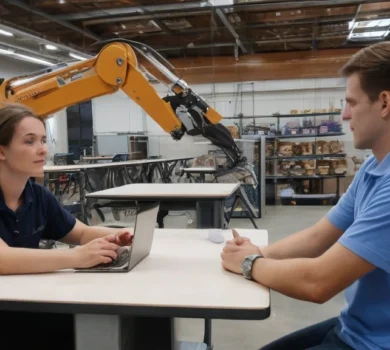
AGCO tests humanoid robot in production in Hesston, Kansas
AGCO and Agility Robotics will launch a pilot program featuring the Digit® humanoid robot at their manufacturing facility in Hesston.
How does the new diffusion model change the approach to autonomous driving?
The new QualiDrive model introduces an innovative approach to trajectory generation in autonomous vehicle guidance - instead of
The fusion of drone and ground vehicle data improves the continuity of tracking autonomous vehicles.
A study conducted in a simulation showed that the combination of data from a drone (UAV) and a ground vehicle (UGV)
Vision-language models as aids for autonomous drones: balancing speed and precision.
A study conducted on autonomous drones showed that vision-language models, despite their potential for advanced semantic reasoning,
IRIM 2026 Seminar: How can robotics achieve seamless physical interaction with humans?
On October 21, 2026, the Institute for Robotics and Intelligent Machines will host a lecture.