

Programming Festo Robots in FTL+
Advanced control of Festo robots
Programming in FTL for full control
Precise Process Automation
Optimization of Festo robot performance
Modern control technologies
Flexible Solutions for Industry
FTL is a dedicated programming environment for Festo robots, providing precise control and optimization of industrial processes. NexaRob offers support in configuring, implementing, and integrating FTL systems, adapting them to specific production requirements. Third Text (Description displayed on mouse hover)
Contact us Watch the videoLearn about FTL - a dedicated, specialized tool developed by Festo that allows you to fully utilize the capabilities of robots and automation systems of this brand.
Programming Industrial Festo Robots in FTL
FTL (Festo Technology Language) is a language designed for Festo’s automation solutions, characterized by precise motion control and easy integration with additional equipment.m.in- grippers, feeders, sensors). Thanks to its modular structure and extensive set of instructions, FTL offers the flexibility required in modern production lines - from simple pick & place operations to complex assembly or inspection processes. NexaRob uses FTL wherever accuracy, speed, and easy adaptation to changing market needs are required.
Why FTL?
- Precise motion control: FTL enables defining detailed trajectories, taking into account custom acceleration and deceleration parameters, which helps in tasks requiring exceptional delicacy and smoothness.
- Compatibility with Festo devices: The language supports a wide range of Festo components and accessories, making it easy to create complex applications in a single consistent environment.
- Ability to adapt quickly: FTL allows you to divide the code into modules and functions, which makes changing individual motion parameters or adding new functionalities much easier and less time-consuming.
How can NexaRob help?
- Needs analysis: Together with the client, we define the expected scope of automation to assess whether FTL and selected Festo solutions are best suited for a given production line.
- Code creation and optimization: We create applications in FTL, test them in a simulation environment, and then fine-tune them at the workstation to ensure maximum performance and stability.
- Service and training: We offer dedicated training for operators, assistance with hardware integration, and service during use, so that your team can efficiently maintain and develop the Festo system.
Learn what distinguishes the FTL language and in which sectors robots and devices from Festo are particularly appreciated.
Key Features and Application Examples in FTL
Although there are many languages and systems on the automation market, FTL stands out due to its adaptation to the architecture of Festo devices and a rich set of built-in functions. Below we present the most important features of FTL and examples of industries where robots and solutions from Festo achieve the highest efficiency:
Advanced motion instructions
FTL offers both classic point-to-point (PTP) commands, as well as linear and arc trajectories, with the ability to define custom speed and acceleration profiles.
Application: Precise assembly of small components in electronics, welding of light structures or handling of packaging in the food industry.
Extensive communication and integration
The language supports communication with sensors (force, torque, temperature), cameras and PLC controllers, enabling dynamic correction of robot movements.
Application: A production line where robots and devices from Festo must exchange data in real time, e.g., to control quality or optimize the cycle.
Flexible code structure
The ability to divide the project into modules and functions makes it easier to maintain and further develop the software. Operators can quickly change parameters (e.g., speed, gripping force) without having to redesign the entire code.
Application: Industries with a high variety of products (e.g., food, cosmetics), where rapid adaptation to a new product is critical.
Focus on safety
FTL contains built-in collision detection and safety zone violation mechanisms, as well as emergency stop procedures, protecting personnel and equipment.
Application: Sectors where robots and humans can share the workspace (e.g., laboratories, assembly of delicate products).
Versatility of applications
Festo solutions with FTL can be used in the automotive, food, electronics, pharmaceutical and many other industries, thanks to the compact design and accuracy of Festo robots.
Application: Tasks such as pick & place, packaging, assembly, sorting, as well as machine operation and quality control.
FTL is a language unique, efficient and flexible, tailored to the needs of devices Festo, which allows you to achieve high productivity and precision. NexaRob guarantees comprehensive support in implementing FTL - from code analysis and design, through testing and integration, to operator training and ongoing service. Thanks to this, your production line can develop and effectively compete in the market.
Discover various ways of creating code in the FTL language for Festo devices and choose the solution that best suits the processes in your plant.
Main Modes and Programming Methods in Festo FTL
Festo robots and devices, controlled in the FTL language, can be programmed in several ways - from entering commands on the operator panel, through advanced simulation tools, to remote editing via the network. Thanks to this, the implementation of applications can be flexible, safe and efficient, and NexaRob will help you choose the appropriate method. Here are the most important modes:
Teach Pendant (Online Programming)
- Direct Editing: The operator uses the control panel to define motion points and sequences in FTL directly on the Festo device.
- Quick adjustments on the line: Excellent for making small changes or tests without the need for a long production downtime.
- Limitations: More complex operations (many points, complicated logic) may require more attention if you rely solely on entering code from the pendant level.
Offline Programming (Simulation Environment)
- Working on a computer: FTL code can be created and tested in a simulation environment, which minimizes errors and downtime on the production line.
- Time saving: After conducting verification and optimization in the simulation, simply upload the ready-made program to the actual Festo device, which reduces the necessary corrections on the line.
- Application: Ideal for projects where collision analysis, advanced paths or precise cycle times are required.
Online Remote Programming (Network Control)
- Remote access: If the IT infrastructure is properly secured, the NexaRob team or your specialists can connect to the Festo controller via the network and modify the FTL code in real time.
- Expert support: It enables quick response to problems and optimizations without the need to bring an engineer to the plant.
Hybrid Approach
- Combining methods: In practice, a Teach Pendant for calibration and minor adjustments is often combined with offline tools for designing complex sequences and optimizing trajectories.
- Gradual improvement: The code can be developed iteratively, testing alternatives in a simulator, and making final corrections online, which reduces the risk of errors and downtime.
Programming methods in FTL are versatile and can be combined depending on the complexity of the project and the need for frequent modifications. This allows devices to Festo perform well both in simple pick & place tasks and in advanced assembly and inspection processes. In the following sections, we will look at how FTL it integrates with vision systems and sensors, further increasing the efficiency and safety of the production line.
Learn how Festo devices programmed in FTL work with cameras and sensors to adapt to changing production conditions.
Integration with Vision Systems and Sensors in Festo FTL
Robots and devices from Festo, controlled in the FTL language, are not limited to replaying fixed motion paths. Thanks to the ability to communicate with vision systems (2D/3D) and sensors (e.g., force), they can actively adapt their operations to the current situation on the line. Below we present how FTL supports such intelligent collaboration:
Vision Systems
- Protocols and libraries: FTL enables communication with industrial cameras, allowing information about the position or orientation of objects to be transmitted.
- Dynamic motion correction: When products are arranged in a disorganized manner, the robot or Festo device calculates the offset and corrects the motion on the fly, increasing speed and reducing errors in pick & place operations.
Force and Moment Sensors
- Gentle assembly: In tasks requiring exceptional care (e.g., connecting delicate electronic components), FTL controls the force level to avoid damage.
- Collision detection- When the torque or force exceeds a set threshold, the code in FTL can immediately stop the motion, protecting equipment and operators from the consequences of collisions.
Support for Additional Axes and Peripherals
- Flexible expansion: The Festo robot can work with additional axes (e.g., positioners) and devices (e.g., grippers of various shapes), and FTL ensures their precise synchronization.
- Application: Automotive sector (multi-stage assembly), food industry (sorting and packaging of various products), electronics (high product variety).
Application examples
Food industry
The robot recognizes products in different sizes using a camera, and FTL corrects the trajectory to gently place them in packages.
Electronics
Gentle joining of elements, where a force sensor protects them from crushing, and a camera verifies the accuracy of assembly.
Logistics
Sorting parcels by barcodes or labels, with dynamic motion correction based on the position of shipments.
Through integration with vision systems and sensors, devices Festo in FTL gain the flexibility and intelligence needed in modern production. NexaRob assists in selecting equipment, writing and optimizing code, and providing training so that your industrial line can fully utilize the potential of the solutions. Festo.
See how the FTL language has accelerated the assembly of delicate components in the demanding electronics industry, while minimizing errors and costs.
Precise Assembly and Quality Control in the Electronics Industry with Festo FTL
In the electronics industry, where thousands of precise components must be assembled with great accuracy, robots and devices from Festo - programmed in FTL - have proven to be an effective and flexible solution. Below is an example implementation in which rapid adaptation to new models and the ability to dynamically correct motion resulted in a significant improvement in efficiency and a reduction in production defects.
Context and Main Challenges
- Delicate layouts and small dimensions: Even minimal deviation in movement or inappropriate pressing force could result in damage to valuable components.
- Frequent product changes- The plant produced various electronic modules, requiring quick modifications to the assembly parameters.
- Need for fast quality control- With a large volume, it became crucial to reduce manual inspection and automate verification after assembly.
Solutions in FTL Code
Modular Division of Operations
Each operation (component retrieval, insertion into a socket, visual inspection) was implemented as a separate procedure in FTL, which simplified code maintenance and accelerated the implementation of corrections. Parameters such as speed, force, or position were separated into external configuration files, allowing operators to quickly make changes without affecting the entire program.
Integration with Force Sensor and Vision System
During the assembly process, the Festo robot monitored the force level, slowing down or stopping the movement if permissible values were exceeded. The camera checked the correct positioning, and in case of even slight misalignments, the FTL code automatically calculated the offset, correcting the trajectory in real time.
Automatic Quality Control
After the assembly was completed, the robot performed a short verification sequence to check whether the component was properly installed and signaled any deviations to the operator. This reduced the number of parts requiring manual inspection, thereby accelerating the entire process.
Effects and Benefits
- Increased efficiency by approx. 20-25%- Thanks to efficient trajectory correction and the absence of downtime related to manual inspection, the assembly process has been accelerated.
- Reduction of defective components- Dynamic force control and visual corrections reduced the number of damaged or incorrectly assembled modules.
- Easy adaptation to new models- The FTL code proved easy to modify, which shortened the time to implement subsequent variants of electronic devices.
Use FTL in this implementation made it possible to improve and accelerate the assembly of electronic components, as well as improve quality and reduce error costs. Comprehensive support NexaRob (analysis, code design, testing, training) enabled the client to quickly transition to mass production with a lower risk of downtime and material losses.
How to maintain high performance and compliance with health and safety standards during intensive development of applications based on Festo devices and the FTL language?
Optimization of Codes and Safety Procedures in Festo FTL
After developing an application in the FTL language, it is important to continuously improve it and ensure compliance with applicable safety regulations. NexaRob recommends the following practices that support efficient and reliable operation of Festo devices:
Cycle time and trajectory analysis
- Collecting statistics: A robot or Festo device can report the number of cycles, errors, or delays. Regular analysis of this data helps identify areas for improvement (e.g., shortening the trajectory).
- Code refactoring: Minor adjustments to speed, task sequence, or removal of unnecessary movement points often result in a noticeable reduction in cycle time.
Code structure and modularity
- Avoiding repetitions: It is worth creating common procedures and functions instead of copying code fragments, which reduces the risk of duplicating errors and speeds up updates.
- Clear names and comments: Consistent designations (e.g., pPickPos, nClampForce) facilitate debugging and making corrections by multiple programmers.
Safety procedures
- Emergency stop conditions: FTL enables a robot or device to interrupt movement if force or safety zones are exceeded. These functions should be tested periodically to meet health and safety requirements.
- Updating with changes in standards: Industries such as food, pharmaceutical, and automotive have strict standards - the code and configuration should be modified when new regulations are introduced.
Updates and development
- New firmware versions: Festo may release software updates. It is worth evaluating whether they introduce useful improvements, such as faster communication or new movement instructions.
- System scalability- If you plan to add more robots or axes, the modular approach in FTL allows for smooth expansion of workstations and adaptation to production growth.
Regular code optimization and attention to safety in FTL ensure that devices have Festo efficient and stable operation. NexaRob It helps with code audits, hardware upgrades, and consultations regarding development - so that your company can keep up with the dynamic needs of the market while maintaining the highest standards of quality and safety.
Dispel your doubts about programming Festo devices in FTL and find out how NexaRob can support your project.
Frequently Asked Questions
Below are answers to frequently asked questions related to robots and Festo devices controlled in FTL. If you do not find the information you need here, please contact NexaRob - we will be happy to discuss your project and present specific proposals.
No. Although FTL offers advanced functions and motion instructions, a basic knowledge of control logic allows you to quickly start creating and modifying code. NexaRob offers training courses that help teams master FTL in a short time.
Stäubli robots are popular in electronics (precision assembly), the food industry (packaging, sorting), the automotive industry (welding, assembly) or the pharmaceutical industry (delicate product handling). Their compact design and high precision make them suitable for many different processes.
Yes. Simulation tools are available to create and verify code without interrupting production. After completing the tests, simply upload the verified application to the Festo device, minimizing corrections in the real environment.
FTL supports communication with cameras (2D/3D) and various types of sensors (force, torque), enabling dynamic trajectory correction. This allows the Festo robot to adjust its path on the fly, which significantly increases precision and flexibility in changing conditions.
Most standard Festo models are industrial robots that usually require safety zones (light curtains, enclosures). However, there are variants that provide greater interaction with humans, and the FTL itself can define speed and force limits, increasing the level of collaboration safety.
It depends on the dynamics of production. If assembly parameters or product range change frequently, code updates may be quite regular. In a stable environment, changes are mainly introduced as part of optimization or when adapting to new standards.
Yes. We cooperate with a global network of suppliers, including Festo. We help in selecting appropriate models, writing and optimizing FTL code, and also provide service and possible system expansion in the future.
Migration may require analyzing the differences in syntax and motion logic. NexaRob supports such processes by assessing which parts can be transferred directly and where modifications will be necessary. Sometimes, partial import of logic is simpler than creating an entire application from scratch.
We invite you to contact us by email or phone. NexaRob will provide a preliminary analysis of your needs, advise on hardware and software, and also develop FTL code along with training for operators. This will allow your production line to operate more efficiently, safely and flexibly, responding to changing market realities.

Do you have more questions?
Contact NexaRob - our specialists will assist you with the design, implementation, and maintenance of solutions based on Festo devices and the FTL language. Together, we will ensure maximum efficiency, minimize the risk of failures, and guarantee full compliance with strict industry standards.
Automate Your Business with NexaRob - Contact Us!
Interesting facts from around the world

How does the new diffusion model change the approach to autonomous driving?
The new QualiDrive model introduces an innovative approach to trajectory generation in autonomous vehicle guidance - instead of
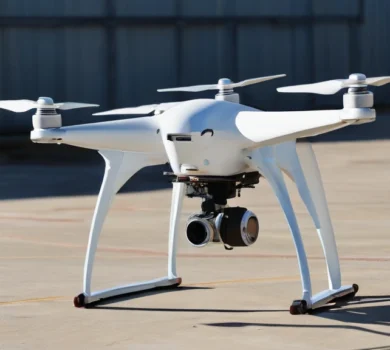
The fusion of drone and ground vehicle data improves the continuity of tracking autonomous vehicles.
A study conducted in a simulation showed that the combination of data from a drone (UAV) and a ground vehicle (UGV)
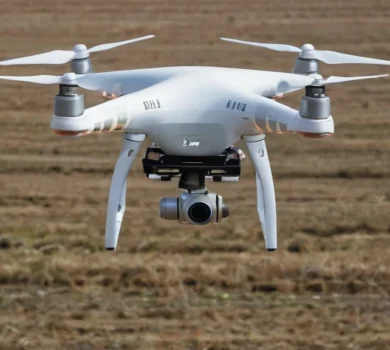
Vision-language models as aids for autonomous drones: balancing speed and precision.
A study conducted on autonomous drones showed that vision-language models, despite their potential for advanced semantic reasoning,
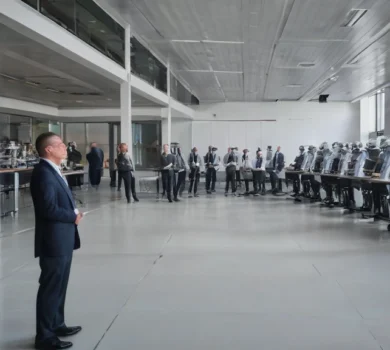
IRIM 2026 Seminar: How can robotics achieve seamless physical interaction with humans?
On October 21, 2026, the Institute for Robotics and Intelligent Machines will host a lecture.
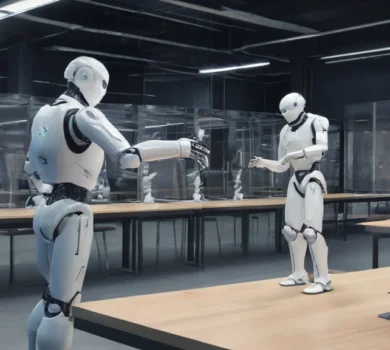
DriveWorld3D: a new generative simulation for safe autonomous driving
The new DriveWorld3D system, developed by the Robostreet team in Cambridge, is designed to help create safer models.