

Humanoid Robot Clone Alpha
Clone Alpha - Artificial muscles, natural movement!
Robot with synthetic organs
Clone Alpha - Biomimetic precision
Innovative technology from Wrocław
Clone Alpha - A breakthrough in humanoid robotics
Polish robot with human anatomy
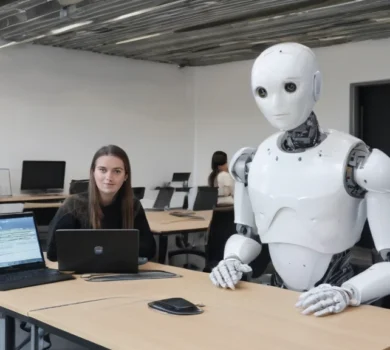
Clone Alpha is a humanoid robot developed by the Wrocław-based startup Clone Robotics. Equipped with over 200 synthetic "bones", artificial muscles, and organs, it mimics human anatomy and movements. Thanks to Myofiber technology, Clone Alpha moves in a natural way, offering wide applications in everyday life and industry.
Contact us Watch the videoClone Alpha - Clone Robotics
Humanoid Robot Clone Alpha
Clone Alpha is a humanoid project developed by the company Clone Robotics, which focuses on creating robots that are similar in functionality and anatomy to humans. The company has become known mainly for its work on synthetic "muscles" that power limbs, which is an innovative approach in robotics - instead of typical electric actuators, Clone Robotics experiments with solutions that mimic the functioning of human muscles and tendons.
The Clone Alpha robot (also referred to as simply "Clone" in some materials) is intended to be the first humanoid in the company's portfolio, combining advanced mechanics with artificial intelligence algorithms. The project is in the development phase, and information provided by the manufacturer suggests that the final version of the robot will be able to perform a wide range of upper limb movements and move in a way that replicates human posture. The main goal of Clone Alpha is to demonstrate that by introducing flexible "muscle" elements, it is possible to achieve natural movement dynamics and precision, exceeding solutions based on classic electric motors.
Although there are currently not many detailed information available publicly, Clone Robotics indicates cooperation with various research centers and universities. If the project is successful, the Clone Alpha humanoid may find applications both in research environments and in the future in service, industrial or medical sectors.
History and Development
History of the Humanoid Robot Clone Alpha
Beginnings and work on "artificial muscles"
- Clone Robotics started by developing prototypes of robotic arms and hands using so-called "synthetic muscles," based on flexible pneumatic conduits or polymeric materials. The goal was to achieve movements as close as possible to human anatomy.
- The first demonstrations consisted of presentations of grippers capable of performing precise tasks, such as lifting delicate objects or manipulating small items.
Inspiration from bionic movement models
- Unlike many companies that mainly use classic electric motors in joints, Clone Robotics opted for a hybrid approach combining muscle-tendon and classic mechanics. The creators emphasize that this solution may better replicate human strength and fluidity of movement.
- Studies on human biomechanics and analysis of natural sequences of limb movements resulted in designs of prototype robotic hands, which the company presented as a basis for building a full humanoid.
The birth of the Clone Alpha project
- Developing increasingly advanced designs of limbs and hands, Clone Robotics decided to create a full-size humanoid. The robot is intended to combine all the company's previous achievements in the field of artificial muscles, sensors, and AI algorithms.
- The first public mentions of Clone Alpha appeared in promotional materials and short press releases, in which the manufacturer indicated plans to test the robot in research laboratories and in selected prototype applications (e.g., in education, precision assembly work, or as a demonstrator assistant).
Current status and prospects
- Clone Robotics maintains that the Clone Alpha humanoid is in the phase of intensive internal testing and continuous improvement of the materials used to create "muscles."
- The company declares its willingness to cooperate with external R&D partners, universities, and companies that want to experiment with humanoids in their technology lines. So far, no official date for the commercial availability of the robot or a complete specification has been announced.
- If the project achieves its intended goals in terms of precision, strength, and smoothness of movement, Clone Alpha may become one of the most advanced humanoids inspired by natural biomechanics, providing competition for solutions based on traditional electric drives.
Clone Alpha, despite the limited number of officially released details, is generating considerable interest in the robotics community due to its innovative approach to designing limbs and joints. If the pioneering work on "artificial muscles" yields the expected results, the humanoid Clone Robotics may significantly influence the further development of service, medical, and educational robotics.
Technical Specifications
Technical Specification of the Clone Alpha Humanoid Robot
The following information is based on publicly available materials from the manufacturer, Clone Robotics. Clone Alpha is an advanced humanoid robot designed to maximize the replication of human anatomy and function. Thanks to the use of artificial muscles and a skeletal system, this robot aims to mimic human movements and manipulative abilities.
| Parameter | Value | Notes |
|---|---|---|
| Height | No official data | The manufacturer has not released detailed information about the height of the robot. |
| Weight | No official data | Information on the mass of the robot has not been provided. |
| Skeletal system | Over 200 synthetic "bones" | A design intended to faithfully replicate the human skeleton. |
| Muscle system | Myofiber artificial muscles | Artificial muscle technology developed by Clone Robotics. |
| Drive system | Battery-powered pump and valve system that transports water. | Enables movement through the flow of water in artificial muscles. |
| Breathing system | Synthetic breathing system | Simulates human breathing for a more realistic representation. |
| Initial capabilities | 16 pre-installed skills | It includes. m.in- remembering the layout of the house, keeping track of kitchen inventory, engaging in dialogue, and performing the roles of butler and housekeeper. |
| Learning capability | Telekinesis training platform | Allows users to teach the robot new skills. |
Clone Alpha is an innovative humanoid robot developed by Clone Robotics, designed to replicate human anatomy and function as accurately as possible. Thanks to the use of advanced technologies, such as Myofiber artificial muscles and a synthetic respiratory system, this robot is able to perform various household tasks and social interactions. The company plans to produce a limited series of 279 units, with the possibility of further development in the future.
Clone Alpha
Applications and Examples of Use
Although Clone Alpha remains in the development phase, and the manufacturer has not disclosed detailed commercialization plans, potential areas where the humanoid could be used can be identified. The following examples are mainly based on the innovative approach to biomechanics and the manufacturer's assumptions about the high precision of the robot's movements:
Research and Development (R&D) Laboratories
- Clone Alpha can serve as a platform for scientific centers involved in biomechanics, robotics, and artificial intelligence, enabling the testing of new control algorithms and perception systems under conditions similar to human anatomy.
- The robot can help in the development of advanced walking or gripping functions, as well as in developing methods for safe human-machine interaction.
Education and Technology Demonstrations
- Thanks to the unique application of "artificial muscles," Clone Alpha could be an attractive tool in educational institutions such as technical universities or science centers, allowing for the presentation of future solutions in robotics.
- Presentations at trade fairs and conferences can attract the attention of both specialists and a wider audience interested in seeing a humanoid with movements most similar to humans.
Precise Assembly Tasks in Light Automation
- If the "muscle" technology proves sufficiently stable and repeatable, the robot could perform simple assembly tasks in the electronics or small mechanics industries, where caution and dexterity are required.
- Ultimately, in factories with a high degree of flexibility (small production series), a humanoid similar to human anatomy may be able to adapt more quickly to new tasks without the need to reconfigure workstations.
Care and Rehabilitation
- In the long term, solutions similar to Clone Alpha may find application as assistants for the elderly or disabled, helping with minor daily activities.
- "Muscle" technology could also be used in the creation of rehabilitation robots or exoskeletons, ensuring smooth and safe movements.
Services and Entertainment Industry
- A humanoid with natural movements attracts attention, which can be used in robotic theaters, amusement parks, or marketing events.
- A friendly, "human" gesture and expression can improve the quality of interaction with customers in service points (receptions, showrooms), although there is currently no information about Clone Robotics' plans in this segment.
Cooperation with Exoskeleton and Prosthesis Manufacturers
- Clone Alpha can serve as a kind of "test platform" for materials and drive solutions inspired by human anatomy. Companies that create prostheses or exoskeletons could use the know-how and "artificial muscle" technology developed during work on the robot.
Due to the early stage of development and limited availability of public data, it is not yet possible to accurately predict in which applications Clone Alpha it will perform best. Nevertheless, the specific approach to the design of moving elements indicates potentially broad possibilities in the field of service robotics, where agility and precision of movement are key, and the humanoid form facilitates adaptation in environments designed for humans.
Technology and Innovation, Safety
Clone Alpha
While developing the Clone Alpha model, Clone Robotics focuses on a unique combination of mechanics inspired by human anatomy with advanced control systems. Thanks to this, the robot is supposed to perform movements that are more similar to natural ones, especially in the area of upper limbs and hands. Despite being at an early stage of development, the manufacturer indicates several key technological solutions that distinguish the project:
"Artificial Muscles" System and Flexible Actuators
- Flexible Cables and Polymer Materials: Instead of traditional electric actuators in each joint, Clone Alpha uses elements that are designed to mimic the contraction and stretching of human muscles. This system can increase the smoothness of movements and provide a more natural dynamics.
- Hybrid Mechanics: The robot still contains some elements typical of traditional designs (e.g., joints with bearings or actuators assisting), in order to maintain stability and control at larger ranges of motion.
Advanced Control Algorithms and Machine Learning
- Real-Time Motion Planning: The manufacturer declares that Clone Alpha will have software that allows it to correct the trajectory of movement in response to stimuli from the environment - e.g., changing the gripping force based on information from sensors.
- Artificial Intelligence Integration: Although little is known about this, the company mentions the use of AI algorithms to adapt and optimize limb movements for specific tasks (e.g., manipulating delicate objects).
Safe Coexistence with Humans
- Designed for Collaboration (Coexisting): "Muscle" and flexible drive systems can increase safety by limiting the maximum force that the robot is able to generate. In theory, if a collision with a human occurs, the flexible elements absorb some of the energy.
- Collision Detection and Torque Limiting: The manufacturer plans to incorporate sensors that provide information about unexpected contact with an obstacle, which will allow it to automatically limit the force in the robot's joints and stop movement.
Modular Components and Service
- Repair and Modernization: Clone Robotics is planning a design in which worn "muscles" or joint elements can be quickly replaced with new modules or upgraded versions, which will facilitate maintenance and development of the project.
- Potential in Rehabilitation and Exoskeletons: Flexible drives may be used in rehabilitation devices in the future, but this requires meeting additional, stringent safety standards.
Clone Alpha
Integration and Compatibility, Personalization and Customization of Solutions
Clone Alpha is already being designed at the concept stage with flexible deployment in various research and service environments in mind. Although the final version of the robot still needs to be refined, Clone Robotics reveals some assumptions regarding integration and personalization:
Open Programming Interface (API)
- Ability to Write Your Own Software: The company wants to provide an SDK and documentation so that R&D laboratories and software companies can create dedicated applications to control limb movements or perception systems.
- Flexible AI Libraries: The robot is designed to work with popular machine learning frameworks, which will give researchers the opportunity to develop custom algorithms for various fields.
Integration with External Systems
- Network Communication: Clone Alpha will likely be equipped with Wi-Fi or Ethernet modules, enabling remote monitoring and software updates.
- Cooperation with Sensors and Additional Devices: During testing, the manufacturer intends to check whether the robot can effectively interact with 3D cameras, scanners, or GIS systems, which would expand its capabilities in industry and services.
Personalization of Appearance and Functionality
- Configuration of Limbs and "Muscles": Clone Robotics is considering offering various options for arm length, "muscle" strength, or the number of sensors to adapt the robot to specific industries (e.g., education, light equipment manufacturing).
- Adaptation to the Task: Users will be able to create sets of movements and sequences of gestures programmed into the robot, e.g., for presentations, simple assembly tasks, or demonstration shows.
Collaboration with Universities and R&D Companies
- Test Programs: Clone Robotics indicates a willingness to work on the humanoid in close collaboration with research centers so that the final version is refined in terms of usability in laboratories and research projects.
- Joint Projects Financed by Grants: In the world of service and medical robotics, development grants are often key. Clone Alpha can be a platform used in experiments funded by public institutions.
Updates and Development Over Time
- Systematic Improvement of Materials: The manufacturer assumes that the materials used in "artificial muscles" will evolve with the development of polymer science, which will ultimately increase the durability and flexibility of robots.
- Emphasis on Machine Learning With each version of the software, the humanoid would gain new motion planning algorithms, which is intended to improve the precision and naturalness of gestures.
If an innovative idea Clone Robotics whether the "artificial muscle" system proves effective and scalable. Clone Alpha it may be an interesting solution in areas where high agility and smooth robot movements are required. Flexibility in design and customization will facilitate testing in various industries, from education and scientific laboratories to light manufacturing and services.
Clone Alpha humanoid robot
Benefits for Customers
The Clone Alpha project from Clone Robotics may provide valuable solutions for a variety of sectors in the future - from research laboratories, through education and services, to light manufacturing. Although the robot is still in the development phase, the manufacturer and expert community point to a number of potential benefits:
- Increased Precision and Natural Movement Dynamics The assumption that "artificial muscles" will enable smoother and more flexible movements may translate into the ability to perform delicate assembly operations or tasks requiring precise manipulation of objects. In educational and research environments, the robot can serve as a unique platform for analyzing biomechanics and conducting experiments related to imitating human movements.
- Potential for Use in Research and Development R&D institutions can use the innovative design of Clone Alpha to test new materials, control algorithms or AI interfaces. A humanoid robot with flexible drives offers the opportunity to develop tools and safety procedures useful in various robotics industries.
- Flexible Platform for Programming and Customization Clone Robotics plans to provide toolkits and an API that will enable configuration of robot movements, machine learning and integration with external systems. Thanks to the modular design of the robot, its functions and tasks can be adapted to the specifics of a given application - from demonstration work to participation in education or simple service activities.
- Safe Collaboration with Humans Flexible "muscle" elements theoretically reduce the risk of sudden collisions, as they absorb some of the energy upon contact with a human. Torque limiters and collision detection systems help maintain robot collaboration with personnel under conditions similar to cobots (collaborative robots).
- Possible Applications in Care and Rehabilitation Although this is not the primary goal of the creators, in the future similar designs may support specialized fields such as rehabilitation, offering a more "human" interaction and gentle physical support.
FAQ - 9 frequently asked questions
Humanoid Robot Clone Alpha
Below we present the most important questions about Clone Alpha. If you still have doubts or are looking for more advanced information, please contact us or Clone Robotics and check out the full FAQ section:
Currently, the project is in the development and testing phase. Clone Robotics has not announced an official distribution, and any pilot projects will likely be arranged individually.
Due to the early stage of work, the manufacturer has not released a price list. The cost will probably depend on the configuration, number of "muscles," and scope of implementation services.
Clone Robotics states that Clone Alpha is ultimately intended to move in a bipedal posture, but details about stability and terrain-crossing capabilities have not been officially disclosed.
The idea is to increase the fluidity and naturalness of limb movements. If the solution proves to be durable and precise enough, it may enable manipulation of small or delicate objects under conditions similar to those of humans.
Probably not - the humanoid design suggests operation in environments designed for humans. Tests may require power stations or compressors (if external pneumatic power systems are provided).
This is a key question - the manufacturer admits that the durability and long-term reliability of these elements are still being studied. In the event of failure, it is planned to replace the "muscle" modules.
Clone Robotics announces the release of APIs and tools that will enable connection with popular machine learning frameworks. Details are still being developed.
According to the design assumptions, yes, as long as standard health and safety procedures are followed. Flexible muscles should reduce the risk of serious injuries, but detailed safety certificates have not yet been announced.
The company plans demonstrations and collaborations with R&D centers, but no schedule for official presentations has been released yet. It is possible that the first demonstrations will appear at industry trade shows or during robotics conferences.

More questions?
If you would like to learn more about humanoid robots, we invite you to browse our complete FAQ section. You will find additional questions, detailed instructions, and helpful tips there.
Why NexaRob?
Your Trusted Partner in the Field of Humanoid Robotics - Knowledge, Passion, and Innovation
At NexaRob, we monitor and analyze the latest trends in robotics, including work on groundbreaking projects such as Clone Alpha. We understand that the evolution towards flexible "muscle" drives may open up new possibilities in industry, services, or education. Our mission is to help companies and institutions fully utilize these innovations - from initial consultations and needs assessment to comprehensive implementation and further development of solutions.
- Expertise in Humanoid Robotics Thanks to our contacts and cooperation with many manufacturers of humanoid robots, NexaRob can advise on the selection of the most promising and appropriate projects, such as Clone Alpha, in relation to the client's goals and resources.
- Individual Approach to Projects We focus on understanding the specifics of your business - whether it’s in the research, education, or service sector. We prepare customized implementation strategies that include: integration, staff training, and infrastructure adaptation.
- Comprehensive Support NexaRob offers full support at every stage of cooperation: from pre-purchase consultations, through the robot startup process, to service and software updates. We strive to ensure that your investment in humanoid robots quickly translates into efficiency and innovation.
- Innovation and Further Development We are constantly monitoring global trends and the development of robotic solutions, such as "artificial muscles" or advanced control algorithms. We help our clients implement new features so that their humanoid robotics can continuously keep up with market needs.
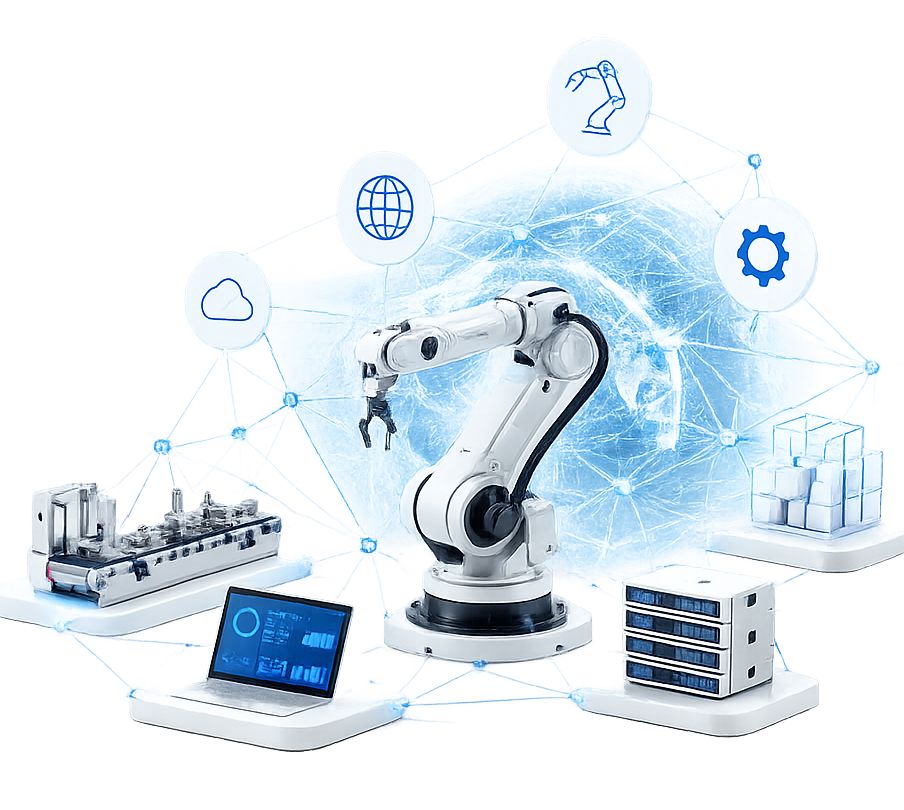
Are you interested in the potential of the Clone Alpha robot or are you looking for support in implementing solutions based on flexible drives? Contact NexaRob - together we will assess your needs, prepare an implementation plan and indicate the steps that will ensure the most beneficial use of innovative robotic technologies.
Automate Your Business with NexaRob - Contact Us!
Join NexaRob and Together Let's Develop Humanoid Robotics
Do you want to become our Partner?
NexaRob is actively creating an ecosystem of partnerships aimed at accelerating the development and popularization of humanoids in business, science and the public sector. We believe that only through the exchange of knowledge and cooperation can we effectively introduce such groundbreaking concepts as "artificial muscles" in service robotics.

United States

China

Japan

Germany

India

United Kingdom

France

Italy

Canada

South Korea

Brazil

Australia

Spain

Mexico

Indonesia

Netherlands

Saudi Arabia

Turkey

Switzerland

Taiwan

Poland

Sweden

Belgium

Thailand

Ireland

Austria

Norway

Israel

United Arab Emirates

Argentina

South Africa

Denmark

Philippines

Singapore

Malaysia

Colombia

Bangladesh

Egypt

Chile

Finland

Vietnam

Portugal

Czech Republic

Romania

New Zealand

Peru

Greece

Ukraine

Slovakia

Hungary

Slovenia

Croatia

Serbia

Bulgaria

Estonia

Latvia

Lithuania

Iceland

Luxembourg

Malta

Cyprus

Morocco

Algeria

Tunisia

Nigeria

Kenya

Ethiopia

Ghana

Tanzania

Uganda

Angola

Senegal

Qatar

Kuwait

Oman

Pakistan

Sri Lanka

Nepal

Kazakhstan

Uzbekistan

Mongolia

Russia

Cambodia

Myanmar

Laos

Fiji

Papua New Guinea

Venezuela

Ecuador

Uruguay

Paraguay

Bolivia

Costa Rica

Panama

Dominican Republic

Guatemala

Cuba

Jordan

Lebanon

Iran
Additional countries in Europe
These countries are hidden in readable mode so that the map is not cluttered. Click on a country to open contact information, email, and a description of the area of cooperation.
Additional countries in Asia
These countries are hidden in readable mode so that the map is not cluttered. Click on a country to open contact information, email, and a description of the area of cooperation.
Additional countries in the Americas
These countries are hidden in readable mode so that the map is not cluttered. Click on a country to open contact information, email, and a description of the area of cooperation.
Additional countries in Africa
These countries are hidden in readable mode so that the map is not cluttered. Click on a country to open contact information, email, and a description of the area of cooperation.
Additional countries in Oceania
These countries are hidden in readable mode so that the map is not cluttered. Click on a country to open contact information, email, and a description of the area of cooperation.
Albania
Andorra
Belarus
Bosnia and Herzegovina
Montenegro
Liechtenstein
North Macedonia
Monaco
Moldova
San Marino
Afghanistan
Armenia
Azerbaijan
Bahrain
Bhutan
Brunei
Georgia
Iraq
Yemen
Kyrgyzstan
North Korea
Maldives
Syria
Tajikistan
East Timor
Turkmenistan
Antigua and Barbuda
Bahamas
Barbados
Belize
Dominica
Grenada
Guyana
Haiti
Honduras
Jamaica
Nicaragua
Saint Kitts and Nevis
Saint Lucia
Saint Vincent and the Grenadines
El Salvador
Suriname
Trinidad and Tobago
Benin
Botswana
Burkina Faso
Burundi
Cape Verde
Chad
Democratic Republic of the Congo
Djibouti
Eritrea
Eswatini
Gabon
Gambia
Guinea
Guinea-Bissau
Equatorial Guinea
Cameroon
Comoros
Congo
Lesotho
Liberia
Libya
Madagascar
Malawi
Mali
Mauritania
Mauritius
Mozambique
Namibia
Niger
Central African Republic
Rwanda
Seychelles
Sierra Leone
Somalia
Sudan
South Sudan
Togo
Ivory Coast
Sao Tome and Principe
Zambia
Zimbabwe
Kiribati
Micronesia
Nauru
Palau
Samoa
Tonga
Tuvalu
Vanuatu
Marshall Islands
Solomon Islands
Why Is It Worth Cooperating with NexaRob?
Joint Investments in Innovation
We combine capital and resources to bring solutions to market that realistically change the way businesses and institutions operate. For us, it is not only the idea that counts, but also the practical benefits.
Diversity of Competencies
Our team includes experts in mechanics, electronics, AI, project management and business strategy. This range of skills allows us to create comprehensive robotic solutions tailored to specific market requirements.
Global Reach and New Markets
We are open to international cooperation, supporting companies in various regions of the world. We help adapt solutions to local safety standards and regulations.
We are Looking for Partners in the Following Areas:
- Production and Distribution of Humanoid Robots Cooperation with manufacturers such as Clone Robotics enables us to create tailor-made solutions for end customers, integrating unique technologies and years of know-how in the field of robotics.
- AI and IoT Technologies The integration of humanoid robots with data analysis systems and cloud services creates completely new scenarios in which machines can operate in full synergy with the digital ecosystem of companies.
- Automation and Logistics Systems A humanoid robot with flexible drives and precise manipulations can improve logistics processes or ensure safe cooperation with people during the assembly of delicate components.
Let's Join Forces
NexaRob invites you to engage in dialogue and collaboration. If you are interested in developing humanoid robotics concepts such as Clone Alpha and implementing them in real-world applications, we are ready to work together to shape the future in the areas of automation, scientific research, and commercial solutions. Let’s build innovative projects that will revolutionize human-technology interaction!
Interesting facts from around the world

IRIM 2026 Seminar: How can robotics achieve seamless physical interaction with humans?
On October 21, 2026, the Institute for Robotics and Intelligent Machines will host a lecture.
DriveWorld3D: a new generative simulation for safe autonomous driving
The new DriveWorld3D system, developed by the Robostreet team in Cambridge, is designed to help create safer models.
Microlocalization: precise positioning of mobile robots based on microscopic textures of the ground
Researchers have presented a new method for locating mobile robots with an accuracy of tens of micrometers, using microscopic textures.
Robotics as a space for creativity and diversity: experiences of researchers from the Oxford Robotics Institute
As part of the International Women in Engineering Day 2026, researchers from the Oxford Robotics Institute (ORI) shared
How does a solar-powered autonomous vessel decide on the most important places to explore?
Researchers from academic and other institutions have developed a new method for mission planning for autonomous ships