

Neo Beta Humanoid Robot
Neo Beta - A new dimension of home support!
Intelligence tailored to your needs
Neo Beta - Your help with everyday tasks
Safe and functional assistant
Neo Beta - The technology of the future in your home
Lightweight, fast, reliable - Neo Beta
Your intelligent home assistant. Thanks to artificial intelligence, it supports you in everyday tasks, ensuring safety and reliability. Discover a new era of robotics with Neo Beta!
Contact us Watch the videoNEO Beta - Robotics
NEO Beta Humanoid Robot
NEO Beta is a humanoid robot developed by NEO Robotics, previously known for its projects involving autonomous mobile machines and advanced vision systems. The design of NEO Beta is based on human anatomy, allowing the robot to perform tasks in environments designed with humans in mind. This model has attracted the attention of both engineers and business representatives interested in automating processes in warehouses, factories, and even the service sector.
The engineers at NEO Robotics leverage their knowledge of artificial intelligence (machine learning, image and object recognition), which enables the robot to exhibit adaptive behaviors and interact with its environment in real time. The robot is equipped with a wide range of sensors - cameras, ultrasonic sensors, and gyroscopes - all of which help maintain balance, detect obstacles, and precisely grasp objects. Initial demonstrations of the prototype have shown that NEO Beta can be used in many areas, from improving logistics tasks to collaborating with people in public spaces.
History and Development
NEO Beta Humanoid Robot
Implementing NEO Beta into business processes is a step towards increasing efficiency, safety, and operational flexibility. Thanks to its ability to perform repetitive, precise, and time-consuming tasks, the humanoid robot relieves employees, allowing them to focus on more strategic and creative tasks.
The beginnings of NEO Robotics (2015-2018)
- 2015: Establishment of NEO Robotics by a group of engineers specializing in mobile robotics and artificial intelligence. The company initially focused on creating autonomous AGV (Automated Guided Vehicles) platforms for distribution centers.
- 2016-2017: Collaboration with technical universities on research into vision systems. NEO Robotics then developed prototypes of software for recognizing objects in motion, which became the foundation for further development.
- 2018: First steps towards humanoid robots - the company received a government grant for research work related to object manipulation and biomechanics of robotic limbs.
Initial NEO Alpha project (2019-2020)
- 2019: NEO Robotics presented the NEO Alpha model at the ICRA (International Conference on Robotics and Automation) - an early form of a humanoid robot that was not yet fully mobile. The focus was mainly on developing arms with greater grip precision and algorithms for balance.
- 2020: Successful tests were conducted in laboratory conditions, where NEO Alpha performed simple manipulation tasks (moving objects, operating tools). However, the COVID-19 pandemic slowed down work on the humanoid, as the company temporarily focused on providing autonomous forklifts for the e-commerce industry.
Start of work on NEO Beta (2021)
- January 2021: Internal research teams at NEO Robotics decided to develop the NEO Alpha concept with a walking module and more advanced artificial intelligence. The project was given the code name "Beta".
- June 2021: The company announced plans to create a fully functional humanoid capable of moving freely on various types of surfaces and interacting precisely with its surroundings. At the same time, employment in the AI and precision mechanics departments increased.
First prototype and presentation at CES (2022)
- January 2022 (CES in Las Vegas): The world saw the NEO Beta prototype, demonstrating basic locomotion capabilities and simple manipulation tasks. The robot was able to m.in- walk along a designated route, avoid obstacles, and pick up light objects. The demonstration garnered interest from technology media outlets.
- February 2022: The first recordings from internal tests were released online, showing the robot equipped with a number of sensors and cameras. Experts pointed out the stable gait and relatively smooth arm movements compared to other humanoids in the early stages of development.
Implementation of AI algorithms and design improvements (2023)
- March 2023: NEO Robotics announced the start of cooperation with a company specializing in cloud computing, which was intended to facilitate real-time processing of sensory data. The NEO Beta project benefited from this in terms of more effective environment recognition and dynamic motion adaptation.
- June 2023: At the Automatica trade fair in Munich, an updated version of the robot was presented, featuring an improved torso design, a new generation of actuators in the limbs, and integrated 5G communication. During the demonstration, NEO Beta performed a series of logistics tasks, such as sorting goods and precisely placing them on shelves.
Conquering new markets and initial commercial tests (2024)
- February 2024: As part of a pilot project in one of the warehouses in the United States, several NEO Beta units were deployed to test package handling in the receiving and packing area. Preliminary results showed a reduction in order fulfillment time and a lower risk of employee injuries.
- April 2024: The robot was presented at the ICRA conference in Yokohama, where it generated interest among academic circles due to its advanced algorithms for posture stabilization and learning new tasks through observation (so-called learning by demonstration).
Current development directions (2025 and beyond)
- Energy optimization: According to information from interviews with NEO Robotics engineers, the next generation of NEO Beta will feature a more efficient energy management system to extend operating time on a single charge.
- Extended compatibility: The manufacturer is developing interfaces that enable easy connection of the robot with MES (Manufacturing Execution System) or ERP software.
- Safety and certifications: Plans include obtaining certificates confirming compliance with ISO safety standards and implementing solutions to minimize the risk of collisions with people in public places.
History NEO Beta perfectly illustrates how, in just a few years of intensive research and development work, it is possible to move from early concepts to a functional humanoid robot model. Advances in AI, precision mechanics, and remote data processing have paved the way for deploying NEO Beta in commercial settings. In the coming years, further project development can be expected, aimed at increasing the robot's autonomy, improving its energy efficiency, and introducing it to new market sectors.
Technical Specifications
Technical Specification of the NEO Beta Humanoid Robot
The following information is based on publicly available materials from the manufacturer, 1X Technologies. NEO Beta is a humanoid robot designed for home use, intended to support users in their daily tasks and social interactions. The company places great emphasis on the safety and naturalness of the robot's movements to ensure its seamless integration into the home environment.
| Parameter | Value | Notes |
|---|---|---|
| Height | 165 cm | Similar to the height of an average person. |
| Weight | 30 kg | Lightweight design that facilitates movement around the house. |
| Arm load capacity | 20 kg | Enables the carrying of most everyday objects. |
| Maximum movement speed | 4 km/h (walking), 12 km/h (running) | Adapted for moving in home environments. |
| Sensors | HD cameras, multi-directional microphones | Enable perception of the environment and interaction with users. |
| Control system | Advanced artificial intelligence | Enables adaptation to different environments and tasks. |
NEO Beta is an advanced domestic humanoid robot that combines practical and social functions. Thanks to its advanced artificial intelligence and modern sensors, it can perform various household tasks, such as cleaning, carrying objects, or assisting the elderly. 1X Technologies plans to introduce the robot into selected homes for research and development purposes, with a view to wider availability in the future.
Optimus
Applications and Examples of Use
Optimus is a versatile humanoid whose potential applications extend far beyond standard ideas about robotics. From warehouses and production plants, through customer service, to tasks requiring work in difficult and dangerous environments - this robot has the chance to find its place in many areas of life.
Below are some of the most important examples of Optimus's use and the potential benefits that its implementation may bring in logistics, industry, services, education, and everyday life. Although the robot is still under development, Tesla's intensive engineering work indicates ambitious plans to introduce humanoid solutions into practice.
Logistics and warehousing
Load Transfer:
NEO Beta can replace personnel in transporting goods over short distances. A lifting capacity of several kilograms is particularly useful in handling packages in distribution centers.
Product Sorting:
Equipped with stereoscopic cameras and sensors, it can recognize barcodes or labels and then place items in the appropriate locations.
Manufacturing Industry
Support for Simple Assemblies:
The robot can perform repetitive assembly tasks, reducing worker fatigue and the risk of errors.
Quality Control:
Thanks to its vision systems and AI software, NEO Beta can perform basic visual inspections, detecting surface defects or incorrectly assembled components, for example.
Services and Customer Support
Reception and Information Points:
A humanoid-looking robot can greet guests, provide information, or give directions in shopping centers, hotels, or airports.
Assistance with Restaurant Tasks:
To a limited extent, the robot can perform tasks related to serving light meals or drinks, although this requires additional adjustment of grippers and protective attachments.
Education and Social Interaction
Demonstrations and Workshops:
NEO Beta can serve as a demonstration platform in scientific institutions, laboratories, and universities. It also presents itself as an attractive example of modern robotics.
Support for Programming Education:
The ability to create dedicated applications (API) allows students to learn about the practical aspects of programming humanoid robots.
Tasks in Special Conditions
Service Work:
With appropriate safeguards, NEO Beta can assist in the maintenance of equipment in hard-to-reach places, replacing humans in dangerous conditions.
Testing in Medical Fields:
Some research centers are investigating whether humanoid robots can support patient rehabilitation, although further research and certifications are needed in this area.
Future Possibilities
Full Integration with Smart Home:
Ultimately, NEO Beta may become more important in the home environment, helping elderly or disabled people.
Cooperative Systems:
In the future, the robot could work with other machines, creating automated production lines or smart warehouses, where the role of humans would be limited to supervision and process design.
Although NEO Beta the applications are currently in the testing or pilot phase, there is already significant potential in industries requiring repetitive and physically demanding tasks. Subsequent versions of the robot will provide better energy efficiency, more efficient movement, and increasingly sophisticated machine intelligence.
Technology and Innovation, Safety
NEO Beta
NEO Beta is the result of advanced engineering, combining innovative artificial intelligence technologies, advanced sensors, and mechanics inspired by biomechanics. The project emphasizes safety, precision, and energy efficiency, allowing the robot to operate reliably in dynamically changing environments.
In this section, we present the key technological aspects that define the capabilities of NEO Beta, such as multi-layer image analysis, advanced drive systems, and innovative safety features. Each element has been designed with maximum performance and reliability in mind, to meet the demands of modern work environments and everyday applications.
Advanced AI solutions and sensors
- Multi-layer image analysis: In the Beta model, NEO Robotics uses deep learning algorithms to recognize its surroundings, allowing the robot to better respond to dynamic changes in the environment. Using stereoscopic cameras and ultrasonic sensors, the robot can distinguish objects even in low light conditions, which allows it to effectively plan movements.
- Continuous sensor calibration- A team of engineers has developed an automatic calibration system, which combines information from various sensors (lidar, gyroscope, accelerometer) into a single, coherent map of the environment. This approach enables faster and more accurate obstacle detection and improved gait stability.
Drive and mechanical design inspired by biomechanics
- Modular actuators- NEO Beta uses lightweight yet durable actuators with increased overload resistance. Their design was partially inspired by the structure of human joints, giving the robot smoother movement and a wider range of motion.
- Advanced materials- In some components of the body, carbon composites and aluminum alloys are used, which reduce weight while maintaining high stiffness.
Safety features
- Force and torque limiters- Each joint is equipped with sensors that monitor overloads. When excessive torque is detected, the robot's movement automatically slows down or stops, protecting both the machine and the environment.
- Collision detection- Algorithms have been developed to respond to unexpected contact with a person or object. If necessary, the robot switches to emergency mode, reducing the risk of injury or equipment damage.
- Emergency stop protocol- NEO Beta has an E-Stop button (emergency stop) that immediately cuts off power to the actuators and can also receive a stop signal remotely via an industrial network.
Innovations in energy management
- Intelligent motion profiles- The robot analyzes tasks in real time, selecting optimal motion parameters, which helps reduce energy consumption.
- Remote diagnostics: The software monitors the battery temperature, current draw in each joint, and sensor status. This makes it possible to predict the need for servicing or replacing parts before a failure occurs.
Thanks to the combination of modern artificial intelligence, extensive sensory functions, and solid mechanical engineering, NEO Beta it has the potential to play an increasingly important role in process automation. At the same time, the manufacturer places great emphasis on safety and ergonomics so that the robot can effectively collaborate with people in various applications.
NEO Beta
Integration and Compatibility, Personalization and Customization of Solutions
NEO Beta was designed with versatility and easy integration with existing IT systems and IoT infrastructure in mind. Thanks to open communication protocols, a modular design, and flexible software, the robot can be adapted to the unique needs of different industries.
In this section, we present how NEO Beta connects with production and logistics management systems, offering customized hardware and software solutions. The ability to collaborate with people and planned expansions highlight how the robot can evolve as technology and user needs develop.
Integration with IT systems
- Collaboration with MES and ERP: NEO Beta can communicate directly with manufacturing execution systems (MES) and enterprise resource planning (ERP) systems. This allows companies to optimize their supply chain and respond quickly to changing orders.
- API and open protocols: The manufacturer provides a set of tools (SDK) that enable the creation of custom applications and integration of the robot with existing IoT infrastructure. This makes it possible to automatically send tasks to the robot and monitor its status in real time.
Collaboration modes and personalization
- Autonomy levels: NEO Beta can operate in fully autonomous, semi-autonomous, or remotely supervised mode. This offers flexibility depending on the complexity of the task and safety requirements.
- Dedicated grippers and accessories: Due to various applications (e.g., package transport, handling delicate objects), the robot can be equipped with interchangeable gripper modules. The manufacturer offers several standard end-of-arm tools but also enables the creation of a "custom-made" version.
Configurable software
- Motion scenarios: NEO Robotics offers a configuration package that allows for defining precise paths or sequences of actions. This is particularly useful in production or warehouse processes, where repeatability and precision are important.
- Learning by demonstration: In the Beta version, the basics of so-called Learning by Demonstration were introduced, in which the operator performs a given action, and the robot imitates it. This form of learning speeds up the implementation of new tasks without the need for in-depth programming knowledge.
Extended functions for collaboration with people (Human-Robot Interaction)
- Voice interface and touch screen: The robot can be equipped with a simple user interface, allowing the operator to control basic functions or enter commands.
- Visual and audible warning signals: NEO Beta communicates with its surroundings using LEDs and audio messages, informing, for example, about approaching an object or changing the operating mode.
Planned extensions and development
- Compatibility with cloud computing: Ultimately, NEO Robotics intends to implement solutions based on the cloud, which will allow collecting data from multiple robots simultaneously, training AI models in real time, and quickly distributing software updates.
- Extended vision system: Future versions are planned to include additional thermal cameras and high-resolution visual sensors for even more accurate environmental analysis.
Thanks to its modular design and flexible software, NEO Beta it can be easily adapted to various conditions - from production lines and warehouses to service and educational spaces. Its ability to work with multiple systems and personalization options make it an attractive solution for companies looking for modern, scalable robotic solutions.
NEO Beta
Benefits for Customers
Implementing NEO Beta into business processes is a step towards increasing efficiency, safety, and operational flexibility. Thanks to its ability to perform repetitive, precise, and time-consuming tasks, the humanoid robot relieves employees, allowing them to focus on more strategic and creative tasks.
- Increased Efficiency and Automation Thanks to its ability to perform repetitive, physically demanding or precise tasks, NEO Beta improves processes in warehouses, factories and logistics centers. As a result, employees can focus on more complex, creative or supervisory tasks.
- Time Savings and Error Reduction Humanoid robots are able to work with consistent accuracy for longer periods of time. This reduces the number of errors related to human factors, while also speeding up the implementation of many business processes.
- Workplace Safety Thanks to advanced collision detection systems and limitation of force and torque in joints, NEO Beta minimizes the risk of accidents. It can also successfully replace people in hazardous conditions, e.g., when working with harmful substances.
- Flexibility and Scalability Configurable software and interchangeable gripping modules allow the robot to be adapted to different environments and tasks. As the company grows or its production profile changes, NEO Beta can be quickly reprogrammed, ensuring maximum flexibility.
- Constant Access to New Features Remote updates and integration with cloud computing mean that users can quickly receive improved control algorithms and extended AI functions. This allows for continuous development of robots in their workplace, without the need for costly hardware upgrades.
- Strengthening the Image of an Innovative Brand The implementation of humanoid robotics translates into the perception of the company as modern and open to future solutions. This may be key in acquiring customers, investors or attracting talented employees.
FAQ - 9 frequently asked questions
NEO Beta Humanoid Robot
Below you will find answers to the most frequently asked questions about NEO Beta. If you cannot find an answer to your question here, we invite you to consult the full FAQ section, where we have gathered even more information.
Currently, the robot is in the pilot deployment phase with selected customers. NEO Robotics announces that full commercial availability will occur after obtaining final safety certifications.
The robot has built-in interfaces (APIs) that enable communication with popular production management and resource planning systems. This allows tasks to be assigned in real time and efficiency monitored.
Usually not. In most cases, a properly prepared workstation and access to power are sufficient. However, additional modifications may be necessary for tasks requiring specialized tools or fixtures.
Costs depend on the intensity of use and any additional module configuration. The manufacturer offers various service packages that include diagnostics, replacement of worn components, and technical support.
The standard version of NEO Beta is primarily intended for operation in typical industrial or service environments (closed halls, warehouses, shopping centers). However, variants with a higher IP protection class are planned.
Depending on the nature of the tasks and the intensity of work, this is approximately 4-6 hours. The manufacturer is working on improving energy management to extend the robot's operating time without the need for charging.
Yes, thanks to collision sensors and algorithms that limit movement force. NEO Beta has been designed to operate safely near humans, provided that standard safety procedures are followed.
NEO Robotics provides toolkits (SDKs) and enables the creation of dedicated applications. This allows companies and research institutions to integrate their own machine learning or image recognition algorithms.
The company plans to expand production and support for global customers over the next two years. Initially, logistics and industrial sectors will be prioritized, followed by the service and education sectors.

More questions?
If you would like to learn more about humanoid robots, we invite you to browse our complete FAQ section. You will find additional questions, detailed instructions, and helpful tips there.
Why NexaRob?
Your Trusted Partner in the Field of Humanoid Robotics - Knowledge, Passion, and Innovation
At NexaRob, we believe that humanoid robots - including the latest models such as NEO Beta - have enormous potential to improve many areas of human activity. Our mission is not only to provide advanced solutions but also to support customers at every stage of the implementation process. We combine global trends with the needs of local markets to ensure comprehensive and effective service.
- Expertise in Humanoid Robotics NexaRob collaborates with leading manufacturers of humanoid robots, constantly monitoring technological developments. This allows us to recommend proven and state-of-the-art models - from logistics concepts to highly automated production lines.
- Adapted to Your Needs Each project is different, so we offer an individual approach to the client. We will assess your requirements, resources, and existing infrastructure, and then propose optimal solutions in the field of humanoid robotics.
- Comprehensive technical support Our support does not end at the implementation stage. We provide regular training, technical service, and the possibility of system upgrades so that the robot can meet all requirements even in changing market conditions.
- Innovation and Technology We focus on continuous development and the search for innovative solutions. We introduce humanoid robots equipped with AI systems, advanced visual sensors, and machine learning algorithms to our offer - all to provide you with tools that are always up-to-date.
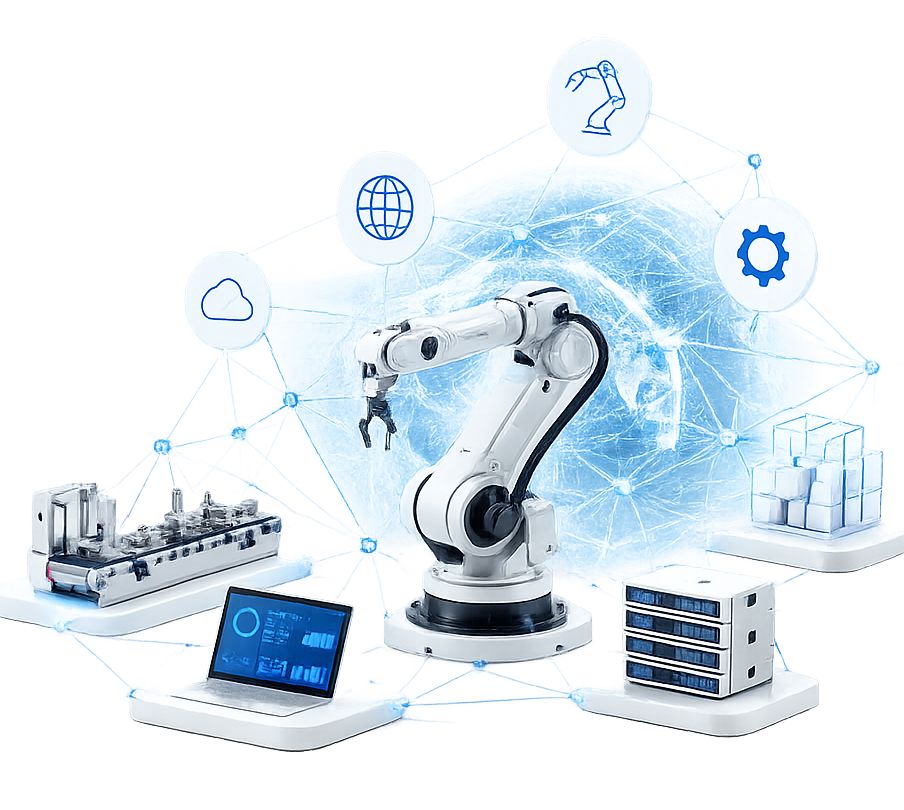
Would you like to learn more about how NexaRob can help you effectively leverage the capabilities of robots such as NEO Beta in your company? Contact us, and we will prepare solutions tailored to your needs and business goals!
Automate Your Business with NexaRob - Contact Us!
Join NexaRob and Together Let's Develop Humanoid Robotics
Do you want to become our Partner?
NexaRob is actively seeking new areas and opportunities for development in humanoid robotics. We collaborate with manufacturers, integrators, AI companies, and research institutions to jointly design and implement groundbreaking technologies. We believe that only through strong partnerships can we meet the challenges of the future and introduce truly innovative solutions to the market.

United States

China

Japan

Germany

India

United Kingdom

France

Italy

Canada

South Korea

Brazil

Australia

Spain

Mexico

Indonesia

Netherlands

Saudi Arabia

Turkey

Switzerland

Taiwan

Poland

Sweden

Belgium

Thailand

Ireland

Austria

Norway

Israel

United Arab Emirates

Argentina

South Africa

Denmark

Philippines

Singapore

Malaysia

Colombia

Bangladesh

Egypt

Chile

Finland

Vietnam

Portugal

Czech Republic

Romania

New Zealand

Peru

Greece

Ukraine

Slovakia

Hungary

Slovenia

Croatia

Serbia

Bulgaria

Estonia

Latvia

Lithuania

Iceland

Luxembourg

Malta

Cyprus

Morocco

Algeria

Tunisia

Nigeria

Kenya

Ethiopia

Ghana

Tanzania

Uganda

Angola

Senegal

Qatar

Kuwait

Oman

Pakistan

Sri Lanka

Nepal

Kazakhstan

Uzbekistan

Mongolia

Russia

Cambodia

Myanmar

Laos

Fiji

Papua New Guinea

Venezuela

Ecuador

Uruguay

Paraguay

Bolivia

Costa Rica

Panama

Dominican Republic

Guatemala

Cuba

Jordan

Lebanon

Iran
Additional countries in Europe
These countries are hidden in readable mode so that the map is not cluttered. Click on a country to open contact information, email, and a description of the area of cooperation.
Additional countries in Asia
These countries are hidden in readable mode so that the map is not cluttered. Click on a country to open contact information, email, and a description of the area of cooperation.
Additional countries in the Americas
These countries are hidden in readable mode so that the map is not cluttered. Click on a country to open contact information, email, and a description of the area of cooperation.
Additional countries in Africa
These countries are hidden in readable mode so that the map is not cluttered. Click on a country to open contact information, email, and a description of the area of cooperation.
Additional countries in Oceania
These countries are hidden in readable mode so that the map is not cluttered. Click on a country to open contact information, email, and a description of the area of cooperation.
Albania
Andorra
Belarus
Bosnia and Herzegovina
Montenegro
Liechtenstein
North Macedonia
Monaco
Moldova
San Marino
Afghanistan
Armenia
Azerbaijan
Bahrain
Bhutan
Brunei
Georgia
Iraq
Yemen
Kyrgyzstan
North Korea
Maldives
Syria
Tajikistan
East Timor
Turkmenistan
Antigua and Barbuda
Bahamas
Barbados
Belize
Dominica
Grenada
Guyana
Haiti
Honduras
Jamaica
Nicaragua
Saint Kitts and Nevis
Saint Lucia
Saint Vincent and the Grenadines
El Salvador
Suriname
Trinidad and Tobago
Benin
Botswana
Burkina Faso
Burundi
Cape Verde
Chad
Democratic Republic of the Congo
Djibouti
Eritrea
Eswatini
Gabon
Gambia
Guinea
Guinea-Bissau
Equatorial Guinea
Cameroon
Comoros
Congo
Lesotho
Liberia
Libya
Madagascar
Malawi
Mali
Mauritania
Mauritius
Mozambique
Namibia
Niger
Central African Republic
Rwanda
Seychelles
Sierra Leone
Somalia
Sudan
South Sudan
Togo
Ivory Coast
Sao Tome and Principe
Zambia
Zimbabwe
Kiribati
Micronesia
Nauru
Palau
Samoa
Tonga
Tuvalu
Vanuatu
Marshall Islands
Solomon Islands
Why Is It Worth Cooperating with NexaRob?
Joint Investments in Innovation
We create projects that bring together experts from various fields. This allows us to develop advanced solutions, increasing the competitiveness of our partners and delivering real value to end customers.
Synergy of Knowledge and Experience
Each partner brings unique expertise. Together, we create products and services that meet diverse needs - from the industrial sector, through medicine and education, to service industries.
Global Network of Contacts and New Markets
NexaRob facilitates access to customers around the world. We support our partners in expanding their reach and adapting projects to the requirements of local markets, standards, and regulations.
We are Looking for Partners in the Following Areas:
- Production and Distribution of Humanoid Robots Are you a manufacturer or distributor of models such as NEO Beta? We are open to collaboration to jointly develop solutions and offer them to a wide customer base.
- AI and IoT Technologies Do you offer data analysis systems, intelligent sensors, or machine learning algorithms? Together, we can combine our strengths and enrich humanoid robots with even more advanced features.
- Logistics and Automation Solutions If you design industrial automation, transportation, or warehousing systems, joint implementations involving humanoid robots will allow you to offer unique, future-proof services.
Let's Join Forces
Contact us to learn more about collaboration opportunities. Together, we can give a new dimension to the development of humanoid robotics, creating a future in which innovation becomes accessible to a wide range of users!
Interesting facts from around the world
GAM: a new basic model for robotic manipulation in industry.
Amazon introduced the Generalized Action Model (GAM) - an advanced foundational model for robotic manipulation, which
Fraunhofer IPA presents robotics for the circular economy at the European Parliament
On September 2, 2026, the Fraunhofer Institute for Manufacturing Engineering and Automation IPA (IPA)
A new method helps people predict errors in self-driving cars
Researchers from MIT and Motional have developed a system that allows people to predict errors in self-driving cars.
How intelligent memory coding can save energy in autonomous vehicles
A new method called MotiMem-Omega can reduce energy consumption in the memory interface of an autonomous vehicle by
KEENON unveiled the KOM 3.0 at WRC 2026: robots think before they act
At the World Robot Conference 2026, KEENON Robotics presented KOM 3.0 - a new generation of AI architecture,