

Humanoid Robot Iron
The future of humanoid robotics
Advanced artificial intelligence in action
Iron - Precision and agility of movement
Modern technology from XPeng
Next-generation humanoid robot
Iron - Versatility in applications
Iron is a humanoid robot from XPeng, measuring 178 cm and weighing 70 kg. Thanks to its 60 joints and 200 degrees of freedom, it can precisely mimic human movements. Using AI and autonomous vehicle technology from XPeng, it finds application in factories and retail outlets, supporting automated processes.
Contact us Watch the videoIron - Xpeng
Humanoid Robot Iron
The Iron robot is a humanoid project developed by Xpeng, primarily known for producing electric vehicles and innovative solutions in the field of modern mobility. In 2025, Xpeng will leverage its experience in advanced engineering and artificial intelligence to develop a humanoid robot that provides effective support in environments typically designed for humans - such as offices, receptions, warehouses, and service areas.
The Iron robot features a lightweight, balanced design based on efficient electric actuators and advanced motion stabilization systems, allowing it to navigate stairs, move through narrow corridors, and perform basic manipulation tasks. Xpeng also places great emphasis on the safety and interoperability of its systems - open programming interfaces (APIs) are planned, enabling integration of the robot with advanced AI systems and cloud services.
The Robot Iron project is intended for practical application. is used in light logistics tasks, customer service, and the education sector. Current pilot tests conducted in 2024 and further development planned for 2025 confirm that Robot Iron is a platform ready for adaptation and integration in a rapidly changing business and educational environment.
History and Development
History of the Humanoid Robot Iron
Xpeng, known in the automotive industry for producing electric vehicles and driver assistance systems, decided to expand its competencies into the humanoid robotics sector. The Iron robot is one of the company's first projects in this field, aimed at introducing innovative automation solutions to everyday work and service environments.
Expanding on Experience with Electric Vehicles and AI
- Xpeng has started working on technologies that support human-machine interaction, creating algorithms to assist in vehicles, such as object recognition, image analysis, and trajectory planning systems. These solutions, developed and improved between 2019 and 2021, became the foundation for the Iron Robot project, where safe and effective collaboration with humans is key.
- In 2021, the company announced its intention to create a humanoid robot, using experience in actuator control and advanced AI algorithms developed in the e-mobility industry.
Official Presentation of Iron and Further Development Plans
- In 2022, Xpeng presented the Iron Robot prototype at the World Robotics Conference in Beijing, demonstrating basic humanoid capabilities such as walking, bending down to pick up objects, and carrying them. The presentations also highlighted planned communication functions and the possibility of cloud integration.
- In subsequent years, the project’s development progressed rapidly. Updates in 2025 confirmed that the Iron Robot had been equipped with more advanced AI features. m.in- speech recognition and 3D environment analysis, as well as improved battery performance and manipulators, enabling the handling of objects with greater mass.
Xpeng plans to further expand the functionality of the Robot Iron, which will enable its widespread deployment in the service sector, light logistics, and education. Thanks to its modular design and continuous software updates, the Iron Robot is intended to become a universal humanoid platform capable of safe and effective collaboration with people in everyday work environments.
Technical Specifications
Technical Specification of the Iron Humanoid Robot
Below I present a detailed technical specification of the Iron humanoid robot, developed by XPENG.
| Parameter | Value | Notes |
|---|---|---|
| Height | 178 cm | Similar to the height of an average person. |
| Weight | 70 kg | Suitable for the robot's stability and mobility. |
| Number of joints | Over 60 | Enables complex and precise movements. |
| Degrees of freedom | 200 | Provides a wide range of movements and gestures. |
| AI system | Proprietary 40-core Turing AI chip | Enables advanced data processing and decision making. |
| Application | Assembly work in factories, customer service in stores, potentially in offices and homes | Versatility in various work environments. |
Iron is an advanced humanoid robot developed by XPENG, which aims to provide support in various sectors through the automation of manual tasks. Thanks to its advanced design, integration with artificial intelligence systems, and ability to perform precise manipulation, Iron is a promising solution for companies looking for modern technologies that support operational efficiency.
Xpeng
Applications and Examples of Use
Xpeng is focusing on the versatile capabilities of the Iron Robot, which, thanks to its bipedal mobility and basic manipulation functions, finds applications in the service, logistics, and education sectors. Current data from 2025 confirms that the Iron Robot performs well where traditional solutions, such as AGV carts, have limitations in navigating human-centric environments.
Customer Service and Reception.
Greeting Guests and Providing Information: The Iron Robot can serve as a reception assistant in hotels, shopping centers, and offices, registering guests, providing basic information about the offer, and directing them to the appropriate service points.
Distributing Materials: Thanks to its built-in manipulators, the robot can support the distribution of leaflets, brochures, and other informational materials during conferences and events.
Light Logistics and Warehouse Tasks
Transport of Small Loads: The bipedal design allows the Iron Robot to carry small packages and items, even in places with non-standard architecture - for example, near stairs or in narrow passages, where traditional wheeled robots struggle.
Integration with WMS Systems: Planned integration with warehouse management systems enables automatic retrieval of transport orders and real-time reporting of progress, which streamlines logistics operations.
Education and Research Projects
R&D Platform: Thanks to its open API interface, the Iron Robot is an attractive research platform for universities and laboratories, allowing students and scientists to test AI algorithms, motion control systems, and human-robot interaction in environments close to reality.
Trade Shows and Conferences: The humanoid attracts attention at educational and industry events, where it can demonstrate modern technologies and inspire further research.
Support in Offices and Service Facilities
Internal Support: The Iron Robot can function as an internal courier, transporting documents, files, and small packages between departments or floors, which helps to improve daily work.
Representative Tasks: In conference centers and showrooms, the humanoid can present the company's offer, indicate locations, or provide basic information, strengthening the organization's modern image.
Integration Projects and Functionality Expansion
Software Updates: Thanks to its open architecture, the Iron Robot receives updates from the cloud, which expands its AI capabilities and improves control algorithms, enabling continuous development of the robot's functions.
Development of Manipulators: Xpeng plans to further improve the manipulators, increasing their lifting capacity and gripper precision, which will allow for the performance of more complex manual tasks.
In each of these scenarios Xpeng it assumes that the Robot Iron will support employees in performing routine and time-consuming tasks, enabling more efficient use of human resources and improving operational efficiency in office, service, and logistics environments. Further technological development, including improvements to batteries, manipulators, and AI functions, aims to significantly expand the range of tasks in which the Iron Robot can be used.
Technology and Innovation, Safety
Iron
The Iron Robot, developed by Xpeng, is designed to effectively combine advanced bipedal mechanics with artificial intelligence elements to ensure stable and safe operation in office and service environments. Updates in 2025 confirm that the project has been optimized for operational efficiency and user safety. The following presents key technological issues and the manufacturer's approach to ensuring safety:
Bipedal Drive and Stabilization
- Electric Actuators: The Iron Robot uses lightweight yet efficient actuators placed in the hip, knee, and torso joints. This solution enables smooth walking, effective maneuvering in tight corridors, and overcoming stairs and ramps.
- Dynamic Balance Algorithms: The built-in system constantly analyzes data from accelerometers, gyroscopes, and depth cameras, dynamically correcting the trajectory of movement, which ensures stable steps even in changing environmental conditions.
Manipulators and Grippers
- Light Duty Arms: In its current version, the Iron Robot handles objects with a small mass (usually up to a few kilograms), which is sufficient for performing basic tasks such as opening doors, moving documents, or minor logistics tasks.
- Planned Expansion: Xpeng plans to introduce various types of grippers equipped with pressure sensors, which will allow for more precise manipulation of delicate objects in future versions of the robot.
Artificial Intelligence Algorithms
- Object Recognition: Thanks to the use of cameras and machine learning algorithms, the Iron Robot can detect obstacles, identify objects, and plan an optimal route.
- Voice Communication (Planned): Xpeng is working on implementing voice command recognition modules, which will allow the robot to perform simple interactions with users, especially in reception environments.
Safe Coexistence with Humans
- Force Limiters and Collision Detection: Special mechanisms and software automatically reduce the torque in the joints when contact with a human occurs, and the obstacle detection system allows for quick stopping of limb movement, minimizing the risk of injury.
- E-Stop Button: A standard emergency stop button enables the operator to immediately shut down the robot's drives in critical situations, which further increases the level of safety.
Thanks to these solutions, the Robot Iron It not only achieves high operational efficiency but also ensures a high standard of safety, making it an ideal tool for working in human-designed environments.
MenteeBot
Integration and Compatibility, Personalization and Customization of Solutions
Xpeng is developing the Iron Robot in such a way that it can easily work with existing IT infrastructure and be adapted to various applications - from light logistics tasks, through customer service, to educational projects. Current solutions in 2025 confirm that the project is based on an open architecture, which enables rapid integration and flexible adaptation in dynamic market conditions. Below are the main assumptions regarding integration and personalization options:
Open Programming Interface (API)
- Developer Tools: Xpeng plans to provide a comprehensive development environment, including documentation and libraries, which will enable the creation of dedicated applications for controlling robot movement, defining task sequences, and integrating with external AI services, such as image or speech recognition in the cloud.
- Flexible Updates: The Iron Robot can receive regular software updates over the network, which allows for continuous improvement of control algorithms and AI functions without the need to replace hardware.
Connectivity and IT Systems
- Wi-Fi, Ethernet: The robot is equipped with standard communication methods, which facilitates remote monitoring, automatic updates, and ongoing management of device operation in real time.
- Integration with WMS/ERP: Xpeng plans for the Robot Iron to receive orders from warehouse and enterprise management systems, enabling automated task execution in office and warehouse environments.
Gripper and Sensor Configuration
- Upper Limb Variants: The Robot Iron can be adapted to specific work scenarios - for example, equipped with manipulators of varying degrees of precision, which allows for more effective transfer of objects, from small packages to documents.
- Extended Sensors: Xpeng is considering the implementation of various types of sensors, including depth cameras, thermal imaging cameras and ultrasonic sensors, depending on the specifics of the environment and customer expectations.
Housing Personalization
- Branding and Color Scheme: Depending on the needs, the customer can order a robot with specific housing colors and logos, which is especially important in service and marketing applications, emphasizing the modern image of the company.
- Interactive Panels: Optionally, the Robot Iron can be equipped with a touch panel (e.g., in the chest area), enabling the presentation of information and interaction with users, which increases functionality at service points.
Pilot Projects and Partnerships
- Testing in Real-World Conditions: Xpeng plans to cooperate with companies and institutions that want to test the robot's operation in real operating environments. Such projects allow for collecting feedback and continuously improving the functionality of the Robot Iron.
- Educational and Research Versions: The Robot Iron can be offered in configurations specifically adapted for universities and laboratories, enabling research on AI algorithms and bipedal motion control.
Thanks to these solutions, the Robot Iron It has the potential to be easily integrated with existing IT systems and adapted to the specific requirements of each organization. This approach enables versatile implementations - from service and logistics applications to educational projects - supporting effective collaboration with personnel with minimal infrastructure adaptation costs.
Iron
Benefits for Customers
The Iron robot, developed by Xpeng, has the potential to significantly improve daily processes in various environments - from services and light warehouse tasks to education and research projects. Current data from 2025 confirms that thanks to its bipedal design and advanced manipulation functions, the Iron robot is becoming a valuable support for staff, increasing efficiency and improving the attractiveness of workplaces and customer service.
Time and Resource Savings
- The Iron robot takes over routine, repetitive tasks such as moving documents, small packages or basic products in warehouses, allowing employees to focus on tasks that require creativity and specialized skills.
- Bipedal mobility allows the robot to work in standard conditions without the need for costly infrastructure modifications, as it copes well with navigating stairs, narrow corridors and other spaces typical of offices and service facilities.
Improved Customer Service
- In reception areas, hotels and service points, the Iron robot can act as an assistant, welcoming guests, providing basic information and directing them to the appropriate departments, which relieves staff and enhances the company's modern image.
- Planned speech recognition functions will enable the robot to conduct simple voice interactions, further improving customer service and increasing the attractiveness of public spaces.
Integration with IT Systems
- The open API interface and Wi-Fi and Ethernet connectivity allow for seamless integration of the Iron robot with existing management systems, such as WMS or ERP.
- Thanks to this, the humanoid can receive orders in real time, report progress and automatically adapt to changes in the task schedule, which contributes to the optimization of operational processes.
Educational Platform and R&D
- The Iron robot is an excellent research platform for universities and laboratories, enabling students and scientists to test AI algorithms, control systems and human-robot interaction in conditions close to reality.
- Its presence at technology conferences and workshops attracts the attention of the media and participants, promoting innovative solutions in robotics and artificial intelligence.
Safe Coexistence with Humans
- The Iron robot is equipped with advanced safety mechanisms, such as force limiters in the joints, collision detection systems, and an emergency stop button (E-Stop), which allows for immediate shutdown of the drives in critical situations.
- Rapid braking upon detecting unexpected resistance minimizes the risk of injury and ensures safe collaboration with personnel.
Thanks to these solutions, the implementation of the Robot Iron It enables significant optimization of operational processes, improves customer service, and increases work efficiency in office, service, and warehouse environments. Current development efforts in 2025 focus on further improving manipulation functions, extending battery life, and developing communication capabilities, making the Iron robot an increasingly versatile support tool for businesses.
FAQ - 9 frequently asked questions
Humanoid Robot Iron
Below, we present brief answers to frequently asked questions about the Iron robot. If you have any additional questions or would like to implement a humanoid in your company, please contact us and refer to the full FAQ section.
Currently, Xpeng is conducting pilot projects and prototype testing. Widespread commercial deployment will be possible after the completion of the development phase and refinement of the design based on feedback from the tests.
The manufacturer does not publish official price lists. The final cost depends on the selected configuration - for example, the version of manipulators, AI software, and support package - as well as the scale of the order.
Prototype data indicates several hours of active operation, although the actual operating time depends on the intensity of the tasks performed (e.g., frequency of moving objects, walking intensity). Xpeng announces further optimizations in energy management to extend operating time.
The current design of the Iron robot's manipulators is designed for lifting light objects, typically weighing a few kilograms. In future iterations, it will be possible to increase the lifting capacity, depending on Xpeng's development priorities.
Xpeng plans to offer various customization options, including the ability to customize the housing (e.g., change colors, place a logo) and install interactive touch panels, which will allow for branding and adapting the robot's appearance to specific customer requirements.
Initially, the main focus is on recognizing speech in Chinese and English. Subsequent iterations will expand communication capabilities, enabling more advanced conversations in different languages, depending on the available AI services in the cloud.
The Iron robot is equipped with torque limiters in the joints and a collision detection system that automatically reacts to contact with a person, reducing the risk of damage. In addition, a standard emergency stop button (E-Stop) allows for immediate shutdown of the drives in critical situations. Operators should, however, follow basic safety procedures.
Yes, an open API is planned that will allow the Iron robot to receive tasks from WMS/ERP systems and automatically report task completion, which is crucial in light logistics applications.
The current design is primarily intended for use in indoor environments such as offices, warehouses, and stores. The robot is not adapted to work in extreme weather conditions or on very uneven surfaces.

More questions?
If you would like to learn more about humanoid robots, we invite you to browse our complete FAQ section. You will find additional questions, detailed instructions, and helpful tips there.
Why NexaRob?
Your Trusted Partner in the Field of Humanoid Robotics - Knowledge, Passion, and Innovation
NexaRob actively follows projects such as MenteeBot to offer comprehensive support to companies and institutions in implementing innovative humanoids. Our mission is to provide solutions ready to streamline daily processes, from services to education and light logistics. We are convinced that humanoid robots - such as MenteeBot - have great potential, provided they are properly adapted and integrated into the work environment.
- Expertise in Humanoid Robotics NexaRob collaborates with various manufacturers and R&D centers, which allows us to recommend the best options, taking into account the specifics of the industry or the size of the company. We analyze the humanoid market in order to select those that actually translate into benefits for customers.
- Individual Approach to Projects We start by identifying your needs and infrastructure capabilities in order to create a personalized robot implementation plan. Based on this, we adapt the hardware configuration, integration with IT systems, and work scenarios.
- Implementation Support and Service NexaRob supports the client not only in choosing a solution but also in the process of installing and launching the humanoid. We conduct team training, provide assistance in servicing the robot, and advise on daily operation.
- Innovation and Further Development We are up to date with trends in AI and mechatronics, which allows us to provide customers with access to the latest technological advances. We regularly expand our range of services, supporting companies in future-oriented investments in humanoid robotics.
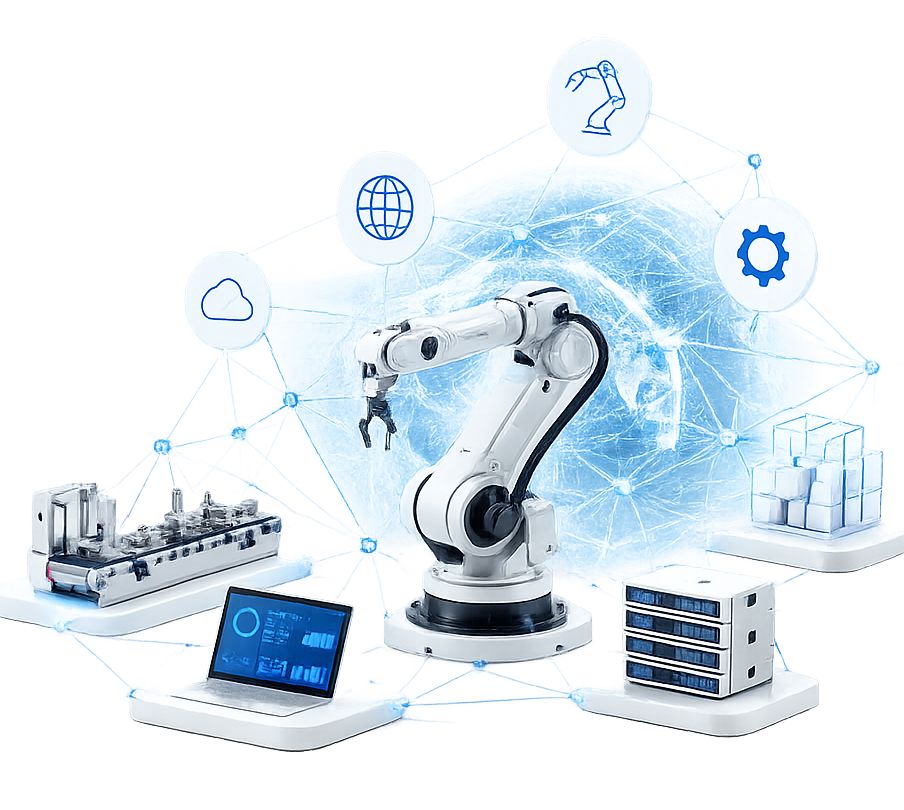
Do you have questions about implementing a robot such as MenteeBot in your business? Contact NexaRob. We will show you how humanoids can support your processes, increase efficiency and improve customer service. Thanks to our experience, we will guide you through the entire process - from needs analysis to the successive development of robot functions.
Automate Your Business with NexaRob - Contact Us!
Join NexaRob and Together Let's Develop Humanoid Robotics
Do you want to become our Partner?
NexaRob is constantly looking for partners and clients who want to expand automation capabilities in their organizations. We believe that robots such as MenteeBot contribute to improving the quality of services, making it easier for staff to work and creating an innovative image of the company.

United States

China

Japan

Germany

India

United Kingdom

France

Italy

Canada

South Korea

Brazil

Australia

Spain

Mexico

Indonesia

Netherlands

Saudi Arabia

Turkey

Switzerland

Taiwan

Poland

Sweden

Belgium

Thailand

Ireland

Austria

Norway

Israel

United Arab Emirates

Argentina

South Africa

Denmark

Philippines

Singapore

Malaysia

Colombia

Bangladesh

Egypt

Chile

Finland

Vietnam

Portugal

Czech Republic

Romania

New Zealand

Peru

Greece

Ukraine

Slovakia

Hungary

Slovenia

Croatia

Serbia

Bulgaria

Estonia

Latvia

Lithuania

Iceland

Luxembourg

Malta

Cyprus

Morocco

Algeria

Tunisia

Nigeria

Kenya

Ethiopia

Ghana

Tanzania

Uganda

Angola

Senegal

Qatar

Kuwait

Oman

Pakistan

Sri Lanka

Nepal

Kazakhstan

Uzbekistan

Mongolia

Russia

Cambodia

Myanmar

Laos

Fiji

Papua New Guinea

Venezuela

Ecuador

Uruguay

Paraguay

Bolivia

Costa Rica

Panama

Dominican Republic

Guatemala

Cuba

Jordan

Lebanon

Iran
Additional countries in Europe
These countries are hidden in readable mode so that the map is not cluttered. Click on a country to open contact information, email, and a description of the area of cooperation.
Additional countries in Asia
These countries are hidden in readable mode so that the map is not cluttered. Click on a country to open contact information, email, and a description of the area of cooperation.
Additional countries in the Americas
These countries are hidden in readable mode so that the map is not cluttered. Click on a country to open contact information, email, and a description of the area of cooperation.
Additional countries in Africa
These countries are hidden in readable mode so that the map is not cluttered. Click on a country to open contact information, email, and a description of the area of cooperation.
Additional countries in Oceania
These countries are hidden in readable mode so that the map is not cluttered. Click on a country to open contact information, email, and a description of the area of cooperation.
Albania
Andorra
Belarus
Bosnia and Herzegovina
Montenegro
Liechtenstein
North Macedonia
Monaco
Moldova
San Marino
Afghanistan
Armenia
Azerbaijan
Bahrain
Bhutan
Brunei
Georgia
Iraq
Yemen
Kyrgyzstan
North Korea
Maldives
Syria
Tajikistan
East Timor
Turkmenistan
Antigua and Barbuda
Bahamas
Barbados
Belize
Dominica
Grenada
Guyana
Haiti
Honduras
Jamaica
Nicaragua
Saint Kitts and Nevis
Saint Lucia
Saint Vincent and the Grenadines
El Salvador
Suriname
Trinidad and Tobago
Benin
Botswana
Burkina Faso
Burundi
Cape Verde
Chad
Democratic Republic of the Congo
Djibouti
Eritrea
Eswatini
Gabon
Gambia
Guinea
Guinea-Bissau
Equatorial Guinea
Cameroon
Comoros
Congo
Lesotho
Liberia
Libya
Madagascar
Malawi
Mali
Mauritania
Mauritius
Mozambique
Namibia
Niger
Central African Republic
Rwanda
Seychelles
Sierra Leone
Somalia
Sudan
South Sudan
Togo
Ivory Coast
Sao Tome and Principe
Zambia
Zimbabwe
Kiribati
Micronesia
Nauru
Palau
Samoa
Tonga
Tuvalu
Vanuatu
Marshall Islands
Solomon Islands
Why Partner with NexaRob?
Joint Investments in Innovation
NexaRob combines capital and knowledge resources to deliver projects that truly change the way a company operates in the service, education, or logistics sector by introducing humanoids into daily work.
Synergy of Competencies
Our team is a combination of AI specialists, mechanical engineers, and IT integration experts. This allows us to prepare humanoid implementation projects from A to Z - taking into account safety and full functionality.
Global Perspectives
We cooperate with customers and manufacturers in various parts of the world, which translates into ease of adapting robots to different markets and requirements. We provide support in scaling projects and after-sales service.
We are Looking for Partners in the Following Areas:
- Production and Distribution of Humanoid Robots Together with manufacturers such as Mentee, we develop turnkey offers - from hardware and software to implementation support and service.
- AI and IoT Technologies The combination of artificial intelligence systems with humanoids opens the way for autonomous customer service scenarios, work in warehouses or education, with an unprecedented level of capabilities.
- Automation and Logistics Systems Humanoid robots, combined with classic automation (e.g., AGV carts, conveyor belts), can improve the supply chain and procurement processes, especially where mobility and object manipulation are needed.
Let's Join Forces
If you are interested in cooperating with NexaRob, want to implement MenteeBot or another humanoid in your work environment, we encourage you to contact us. Together we will develop a plan for introducing the robot, ensure proper integration with IT systems and train your team so that the entire process runs smoothly and without problems. We focus on innovation and sustainable implementations that actually support people in their daily tasks.
Interesting facts from around the world
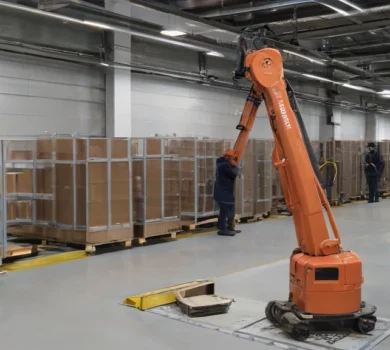
GAM: a new basic model for robotic manipulation in industry.
Amazon introduced the Generalized Action Model (GAM) - an advanced foundational model for robotic manipulation, which
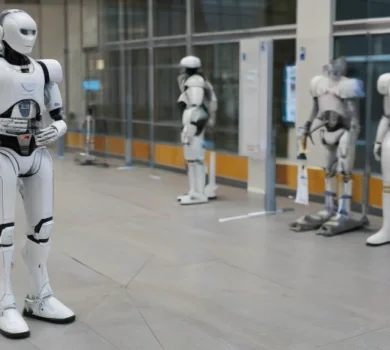
Fraunhofer IPA presents robotics for the circular economy at the European Parliament
On September 2, 2026, the Fraunhofer Institute for Manufacturing Engineering and Automation IPA (IPA)
A new method helps people predict errors in self-driving cars
Researchers from MIT and Motional have developed a system that allows people to predict errors in self-driving cars.
How intelligent memory coding can save energy in autonomous vehicles
A new method called MotiMem-Omega can reduce energy consumption in the memory interface of an autonomous vehicle by
KEENON unveiled the KOM 3.0 at WRC 2026: robots think before they act
At the World Robot Conference 2026, KEENON Robotics presented KOM 3.0 - a new generation of AI architecture,