

Humanoid Robot Atlas
Atlas - Master of Mobility!
Atlas - Strength and Precision in Motion
The future of humanoid robotics
Atlas - Unmatched Agility and Balance
A robot that overcomes every obstacle
Atlas - Your support in extreme conditions
Atlas - An advanced humanoid robot designed to perform dynamic and complex tasks. Thanks to its exceptional agility and precision, it can overcome obstacles while maintaining balance even in the most difficult conditions. Discover the future of mobility with Atlas!
Contact us Watch the videoAtlas - Boston Dynamics.
Humanoid Robot Atlas
Atlas is a bipedal humanoid robot developed by the American company Boston Dynamics. Its design and software were created with advanced mobility, durability, and the ability to maintain balance in difficult conditions in mind. The robot can move in varied terrain, perform complex maneuvers - such as jumps and rotations in the air - and even independently correct its posture after losing balance. In the robotics industry, Atlas is considered one of the most advanced achievements, combining experience from industry, military research, and academic collaboration.
History and Development
History of the Humanoid Robot Atlas
From the very beginning of work on Atlas, the Boston Dynamics team set out to overcome the limitations of traditional mobile robotics. The inspiration came from earlier company projects focusing on walking robots and testing extreme mobility in terrain. Below are the most important stages of development and events that shaped this unique project.
Genesis in DARPA and First Steps (2012-2013)
- DARPA Robotics Challenge Context: Boston Dynamics has begun work on Atlas. for the DARPA Robotics Challenge, which aimed to create robots capable of operating in natural disaster and industrial accident scenarios.
- First Prototype: The initial version of the robot was largely based on experience from the BigDog and PETMAN projects. In 2013, a prototype equipped with a hydraulic drive system was publicly presented, allowing the robot to maintain balance and perform basic bipedal movements.
First demonstrations of agility and further modifications (2014-2015)
- Tests in difficult terrain: In subsequent development phases, Atlas learned to move on unpaved surfaces, stairs, rubble, and slippery ground. The mechanical structure was also reinforced so that the robot could withstand falls and impacts during experiments.
- Improved energy efficiency: The Boston Dynamics team focused on optimizing hydraulic flow and improving control so that the robot could operate for longer periods away from a constant power source.
New generation and breakthrough in mobility (2016-2017)
- Compact design: In 2016, an upgraded version of Atlas was shown with a more streamlined body and improved sensor system. By reducing weight, the robot became more agile and performed better in confined spaces.
- Demonstrations of dynamic movements: A video showing Atlas lifting boxes, walking on snow, and getting up on its own after falling became a hit online. The robot gained notoriety as an almost "indestructible" machine capable of maintaining balance in difficult conditions.
Evolution of artificial intelligence and control algorithms (2018-2019)
- Advanced motion planning tools: In the next phase of work, Boston Dynamics focused on developing real-time step planning algorithms. This allowed Atlas to adapt more quickly to unexpected changes in its environment.
- Integration of machine learning: Machine learning elements have been introduced, allowing the robot to better “understand” its own state. m.in- weight distribution, limb positioning - and react immediately to changes in the environment.
Parkour demonstrations and increasing freedom of movement (2019-2021)
- Jumps, runs, and spins: Videos of Atlas running through obstacle courses, performing synchronized jumps, and even backflips have gained popularity online. These demonstrations highlighted the remarkable combination of stabilization, speed, and precision in its movements.
- Controversy and Awe: Although the robot's impressive achievements garnered applause, discussions also arose regarding potential military applications and the risks associated with such advanced robotics.
Commercial Collaboration and Growing Capabilities (since 2021)
- New Market Segments: Boston Dynamics began exploring broader commercialization paths, such as in logistics or the entertainment industry. Although Atlas remains primarily a research platform, some of its technologies are being incorporated into other company products (e.g., the Spot robot).
- Latest Improvements: Recent demonstrations show Atlas carrying objects in complex scenarios (obstacle courses, different shelf heights). Improved algorithms allow it to recognize and manipulate objects in a way that is more similar to human behavior.
Currently Atlas is one of the most advanced humanoid robots in the world, while remaining a platform for continuous experimentation, testing, and iteration. Boston Dynamics is focusing on further developing software and algorithms to enable the robot to perform an ever-wider range of tasks in a dynamically changing environment. Through intensive research and engineering work, Atlas's successes inspire the entire robotics sector, demonstrating that the future of walking machines is rapidly approaching.
Technical Specifications
Technical Specification of the Humanoid Robot Atlas
The following information is based on official materials from the manufacturer, Boston Dynamics, as well as other available sources. Atlas is an advanced humanoid robot designed to explore the potential of a humanoid form in real-world applications.
| Parameter | Value | Notes |
|---|---|---|
| Height | 150 cm | Similar to the height of an average person. |
| Weight | 80 kg | Lightweight design that facilitates movement. |
| Power supply | Electric | The fully electric drive ensures quiet and efficient operation. |
| Drive system | Hydraulic | Hydraulic actuators enable dynamic and precise movements. |
| Degrees of freedom (DOF) | 28 | Enables smooth and complex movements. |
| Maximum movement speed | 5.4 km/h | Corresponds to a relaxed walking pace. |
| Movement capabilities | Running, jumping, performing somersaults, parkour | Advanced stabilization and motion control algorithms. |
| Sensors | Lidar, stereo cameras | Enable perception of the environment and navigation in difficult terrain. |
| Control system | Advanced control algorithms | Enable dynamic stabilization and adaptation to changing environments. |
| Application | Research on robotics, testing new technologies | A research platform for developing advanced robotic systems. |
Atlas is an advanced humanoid robot developed by Boston Dynamics, serving as a research platform to explore the potential of humanoid form in real-world applications. Thanks to its advanced design, 28 degrees of freedom and integration with modern control systems, Atlas it is capable of performing complex and dynamic movements, such as running, jumping or parkour. Its capabilities also include advanced perception of the environment through the use of Lidar sensors and stereo cameras, making it a versatile tool in robotics research and the development of new technologies.
Atlas
Applications and Examples of Use
Although Atlas primarily serves as a research and development platform, its extraordinary capabilities have generated interest in many industries. Below we present selected areas where the robot may find application - now or in the future.
Rescue operations and crisis response
- The robot's agility allows it to move in difficult conditions (e.g., rubble, flooded areas) where traditional equipment might have problems.
- The ability to lift objects and open doors can support search and rescue operations or provide safe access for rescuers.
Scientific research and technology development
- Atlas serves as a testing ground in the field of bipedal locomotion, hydraulic control and machine learning algorithms.
- The results of research on movement mechanics and stabilization can be transferred to other projects, including quadruped robots or industrial cobots.
Demonstrations and events
- Widely commented videos of the robot performing jumps and somersaults have become an inspiration for technology demonstrations and industry trade shows.
- Atlas can serve as an attraction that attracts attention during conferences and events dedicated to the future of robotics.
Military and security industry
- The ability to adapt to different terrains and dynamic stabilization may prove valuable in tasks
related to detection or evacuation in hazardous areas.
- However, its potential use in missions is limited by battery life and the need for frequent maintenance.
Logistics and warehousing
- Although mainly in the research phase, the robot could assist in transporting loads in hard-to-reach places or support order picking processes in warehouses with unusual spatial layouts.
- The development of more precise grippers and greater effectiveness in object recognition may expand the scope of these applications in the future.
Work at heights and in hard-to-reach places
- The ability to balance and maintain equilibrium can be useful for maintenance tasks (e.g., on steel structures, in places with difficult access).
- However, this would require further improvements in the area of manipulators and safety systems.
Atlas, thanks to its durability and ability to perform advanced maneuvers, opens up new possibilities in the field of mobile robotics. Even if it currently functions mainly as a research platform, work on it is accelerating the development of technologies that may become widely available in the future - both in industry and in everyday life.
Technology and Innovation, Safety
Atlas
Atlas has become a symbol of advanced humanoid robotics, not only thanks to its impressive movement capabilities, but also due to the thoughtful application of innovative solutions in the field of control and design. Below are the key technological elements and the approach to safety issues.
Next-Generation Hydraulic System
- The robot is equipped with hydraulic actuators with a very fast response time, which enables instantaneous adjustment of force in individual joints.
- Proper cooling and control valves guarantee stable operation even under intense load, e.g., during running or jumping.
Advanced Control and Motion Planning Algorithms
- Boston Dynamics has developed software that allows the robot to predict the effects of movement and correct its posture in real time.
- Artificial intelligence supports step planning and environmental analysis to avoid obstacles and maintain balance on unpredictable terrain.
Maximum Stability and Dynamic Balance
- Great attention was paid to the distribution of mass and the specifics of limb contact with the ground. The robot can stay on slippery or uneven surfaces, compensating for loss of grip.
- The automatic balance recovery function allows Atlas not only to survive strong pushes, but also to efficiently return to its previous position.
Construction and Environmental Safety Measures
- Mechanical reinforcements protect the most important elements from damage in case of a fall or collision with an obstacle.
- The manufacturer has introduced limitations on the maximum force and speed of the limbs, which reduces the risk of accidents during direct contact with people.
Collision Detection and Emergency Stop Systems
- Integrated sensors allow for early detection of threats and rapid response, e.g., shutting down the drive in critical situations.
- In test conditions, an E-Stop button or remote control is used to provide an additional level of safety.
Ethics and Regulations
- Loud discussions about the use of Atlas in a military context have accelerated work on legal regulations and ethical standards for advanced robotics.
- The company emphasizes that the robot is currently a research platform, and future commercial implementations will have to meet appropriate standards and safety requirements.
Used in Atlas technologies set new directions in the development of bipedal humanoid robots. At the same time, the attention paid to safety, both structural and operational, indicates the growing responsibility of designers towards users and the environment.
Atlas
Integration and Compatibility, Personalization and Customization of Solutions
Atlas largely serves as a platform for testing the latest robotics achievements. Nevertheless, the Boston Dynamics team is constantly developing integration capabilities with existing systems so that the robot can be used in various fields in the future.
Flexible Software and AI Modules
- The robot is adapted to cooperate with external algorithms for motion control and computer vision. Users can also use the built-in solutions from Boston Dynamics.
- Software updates are planned, which allows for the introduction of new features (e.g., more advanced environment recognition).
Interchangeable Manipulators and Tool End Effectors
- Although locomotion is Atlas's primary specialty, its design allows for the installation of various tool end effectors in place of the hand.
- Experimental work tests grippers that enable the transfer of objects or interaction with simple devices.
Integration with Industrial Systems and IoT
- Thanks to the open communication interface, the robot can transmit data in real time to a cloud computing system or MES/ERP system, supporting analysis and reporting.
- In the future, this model may help optimize warehouse processes, where Atlas would act as a flexible assistant.
Personalization for Research and Implementation Needs
- Universities and research institutes have the ability to modify the source code responsible for controlling individual movements. This allows for the creation of custom solutions tailored to specific scientific projects.
- Boston Dynamics offers support in mechanical engineering and integration, so users can expand the robot's capabilities (e.g., with additional cameras or sensors).
Easier Programming and Future Extensions
- The company aims to simplify the process of creating motion sequences using intuitive graphical tools and 3D simulations.
- Future updates are expected to include better energy management and more advanced learning algorithms, which may move Atlas from the area of technology demonstrations to real-world implementations.
Atlas, although originally designed as a research and demonstration tool, it is gradually opening up to possibilities in more commercial and practical areas. Thanks to its openness to integrations and ease of personalization, it can become a starting point for innovative projects in which a bipedal robot will effectively support people in demanding environments.
Atlas Robot
Benefits for Customers
Implementing such an advanced robot as Atlas can bring a number of benefits - both in the scientific and research field, and in the context of long-term development plans for a company or institution. Below we present the most important aspects that make systems like Atlas significantly support internal processes or research projects.
- Accelerated Research and Innovation - Thanks to its exceptional ability to maintain balance and operate in diverse terrain, Atlas is perfectly suited for scientific analysis and experiments. - The results of the research can be used to improve other mobile robots or industrial systems, leading to faster implementation in practice.
- Prestige and Positive Image - Having one of the most advanced humanoid robots in the world as part of its resources builds an image of the organization as an innovator open to the future. - Presentations and demonstrations of the robot's capabilities attract the attention of the media and potential business partners.
- Optimization of Processes in Specialized Industries - Although Atlas remains primarily a research platform, it is possible to partially use it in warehouses, production halls or distribution centers requiring high mobility and flexibility. - Thanks to its ability to move dynamically, the robot can support tasks in which traditional AGV carts or wheeled robots encounter limitations.
- Increased Safety Level - In rescue operations or in difficult terrain, Atlas can perform tasks that are inaccessible to traditional machines, thereby reducing human exposure to danger. - In the long term, the development of bipedal robotics may lead to safer implementation of projects in construction, mining or the energy industry.
- Development of Expert Staff - Working with such an advanced robot requires high competence in engineering, programming and data analysis. Companies and universities can therefore train highly qualified specialists ready for further technological challenges.
- Flexibility and Scalability - The robot's software enables relatively quick switching between different movement scenarios and tasks, allowing it to be adapted to the needs of a given application or project. - The development of new algorithms and the replacement of hardware modules (e.g., manipulators) allow for continuous expansion of Atlas' functionality without the need to change the entire platform.
FAQ - 9 frequently asked questions
Humanoid Robot Atlas
Below we present answers to key questions about Atlas. If you are looking for more detailed information, please visit the detailed FAQ section, where you will find additional materials and detailed instructions.
Currently, the robot remains primarily a research platform. Boston Dynamics does not conduct regular sales of Atlas, and any potential cooperation in this area requires individual discussions.
These depend on the intensity of use and whether the robot operates mainly in laboratory conditions or in more difficult terrain. Service support is generally provided directly by Boston Dynamics or its partners.
Although Atlas can carry small objects, its primary goal is to develop bipedal mobility. However, work is underway to improve the gripper functions, which will increase its ability to manipulate objects.
The manufacturer offers open communication interfaces, enabling integration with external services or development environments. However, this requires adaptation of protocols and usually cooperation with the Boston Dynamics engineering team.
The robot is able to function in a variety of conditions, but prolonged exposure to extreme temperatures or high humidity can be a limitation, mainly for hydraulic systems.
Work is underway to increase energy efficiency. However, limitations in terms of available power and battery weight mean that the autonomous operating time remains relatively short.
The standard practice is to use an E-Stop button, joint speed limiters, and additional safeguards (e.g., barriers, harnesses). In public spaces, it is also necessary to maintain an appropriate distance.
Boston Dynamics is focusing on other commercial products, such as Spot and Stretch. Atlas, on the other hand, is being developed primarily as a demonstration and research platform, although the technologies developed may be used in future industrial solutions.
Some algorithms use machine learning methods, but most of the key movement sequences are still precisely programmed and corrected by engineers during testing.

More questions?
If you would like to learn more about humanoid robots, we invite you to browse our complete FAQ section. You will find additional questions, detailed instructions, and helpful tips there.
Why NexaRob?
NexaRob believes that humanoid robots, such as Atlas, represent one of the key pillars of modern automation development. Our goal is to support companies, institutions, and technology enthusiasts in maximizing the potential of innovative robotics solutions. We offer comprehensive consulting, assistance with implementation, and ongoing support, so that investment in new technologies becomes a real impetus for development.
- Expertise in Humanoid Robotics Thanks to close cooperation with various robot manufacturers and extensive knowledge of the market, we can select solutions that best meet the needs of our customers. We also monitor the latest trends and scientific publications in order to continuously develop our offer.
- Individual Approach We treat each implementation as a unique project. We conduct audits of the work environment, assess local conditions and human resources, and then propose optimal solutions and help integrate them with existing infrastructure.
- Comprehensive Support NexaRob offers technical consulting, programming and servicing assistance for robots, and training for personnel. We take care of every stage of implementation - from the initial concept to maintenance and further project development.
- Innovation and Continuous Development We cooperate with experts in automation, AI, and robotics, which allows us to create solutions tailored to the most demanding applications. Our philosophy is based on constantly testing new ideas and introducing improvements.
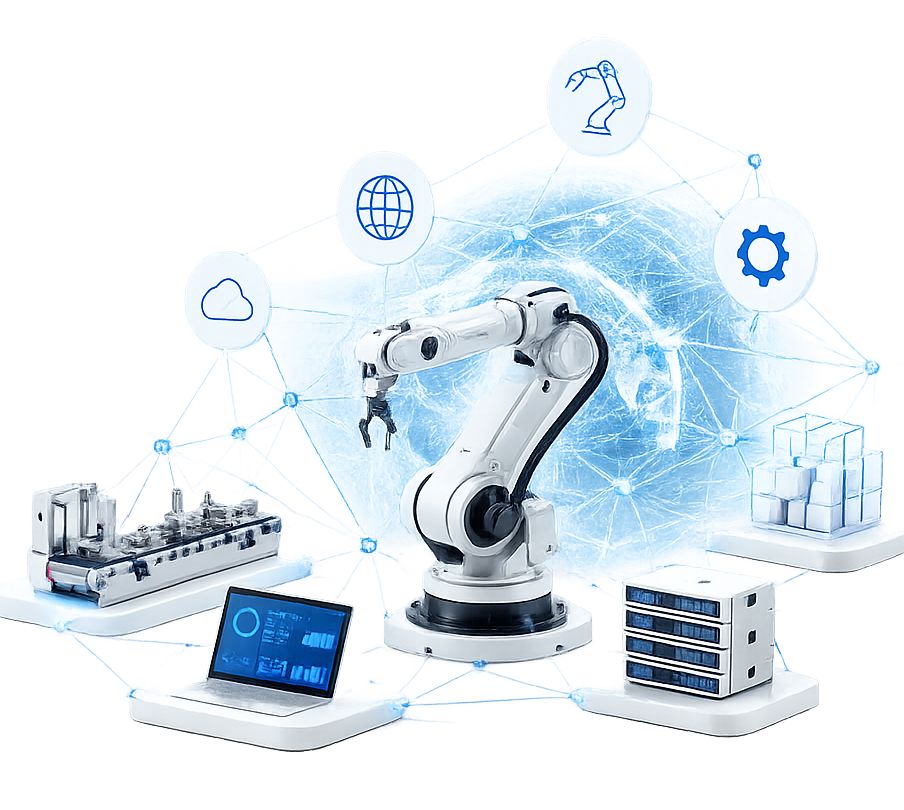
If you would like to learn how NexaRob can help with the practical application of robots such as Atlas or if you need expert support in humanoid robotics, please contact us. Together we will develop an implementation strategy for innovation that will bring measurable benefits to your company!
Automate Your Business with NexaRob - Contact Us!
Join NexaRob and Together Let's Develop Humanoid Robotics
Do you want to become our Partner?
NexaRob is constantly looking for partners ready to shape the future of the robotics industry. We are open to cooperation with AI solution providers, manufacturers of mechatronic technologies, or companies with specialized know-how in the field of automation. Together we can create and develop further groundbreaking projects.

United States

China

Japan

Germany

India

United Kingdom

France

Italy

Canada

South Korea

Brazil

Australia

Spain

Mexico

Indonesia

Netherlands

Saudi Arabia

Turkey

Switzerland

Taiwan

Poland

Sweden

Belgium

Thailand

Ireland

Austria

Norway

Israel

United Arab Emirates

Argentina

South Africa

Denmark

Philippines

Singapore

Malaysia

Colombia

Bangladesh

Egypt

Chile

Finland

Vietnam

Portugal

Czech Republic

Romania

New Zealand

Peru

Greece

Ukraine

Slovakia

Hungary

Slovenia

Croatia

Serbia

Bulgaria

Estonia

Latvia

Lithuania

Iceland

Luxembourg

Malta

Cyprus

Morocco

Algeria

Tunisia

Nigeria

Kenya

Ethiopia

Ghana

Tanzania

Uganda

Angola

Senegal

Qatar

Kuwait

Oman

Pakistan

Sri Lanka

Nepal

Kazakhstan

Uzbekistan

Mongolia

Russia

Cambodia

Myanmar

Laos

Fiji

Papua New Guinea

Venezuela

Ecuador

Uruguay

Paraguay

Bolivia

Costa Rica

Panama

Dominican Republic

Guatemala

Cuba

Jordan

Lebanon

Iran
Additional countries in Europe
These countries are hidden in readable mode so that the map is not cluttered. Click on a country to open contact information, email, and a description of the area of cooperation.
Additional countries in Asia
These countries are hidden in readable mode so that the map is not cluttered. Click on a country to open contact information, email, and a description of the area of cooperation.
Additional countries in the Americas
These countries are hidden in readable mode so that the map is not cluttered. Click on a country to open contact information, email, and a description of the area of cooperation.
Additional countries in Africa
These countries are hidden in readable mode so that the map is not cluttered. Click on a country to open contact information, email, and a description of the area of cooperation.
Additional countries in Oceania
These countries are hidden in readable mode so that the map is not cluttered. Click on a country to open contact information, email, and a description of the area of cooperation.
Albania
Andorra
Belarus
Bosnia and Herzegovina
Montenegro
Liechtenstein
North Macedonia
Monaco
Moldova
San Marino
Afghanistan
Armenia
Azerbaijan
Bahrain
Bhutan
Brunei
Georgia
Iraq
Yemen
Kyrgyzstan
North Korea
Maldives
Syria
Tajikistan
East Timor
Turkmenistan
Antigua and Barbuda
Bahamas
Barbados
Belize
Dominica
Grenada
Guyana
Haiti
Honduras
Jamaica
Nicaragua
Saint Kitts and Nevis
Saint Lucia
Saint Vincent and the Grenadines
El Salvador
Suriname
Trinidad and Tobago
Benin
Botswana
Burkina Faso
Burundi
Cape Verde
Chad
Democratic Republic of the Congo
Djibouti
Eritrea
Eswatini
Gabon
Gambia
Guinea
Guinea-Bissau
Equatorial Guinea
Cameroon
Comoros
Congo
Lesotho
Liberia
Libya
Madagascar
Malawi
Mali
Mauritania
Mauritius
Mozambique
Namibia
Niger
Central African Republic
Rwanda
Seychelles
Sierra Leone
Somalia
Sudan
South Sudan
Togo
Ivory Coast
Sao Tome and Principe
Zambia
Zimbabwe
Kiribati
Micronesia
Nauru
Palau
Samoa
Tonga
Tuvalu
Vanuatu
Marshall Islands
Solomon Islands
Why Is It Worth Cooperating with NexaRob?
Joint Investments in Innovation
We combine resources and competencies to design and implement solutions that exceed market standards. We believe that cooperation is key to creating better, more accessible technologies.
Synergy of Knowledge and Experience
Each of our partners brings a unique perspective. The combination of this diversity translates into the creation of robotic solutions ready for use in various sectors - from industry and services to education.
Global Reach and Scalability
We support partners in reaching customers around the world, while simultaneously helping them adapt products to local requirements and business cultures.
We are Looking for Partners in the Following Areas:
- Production and Distribution of Humanoid Robots We offer support in marketing, implementation, and improvement of solutions, so that they can be used in many branches of industry and services.
- AI and IoT Technologies If you are developing software for data analysis, image recognition systems, or machine learning, together we can integrate them with humanoid robots, creating a complete automation ecosystem.
- Automation and Logistics Joint implementations of humanoid robots and logistics systems can bring significant benefits in the form of optimized transport and warehousing processes.
Let's Join Forces
Do you have an idea for an ambitious project or are you looking for a reliable partner to provide support at every stage of implementation? Contact NexaRob and see how we can work together to develop the potential of humanoid robotics, creating the future of automation based on knowledge, passion, and innovation!
Interesting facts from around the world
A four-legged robot from ETH Zurich autonomously solves a giant Rubik's Cube.
The quadrupedal robot from ETH Zurich demonstrated a new level of precision and autonomy by solving a large Rubik's Cube.
Lane change prediction as a key to higher comfort and safety in autonomous driving.
A study conducted in the CARLA simulation environment showed that predicting lane changes by an autonomous vehicle is possible.
Tamim Asfour received the Greve Award for humanoid robotics.
Professor Tamim Asfour received the Greve Award for humanoid robotics, which is awarded every two years by the German organization.
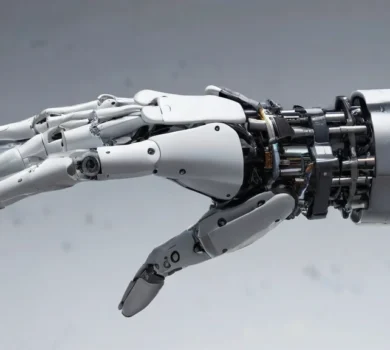
Autonomous needle insertion in a CT scanner with breath control.
The system integrates respiratory sensors and secure control to enable autonomous needle injection in a CT scanner.
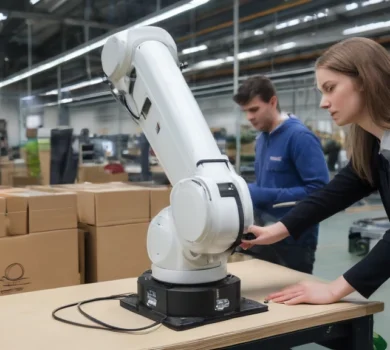
Swedish startup 120ft has built the first microfactories with humanoid robots.
Swedish startup 120ft emerged from stealth after raising €576,000 in angel investments.