ABB Robot Programming in Jody Language
Advanced ABB Robot Control
Jody - an alternative to ABB RAPID
Greater flexibility in programming
Optimization of production processes
Integration with ABB industrial systems
Modern approach to automation
The Jody language is an alternative to ABB RAPID, offering additional options in ABB robot programming. Thanks to greater flexibility and modern features, it enables even more precise process automation. NexaRob supports the configuration, implementation, and optimization of ABB systems based on Jody.
Contact us Watch the videoDiscover the Jody language - an alternative to ABB RAPID, offering additional functions and a flexible approach to controlling ABB robots.
Programming Industrial ABB Robots in Jody Language
Jody is a less well-known but interesting robot programming language for ABB robots, serving as an alternative to the popular ABB RAPID. Thanks to its modular structure and extended functions, Jody allows for precise control of movements, as well as dynamic integration with external systems (e.g., vision or force systems). At NexaRob, we use Jody primarily in projects that require non-standard motion solutions or special flexibility in defining control logic.
Why Jody?
- Flexibility in trajectory definition: The language supports both standard point movements and more complex paths with speed and acceleration control.
- Extended integration options: Jody enables connection to additional libraries and control systems, which facilitates the design of applications with unusual requirements.
- Full robot control: Thanks to its open structure and the ability to define custom procedures, Jody is often an ideal tool for complex or unique industrial operations.
How can NexaRob help?
- Needs analysis: Together with the client, we assess whether Jody will be a suitable solution in a given project, taking into account the specifics of the process and the expected level of code complexity.
- Code creation and optimization: We create applications in Jody, test them in a simulation environment, and fine-tune them at the workstation to achieve maximum efficiency and reliability.
- Service and training: We offer comprehensive support, including training for operators and engineers, as well as assistance in maintaining and developing the system along with growing production needs.
See what distinguishes the Jody language and in which areas programming ABB robots in this environment brings significant benefits.
Key Features and Application Examples in Jody
Although ABB RAPID is a widely used standard in ABB robotics, Jody is often chosen for more complex or custom applications where the basic functionality of RAPID is not always sufficient. Below we present the most important features of Jody and example areas in which it performs particularly well:
Extended motion instructions
In addition to standard commands (linear, articulated, arc motion), Jody offers additional parameters defining accelerations, decelerations, or trajectory profiles, which provides greater control over dynamics.
Application: Applications requiring extremely smooth transitions between points or strict maintenance of motion speed (e.g., in the food or pharmaceutical industry).
Extended integration with vision systems
Built-in functions and libraries facilitate connection with 2D/3D cameras, allowing the ABB robot to dynamically correct its motion based on the surrounding image.
Application: Sorting parts scattered chaotically, real-time quality control, precision assembly in electronics.
Ability to define custom procedures and libraries
Jody enables the creation of custom functions and modules, allowing programmers to tailor the environment to the specific needs of a given application.
Application: Production lines with unusual processes where diverse tasks (e.g., gluing, soldering, inspection) need to be combined in a single sequence.
Advanced safety features
The language allows for easy configuration of safety zones, monitoring of force and speed parameters, and the definition of emergency robot stop procedures.
Application: Industries where human-robot interaction is unavoidable (automotive, medical laboratories), as well as places with high health and safety requirements.
Cross-industry versatility
ABB robots with Jody can perform a variety of tasks - from typical pick & place operations, through welding and machining, to very advanced assembly projects requiring complex control logic.
Application: Automotive, electronics, food processing, pharmaceuticals, and even the aerospace industry (research, prototyping).
Jody is an alternative to ABB RAPID, providing additional features and flexibility in designing paths and integrating with external systems. NexaRob supports the implementation and maintenance of applications in Jody - from the early stages of consultation, through code creation and testing, to long-term service and system expansion. This allows your production to achieve a higher level of automation, better responding to changing market challenges.
Discover the various ways to create code for ABB robots in the Jody language and choose the solution that best suits your processes.
Main Modes and Programming Methods in Jody
ABB robots programmed in the Jody language offer several methods for creating and modifying applications - from quick editing on the operator panel to advanced offline tools, enabling code optimization without downtime. At NexaRob, we select a method that matches the characteristics of your plant to ensure fast, safe and flexible implementation. Here are the most important modes:
Teach Pendant (Online Programming)
- Direct Editing: The operator uses the panel on the ABB robot, defining movements point by point and saving them in Jody code.
- Quick fixes on the line: Ideal when minor changes or corrections are needed during operation, without shutting down the entire process.
- Limitations: More complex sequences (large number of points, complex logic) can be more difficult to implement using only the pendant.
Offline Programming (Simulation Environment)
- Working on a computer: Jody code can be created and tested in a simulation environment (e.g., RobotStudio with dedicated extensions), which allows you to check trajectories and avoid errors without stopping production.
- Time saving: After uploading the verified code to the robot, only minor adjustments are needed, minimizing line downtime.
- Application: Advanced projects requiring detailed collision analysis, cycle time testing, and integration with other systems (e.g., vision systems).
Online Remote Programming (Network Control)
- Remote access: With appropriate infrastructure security, NexaRob engineers or your specialists can connect to the ABB controller over the network, making corrections to the code.
- Expert support: This enables a quick response in case of failure or the need for optimization, without the need for physical presence at the robot.
Hybrid Approach
- Combining methods: Typically, the Teach Pendant is used for simple changes and calibration, while offline tools are used to develop and optimize more complex functions.
- Gradual improvement: Once written, the code can be iteratively improved - testing alternative versions in a simulator, and implementing final corrections online with minimal downtime.
Programming methods in Jody are flexible and can be combined depending on the complexity of the operation and the pace of changes in production. This allows for efficient use of ABB robots in many applications - from simple parts transfer to complex assembly or welding tasks. In the following sections, we will examine how Jody integrates with vision systems and sensors, further increasing intelligence and safety. ABB robots.
Discover how the Jody language allows ABB robots to use cameras and sensors to dynamically respond to changing conditions on the line.
Integration with Vision Systems and Sensors in ABB Jody
ABB robots controlled in the Jody language do not have to be limited to reproducing static motion paths. Thanks to cooperation with vision systems, force sensors and other peripheral devices, they can actively correct their actions, improving the process and reducing errors. Below we show how Jody facilitates this integration:
Vision Systems
- Protocols and libraries: Jody enables communication with 2D/3D cameras and transmits data about the position or shape of parts to the robot in real time.
- Trajectory correction: If objects are arranged in a disorganized manner, the robot can calculate the motion offset and immediately adjust the path, increasing the speed of pick & place operations.
Force and Moment Sensors
- Pressure control: In applications requiring delicate assembly or joining of elements, Jody can continuously monitor force and modify motion to avoid damage.
- Collision detection- When the torque on the axis exceeds the permissible threshold, the robot stops the operation and initiates an emergency procedure, protecting equipment and personnel.
Integration with PLC and additional axes
- Greater flexibility: ABB robots with Jody can control additional axes, such as rotary tables, positioners or vision systems, ensuring synchronized motion in a complex system.
- Application: Welding of large-size elements, precise assembly with many stages or palletizing of products with different dimensions.
Application examples
Food industry
The camera recognizes the shape and size of the packages, and the ABB robot, using Jody, dynamically adjusts the grip and position to quickly sort products on the conveyor belt.
Electronics
Assembly of integrated circuits with a force sensor controlling the pressure of components on the PCB board, preventing damage to the pins.
Logistics
Sorting packages in a warehouse according to barcodes and sizes, where data from the vision system allows for real-time correction of motion offset.
Thanks to integration with vision systems and sensors, ABB robots in the Jody language, they can dynamically adapt to changing conditions and increase the efficiency of the entire process. NexaRob helps in selecting and configuring appropriate devices, writing and optimizing code, and training operators, so that your production line can fully utilize the potential of automation and robotics.
See how the Jody language has accelerated and improved the assembly of delicate components in the demanding electronics industry.
Precise Assembly in the Electronics Industry with ABB Jody
We present an example implementation in the electronics sector, where ABB robots - controlled by the alternative Jody language - helped significantly accelerate the assembly process and improve the quality of final products. In the production of sensitive elements, both high speed and precision that avoids damage are important.
Context and Main Challenges
- Delicate integrated circuits and sensors: Minimal excess force or inaccurate placement could result in component destruction or reduced quality.
- Complex trajectories: Tight tolerances required smooth transitions between points, and the robot had to operate freely in multi-axis systems.
- Frequent changes in models: The lines handled many product variants, which required quick code reconfiguration when new elements were introduced.
Solutions in ABB Jody Code
Modular structure of the assembly code
Each operation (e.g., applying a gasket, connecting a connector) was separated into an individual procedure in the code. Simple modifications of parameters (e.g., speed, pressing force) were sufficient to adapt the robot to a different device model.
Integration with a force sensor
The camera checked whether the components were properly aligned. If there was a deviation, the robot corrected the trajectory by calculating the motion offset during operation. This reduced the number of faulty assemblies and improved the work of the operators, who previously had to manually inspect certain stages.
Visual verification and motion correction
Thanks to the force sensor, the robot immediately stopped its movement when excessive resistance was detected, preventing damage to the components. Most cases of accidental pressing on delicate tiles were eliminated, which reduced costs and waste.
Effects and Benefits
- Increased efficiency by approximately 15-20%: Reduced cycle time and elimination of unnecessary downtime thanks to efficient trajectory correction and dynamic force control.
- Fewer rejected parts: Accurate pressure control and visual correction reduced damage, reducing the production defect rate.
- Easy adaptation to new products: The modularity in Jody allowed for quick code adjustment when introducing subsequent variants of electronic devices.
This example shows that ABB Jody can effectively increase the speed and precision of assembly in the electronics industry - especially where maintaining narrow tolerances is critical. NexaRob The company provided comprehensive support for the project: from application development and hardware integration to final testing and operator training, allowing the company to benefit from advanced, reliable ABB robotics.
Learn how to maintain high performance and compliance with health and safety standards when operating ABB robots in Jody, even with increasing production requirements.
Optimization of Codes and Safety Procedures in ABB Jody
After building an application in Jody, it is crucial to continuously improve the code and ensure compliance with safety standards. NexaRob recommends several practices that help ABB robots work efficiently and reliably:
Cycle time and motion analysis
- Collecting statistics: The robot can record the number of cycles, any errors or deviations in movement. Analyzing this data makes it easier to find areas for optimization.
- Trajectory refactoring: Often, minor adjustments to speed or removing unnecessary movement points can shorten the cycle without negatively impacting quality.
Code structure and modularity
- Removing duplicate code fragments: Creating common procedures and functions reduces the risk of errors and also shortens software update time.
- Clear naming: Clear and consistent variable names (e.g., pAssemblyPos, nMaxForce) facilitate teamwork and debugging.
Safety procedures
- Emergency stop conditions: Jody allows you to define reactions in case of exceeding safety zones or registering a collision. We recommend regular testing to ensure that the system responds correctly.
- Current regulations: If industry standards change (e.g., in automotive or pharmaceuticals), the Jody code should be updated to keep up with new health and safety and quality requirements.
Updates and development
- New firmware versions: ABB sometimes releases software improvements. Assessing their value can lead to increased efficiency or expanded robot functionality.
- Project scalability: The code in Jody can be extended if the company plans to add more robots or devices, which makes it easy to adapt the line to production growth.
Thanks to regular code optimization and attention to safety procedures in V+ robots, Adept/Omron maintain high efficiency with minimal risk of failure. NexaRob supports these activities through code audits, consultations and advice on modernization, allowing your team to focus on developing core business and responding quickly to market changes.
Dispel your doubts related to creating and maintaining applications in ABB Jody, and learn about our support model.
Frequently Asked Questions
Below are the answers to frequently asked questions about ABB robots programmed in the Jody language. If you do not find the explanations you are looking for here, please contact NexaRob - we will be happy to discuss your project and present specific proposals tailored to the needs of your line.
Jody is often seen as more flexible and allowing for deeper code modification than RAPID. It may require a slightly different approach, but it is often more user-friendly for projects requiring custom trajectories and broader integration. NexaRob offers training that will allow your team to quickly implement it.
ABB robots programmed in JODY can be found here. the electronics industry (precision assembly), automotive industry (welding, quality control), food industry (packaging), or pharmaceutical industry (handling delicate products). Jody is particularly effective in applications that require customized motion solutions.
Yes. RobotStudio (extended with appropriate plugins and libraries) allows you to create and pre-verify code without interrupting production. This reduces downtime and avoids potential errors during startup on the line.
Jody supports communication protocols that enable collaboration with 2D/3D cameras and force and torque sensors. In the code, you can then dynamically correct the movement based on readings from external devices, which supports intelligent pick & place, assembly or welding.
As a rule, these are industrial ABB robots that require enclosures and safety systems (e.g., scanners, light curtains). However, some collaborative ABB models (so-called GoFa, SWIFTI) can be programmed in the Jody style, although more often a more standard environment is used for them. It is important to match the hardware and code to the health and safety requirements.
It depends on the variability of your processes. If new product variants appear or there is a need to integrate new devices, the code will be modified more frequently. In the case of a stable line, changes may be less frequent. The modular structure of Jody makes it easier to introduce corrections and speeds up adaptation.
Yes. We cooperate with a global network of suppliers, including ABB. We advise on the selection of optimal robot models and accessories, write code in Jody, and also provide service support and assistance with modernizations.
Yes, but it requires understanding the differences in syntax and approach to movements. NexaRob assists with migration by analyzing existing logic and parameters to transfer them into the new language while preserving key functions. Often, adaptation is simpler than writing code from scratch.
We encourage you to contact us via email or phone. NexaRob will gladly analyze your needs, present Jody code proposals, and conduct training sessions. This way, your production line can operate more efficiently, safely, and flexibly in the face of dynamic market demands.

Do you have more questions?
Contact NexaRob - we offer comprehensive support in the design, implementation, and maintenance of Jody applications. Together, we will ensure that your ABB robots operate with maximum efficiency, minimal risk of errors, and in full compliance with applicable industry standards.
Automate Your Business with NexaRob - Contact Us!
Interesting facts from around the world

How robots learn to correct themselves in real time using critics and residual flows.
A new approach to robotics based on residual flow and level-of-detail criticism has achieved 66% effectiveness.
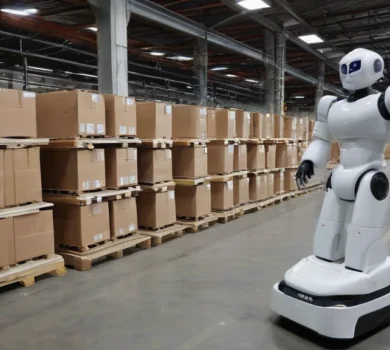
Teradyne Robotics and Sereact have implemented physical AI in Zalando's logistics centers.
At Zalando’s logistics centers in Greven and Świebodzin, collaborative robots working with the Sereact Cortex platform operate automatically.
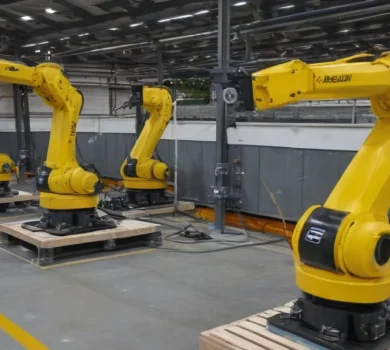
Complete traceability in production thanks to robots and system integration.
Atmus Filtration has implemented a modern robotic system for assembly and inspection, which ensures full product traceability.
AGCO tests humanoid robot in production in Hesston, Kansas
AGCO and Agility Robotics will launch a pilot program featuring the Digit® humanoid robot at their manufacturing facility in Hesston.

How does the new diffusion model change the approach to autonomous driving?
The new QualiDrive model introduces an innovative approach to trajectory generation in autonomous vehicle guidance - instead of