
Solutions for Your Automation
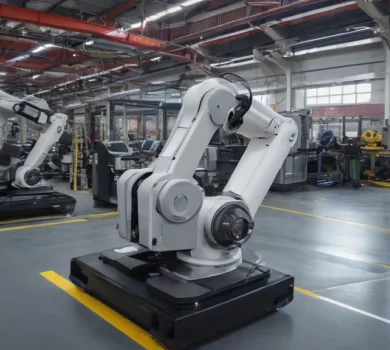
Comprehensive solutions for the industry
Automation tailored to your needs
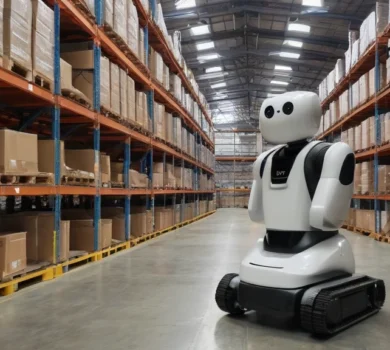
Robotics that supports your development
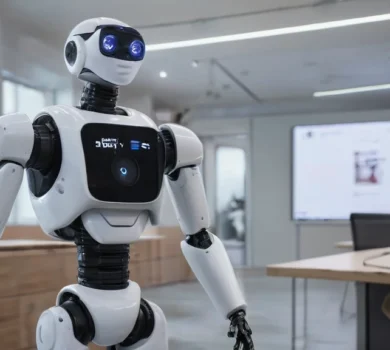
Modern technologies in your company
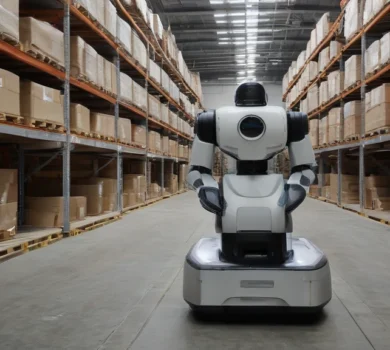
From consulting to system implementation
Flexible offer based on partnership
The NexaRob offer includes a full range of services and technologies in the field of robotics and automation - from selecting appropriate solutions, through system integration, to technical and advisory support. We cooperate with trusted suppliers from around the world to provide our customers with proven and modern technologies, tailored to the individual needs of their business. Our approach is based on flexibility, innovation and partnership at every stage of the project.
Contact us Watch the videoInnovative Process Automation - Your competitive advantage in the market
Automation and robotics - the key to your company's success
In today's rapidly changing world, robotic and automation technologies are becoming the foundation of modern enterprises. NexaRob provides comprehensive solutions that help companies from various industries improve efficiency, increase precision and improve workplace safety. Our offer includes a wide range of technologies, from collaborative robots to advanced autonomous systems, as well as technical support and service.
Each NexaRob solution is designed with flexibility and adaptation to the individual needs of the customer in mind. Whether you run a large industrial plant or a small company, our technologies will help you meet the challenges of today's market and prepare for the future.
Safe human-machine collaboration - Cobots in your production
Collaborative Robots (Cobots)
Collaborative robots, also known as cobots, are intelligent devices that are revolutionizing process automation in various industries. Thanks to their ability to work side-by-side with people, cobots eliminate the need for dedicated safety zones and bridge the gap between traditional automation and tasks performed by humans. Their flexibility, ease of programming, and advanced safety systems make them suitable for both large industrial plants and smaller companies.
Cobots introduce a new quality to automation, offering not only increased efficiency but also improved safety and comfort for the team.
Main advantages of collaborative robots:
- Safety: Cobots are equipped with advanced sensors and collision detection systems, allowing them to work safely with people. Automatic adjustment of force and working speed minimizes the risk of accidents.
- Ease of programming: Intuitive interfaces and the ability to learn movements "by demonstration" make cobots easy to use even for people without specialized knowledge.
- Flexibility: Cobots can be quickly adapted to different tasks, from assembly and machine operation to packaging and quality control. They are an ideal choice for companies operating in a rapidly changing environment.
- Compact size: Thanks to their design, cobots can work in limited spaces, making them an ideal solution for smaller production plants.
- Reduction of monotonous workload for employees: By automating repetitive and monotonous tasks, cobots reduce the workload on employees, which positively affects their efficiency and job satisfaction.
Applications of cobots:
Supporting precise processes, such as assembling components, tightening screws, or testing finished products. Automating these tasks reduces the number of errors and improves product quality.
Loading and unloading machines, such as milling machines, lathes, or injection molding machines. Automating these tasks allows for better utilization of machine operating time and reduces the workload on employees.
Using advanced vision systems for visual inspection of products. Cobots can detect defects, analyze dimensions, and check whether products comply with quality standards.
Sorting, transporting, and packaging products. Cobots work with warehouse management systems (WMS), which optimizes logistics processes and speeds up order fulfillment.
Working in sterile conditions while maintaining the highest hygiene standards. Packaging, labeling, and transferring food or pharmaceutical products are just some of their applications in these demanding industries.
Cobots combine the best features of automation with the ability to work directly with people, making them an indispensable tool in dynamically changing work environments. Thanks to their versatility, safety, and ease of use, collaborative robots are the ideal choice for companies that want to increase the efficiency, quality, and flexibility of their processes. Choose cobots as a partner in automation and discover new possibilities for your business.
Proven solutions for modern production - Industrial Robots
Industrial Robots
Industrial robots play a key role in the transformation of modern industry. These are technologically advanced devices that have been designed to perform demanding tasks with unprecedented precision, strength, and repeatability. Thanks to their versatility, industrial robots are widely used in manufacturing plants around the world, streamlining processes, reducing costs, and improving product quality.
Automation using industrial robots enables companies to achieve a higher level of efficiency, flexibility, and competitiveness in a rapidly changing market environment.
Main advantages of industrial robots:
- Precision and repeatability: Industrial robots ensure tasks are performed with the highest accuracy, which eliminates production errors and achieves a consistent quality standard at every stage of production.
- High efficiency: Robots can work around the clock, eliminating downtime and significantly increasing production speed. This makes them an ideal solution for plants requiring large-scale operations.
- Resistance to harsh conditions: Industrial robots are designed to operate in demanding environments, such as high temperatures, dust, or the presence of chemicals.
- Versatility of applications: They can be used in a variety of production processes, from assembly and welding to packaging and internal transport.
- Scalability and integration: Robots can be easily integrated with existing production lines, allowing for flexible expansion of plants and adaptation to changing market needs.
- Cost reduction: Automation using industrial robots reduces operating costs by limiting the need to invest in additional labor or correct errors.
Applications of industrial robots:
Industrial robots with advanced welding tools ensure precise execution of tasks even in hard-to-reach places, increasing efficiency and connection quality.
They guarantee uniform application of paints and protective coatings, eliminating the risk of undercoating and reducing material consumption.
Moving large and heavy components in assembly lines without the need to involve employees' physical strength.
Robots work with devices to create integrated, fully automated production processes.
They speed up the execution of logistics tasks, such as sorting products or preparing them for shipment, which increases operational efficiency.
Industrial robots are often used for milling, grinding, or polishing, guaranteeing repeatability and high quality of workmanship.
Industrial robots are indispensable tools of modern industry that allow companies to achieve higher productivity, precision, and flexibility in the implementation of production processes. Thanks to cooperation with leading technology suppliers, NexaRob provides solutions tailored to the individual needs of customers, supporting them in fully utilizing the potential of automation. Choose industrial robots and discover new opportunities for developing your company.
Autonomous operation - intelligent robotic systems in motion
Autonomous Systems
Autonomous robotic systems are innovative solutions that are changing the way modern enterprises operate. By using advanced technologies such as artificial intelligence (AI), the Internet of Things (IoT), and real-time data analysis, these systems can operate independently, making decisions and performing tasks without the need for direct human intervention.
Main advantages of autonomous systems:
- Independence: Autonomous systems can make decisions based on data analysis and operate independently, which reduces the need for constant operational supervision.
- IoT Integration- Thanks to integration with the Internet of Things, autonomous systems can communicate with other devices in real time, creating intelligent production and logistics networks.
- Process optimization: AI algorithms and data analysis enable real-time system performance optimization, reducing costs and increasing efficiency.
- Increased safety: Autonomous systems eliminate the risk of human error and can operate in hazardous environments, such as high temperatures or toxic zones.
- Flexibility: The ability to adapt systems to changing conditions and production requirements makes them ideal for dynamic work environments.
Example applications of autonomous systems:
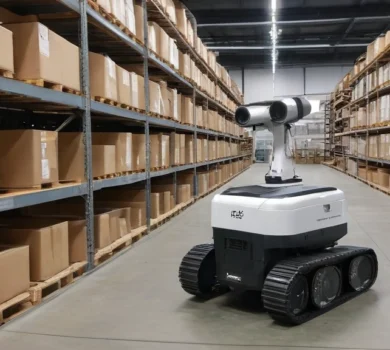
Automation of transport and sorting of goods, which speeds up order fulfillment and optimizes warehouse space.
Autonomous carts and AGV (Automated Guided Vehicles) can deliver components to production lines or move goods between departments.
Monitoring and analysis of production processes
Robots and autonomous systems equipped with sensors and AI can monitor the operation of devices, predict failures, and optimize performance.
Logistics and delivery management
The use of autonomous systems in supply chains enables better transport management and reduces operating costs.
Autonomous systems can monitor crops, analyze environmental conditions, and precisely apply fertilizers or pesticides, increasing agricultural efficiency.
Intelligent production systems
Creating fully automated production lines that independently adapt to changing customer needs.
Autonomous systems are a revolution in automation, enabling companies to achieve a new level of efficiency and precision. Thanks to their ability to operate independently, optimize processes, and integrate with other technologies, they are a key element of modern enterprises. This is not only an investment in performance but also in the future of intelligent operations.
Artificial intelligence as the driving force behind the future of robotics
Artificial Intelligence in Robotics
Artificial intelligence (AI) plays a crucial role in modern robotics, opening up new possibilities for process automation. By integrating AI algorithms with robots, these devices can make independent decisions, learn from collected data, and optimize their operations in real time. It is AI that transforms robots from machines performing predefined tasks into intelligent systems that adapt to dynamically changing working conditions.
The main advantages of artificial intelligence in robotics:
- Self-learning: Robots equipped with AI can analyze operational data and learn from it, which allows for continuous improvement of the tasks performed. For example, machine learning systems can adapt their operation to specific production requirements.
- Image and object recognition: Thanks to computer vision technology, AI robots can identify, classify, and process objects in real time. This opens up possibilities for automating quality control, sorting, or precision assembly.
- Real-time optimization: AI algorithms enable robots to adapt their work to current conditions, which allows them to achieve maximum efficiency even in a dynamic environment.
- Prediction and analysis: AI robots can analyze historical and current data to predict potential machine failures, minimizing downtime and increasing operational efficiency.
- Motion planning Thanks to AI, robots can calculate the most optimal routes for moving in space, which increases the efficiency of internal transport and reduces the risk of collisions.
Examples of artificial intelligence applications in robotics:
AI-powered robots can detect even the smallest defects on production lines thanks to advanced vision systems.
Intelligent robots manage fleets of autonomous devices in warehouses, optimizing logistics processes such as sorting, storage, and order fulfillment.
Equipped with AI, robots can navigate in a dynamically changing environment, avoiding obstacles and planning their actions in real time.
AI enables better integration of cobots with human teams, increasing the precision of their work and enabling the automation of more complex tasks.
Robot fleet management:
Intelligent AI algorithms help coordinate the work of multiple robots, ensuring efficient and coordinated operation of the entire fleet.
Personalized production
Thanks to AI, robots can adapt production processes to changing customer requirements, enabling mass customization of products.
Artificial intelligence in robotics is a key step towards more advanced, flexible, and autonomous systems. Thanks to the integration of AI, robots gain the ability to learn, adapt, and make decisions, which enables companies to achieve higher efficiency and quality of processes. AI in robotics is an investment in the future that allows companies to meet the challenges of today's market.
Nature-inspired mobility - advanced walking robots
Walking Robots
Walking robots are a symbol of technological innovation that combines advanced engineering solutions with exceptional ability to move in challenging environments. Inspired by animal movement, these machines can operate effectively in places inaccessible to traditional wheeled or tracked robots. They are indispensable in tasks requiring mobility, precision and resistance to changing conditions.
Key features of industrial robots:
- Mobility in any terrain: The nature-inspired design allows walking robots to move on uneven, unstable and extremely difficult surfaces such as rubble, snow, mud or sand. This enables the robots to operate in places inaccessible to traditional vehicles.
- Versatility of applications: Walking robots can be used in industry, scientific research, rescue operations or exploration. Their versatility makes them suitable for many industries, from the public sector to specialized work in the private sector.
- Advanced sensor systems: Equipped with cameras, LiDAR sensors and navigation systems, walking robots can accurately analyze terrain, map the environment and avoid obstacles. This makes their work not only precise but also safe and efficient.
- Resistance to harsh conditions: Walking robots are designed for extreme environments. They can operate in high temperatures, low pressures, high humidity or with heavy dust, making them reliable even in the most difficult situations.
- Motion flexibility: Thanks to complex movement mechanisms, walking robots can adapt their steps to current terrain conditions, allowing them to move stably even in a dynamically changing environment.
- Energy independence: Many models of walking robots are equipped with systems that enable long-term operation thanks to efficient batteries and the ability to self-charge in the field.
Applications of walking robots:
Infrastructure inspection
Monitoring pipelines, power lines, bridges and other hard-to-reach infrastructure elements. Walking robots can detect damage and collect data that helps with their repair or maintenance.
Exploration
Exploring hard-to-reach areas such as caves, mines, polar regions or seabeds. Thanks to the ability to move in extreme conditions, walking robots support scientific research and mining industry.
Rescue operations
In crisis situations such as earthquakes, floods or avalanches, walking robots can deliver equipment, locate victims and analyze the stability of the terrain, supporting rescue services.
Cargo transport
Moving heavy or bulky materials in hard-to-reach places, such as mines, construction sites or mountainous areas, where conventional vehicles cannot reach.
Construction and industrial work
Assistance in moving materials, inspecting construction sites or analyzing the terrain before starting large construction projects. Thanks to their mobility, walking robots perform well in demanding construction conditions.
Walking robots stand out for their ability to operate in environments where other technologies fail. Thanks to advanced sensor systems, a durable design and exceptional mobility, these robots provide unparalleled flexibility and reliability. Their application is reflected in key industries that require precision, safety and efficiency, even in extreme conditions.
From implementation to service - comprehensive NexaRob support
Full Technical and Service Support
The automation of production and logistics processes requires not only modern technologies, but also solid technical support, which ensures the reliability and continuity of system operation. NexaRob offers comprehensive service and technical support services, so that your company can focus on achieving its business goals without worrying about downtime or technical problems.
Our services cover all stages of the robot's life cycle - from initial installation to regular inspections and upgrades, guaranteeing their efficiency and maximum performance.
The main advantages of our technical and service support:
- Comprehensive support: NexaRob provides technical assistance at every stage of cooperation - from needs analysis and implementation planning, to ongoing system service and maintenance.
- Minimizing downtime: Our service team is always ready to respond quickly to failure reports and provide immediate problem solving.
- Adaptation to customer needs: Each client can count on an individually tailored service plan that takes into account the specifics of their business and the intensity of equipment usage.
- Training for personnel: We organize training courses on robot operation and maintenance for your team, which allows for quick resolution of minor problems internally.
- Modernization and updates: We provide access to the latest software updates and hardware upgrades, ensuring that your systems remain compliant with the latest technological standards.
Example technical and service support services:
Installation and configuration
Professional implementation of robots and automation systems, including their integration with existing infrastructure.
Technical condition monitoring
Continuous monitoring of system and component operation to detect potential problems before they occur.
Fast response to failures
Our service team operates 24/7, ensuring minimal downtime.
Replacement of worn components
We supply original spare parts from leading suppliers, which guarantees high quality and reliable repairs.
Technical consulting
We offer technical consultations that help optimize system performance and adapt them to changing production requirements.
Modernizations and system development
We introduce new functionalities, expand existing systems, and update software to ensure their compliance with the latest standards.
Full technical and service support from NexaRob guarantees the reliability and longevity of robotic systems. Thanks to our comprehensive service offering, your company can operate without interruptions, focusing on its business goals. NexaRob is a partner you can rely on - we ensure that technology works for you, not the other way around.
Why NexaRob?
Partnership based on trust and innovation
NexaRob is more than just a technology provider - it's a partner that supports your company at every stage of automation. By cooperating with leading technology providers from around the world, we provide access to the latest solutions, which we integrate into the processes in your enterprise.
- Individual approach: Each solution is tailored to the specific needs of your plant, regardless of the industry.
- Expert knowledge: The NexaRob team helps select, implement, and optimize collaborative robots so that they bring real business benefits.
- Support at every stage: We offer comprehensive services, from needs analysis to implementation, staff training, and technical service.
- Partnership based on trust: Our philosophy is based on long-term cooperation and building relationships with customers and suppliers.
With NexaRob, your company will gain more than just technology - it will gain a partner you can rely on.
Together we create the future of automation
Do you want to become our Partner? Contact us
At NexaRob, we believe that the development of innovative technologies requires cooperation. That is why we are actively looking for business partners who provide advanced robotic technologies, automation systems, or solutions supporting Industry 4.0. If your company is a leader in its field and wants to jointly build modern automation systems with us, we invite you to cooperate.

Why is it worth cooperating with NexaRob?
Global network of clients
Thanks to our projects, we reach companies around the world, opening up new opportunities for your technologies.
Long-term partnership
We cooperate based on transparency and trust, building relationships for years to come.
Flexible approach
We adapt cooperation models to the specifics of your business.
Who are we looking for?
- Manufacturers of advanced industrial and collaborative robots.
- Suppliers of AI, IoT and vision system technologies.
- Companies offering innovative autonomous systems and fleet management solutions.
- Partners providing technologies dedicated to Industry 4.0.
Join NexaRob and let's create the future of technology together.
Contact us to discuss cooperation opportunities and learn about the benefits of partnership. Together we can implement the most demanding projects and accelerate the development of automation on a global scale.
Contact us - your innovations can change the world!
Your company, our support - 100 countries, one goal: automating the future.
Z NexaRob You have access to a global network of innovative solutions and technologies. We serve clients in over 100 countries, providing local support on a global scale. Thanks to our flexibility and collaborative approach, we help companies of all sizes fully leverage the potential of automation.

Our mission: Building a smart future where people and technology work together to create a more efficient, safe and sustainable working environment.

With NexaRob, your company will become part of the global revolution in robotics and automation!
United States
China
Japan
Germany
India
United Kingdom
France
Italy
Canada
South Korea
Brazil
Australia
Spain
Mexico
Indonesia
Netherlands
Saudi Arabia
Turkey
Switzerland
Taiwan
Poland
Sweden
Belgium
Thailand
Ireland
Austria
Norway
Israel
United Arab Emirates
Argentina
South Africa
Denmark
Philippines
Singapore
Malaysia
Colombia
Bangladesh
Egypt
Chile
Finland
Vietnam
Portugal
Czech Republic
Romania
New Zealand
Peru
Greece
Ukraine
Slovakia
Hungary
Slovenia
Croatia
Serbia
Bulgaria
Estonia
Latvia
Lithuania
Iceland
Luxembourg
Malta
Cyprus
Morocco
Algeria
Tunisia
Nigeria
Kenya
Ethiopia
Ghana
Tanzania
Uganda
Angola
Senegal
Qatar
Kuwait
Oman
Pakistan
Sri Lanka
Nepal
Kazakhstan
Uzbekistan
Mongolia
Russia
Cambodia
Myanmar
Laos
Fiji
Papua New Guinea
Venezuela
Ecuador
Uruguay
Paraguay
Bolivia
Costa Rica
Panama
Dominican Republic
Guatemala
Cuba
Jordan
Lebanon
Iran
Additional countries in Europe
These countries are hidden in readable mode so that the map is not cluttered. Click on a country to open contact information, email, and a description of the area of cooperation.

Additional countries in Asia
These countries are hidden in readable mode so that the map is not cluttered. Click on a country to open contact information, email, and a description of the area of cooperation.

Additional countries in the Americas
These countries are hidden in readable mode so that the map is not cluttered. Click on a country to open contact information, email, and a description of the area of cooperation.

Additional countries in Africa
These countries are hidden in readable mode so that the map is not cluttered. Click on a country to open contact information, email, and a description of the area of cooperation.
Additional countries in Oceania
These countries are hidden in readable mode so that the map is not cluttered. Click on a country to open contact information, email, and a description of the area of cooperation.
Albania
Andorra
Belarus
Bosnia and Herzegovina
Montenegro
Liechtenstein
North Macedonia
Monaco
Moldova
San Marino
Afghanistan
Armenia
Azerbaijan
Bahrain
Bhutan
Brunei
Georgia
Iraq
Yemen
Kyrgyzstan
North Korea
Maldives
Syria
Tajikistan
East Timor
Turkmenistan
Antigua and Barbuda
Bahamas
Barbados
Belize
Dominica
Grenada
Guyana
Haiti
Honduras
Jamaica
Nicaragua
Saint Kitts and Nevis
Saint Lucia
Saint Vincent and the Grenadines
El Salvador
Suriname
Trinidad and Tobago
Benin
Botswana
Burkina Faso
Burundi
Cape Verde
Chad
Democratic Republic of the Congo
Djibouti
Eritrea
Eswatini
Gabon
Gambia
Guinea
Guinea-Bissau
Equatorial Guinea
Cameroon
Comoros
Congo
Lesotho
Liberia
Libya
Madagascar
Malawi
Mali
Mauritania
Mauritius
Mozambique
Namibia
Niger
Central African Republic
Rwanda
Seychelles
Sierra Leone
Somalia
Sudan
South Sudan
Togo
Ivory Coast
Sao Tome and Principe
Zambia
Zimbabwe
Kiribati
Micronesia
Nauru
Palau
Samoa
Tonga
Tuvalu
Vanuatu
Marshall Islands
Solomon Islands
Interesting facts from around the world
TIAGo Base: A flexible mobile robot for transforming internal logistics
TIAGo Base, an autonomous mobile robot from PAL Robotics, offers flexible solutions for internal logistics. Thanks to
How does the industrial sector collaborate with the Oxford Robotics Institute?
Oxford Robotics Institute offers membership for companies in the industrial sector who want direct access
AI-powered robots help logistics combat labor shortages.
In the face of a global labor shortage, especially among truck drivers and warehouse workers, logistics is increasingly
How to study robotics at the Oxford Robotics Institute?
The Oxford Robotics Institute (ORI) offers doctoral and research studies in the field of autonomous robotics, with an emphasis on
Chad Jenkins received the title of Fellow ACM for innovation in robotics and inclusion
Chad Jenkins, professor of robotics at the University of Michigan, was named ACM Fellow in 2025.