
How does the new PACDM method work in modeling closed mechanisms?
The Path-Assembled Closure Differential Mapping (PACDM) method introduces an innovative way to deal with the complexity of kinematics of closed mechanisms. Instead of treating the whole as a single system, PACDM divides the problem into modules, where each element compares two ordered transformation paths with common end points. The difference between these paths is expressed using the logarithm on the SE(3) group, which allows for precise characterization of inconsistencies in the system. This approach enables modularity - each module can be analyzed and optimized separately, which significantly facilitates the design of complex systems.
A key element is rank-revealing analysis, which automatically identifies locally independent scalar constraints. This allows the system to avoid redundancy and prevent numerical problems that often occur in traditional modeling methods. This makes it possible to build more stable and predictable kinematic models, especially for systems with many degrees of freedom, where the dependencies between coordinates are nonlinear and complex.
Homotopy of the defect as a tool for recovering consistent passive states
PACDM uses the defect homotopy technique to recover passive coordinates that are consistent with closed-loop constraints, even when initial estimates are approximate. The method works by constructing a regular and admissible continuation path, along which the system iteratively corrects errors. This avoids problems with divergence or looping of the algorithm, which are typical of other numerical approaches.
Importantly, homotopy operates in a continuous and regular manner - it does not require recalculating the entire system from a zero state. As a result, the system can quickly transform approximate input data into accurate kinematic solutions, which is critical for real-time applications such as manipulator control or dynamic simulations.
Test results: precision and performance in practice
 Enlarged imageClose zoomPrevious image
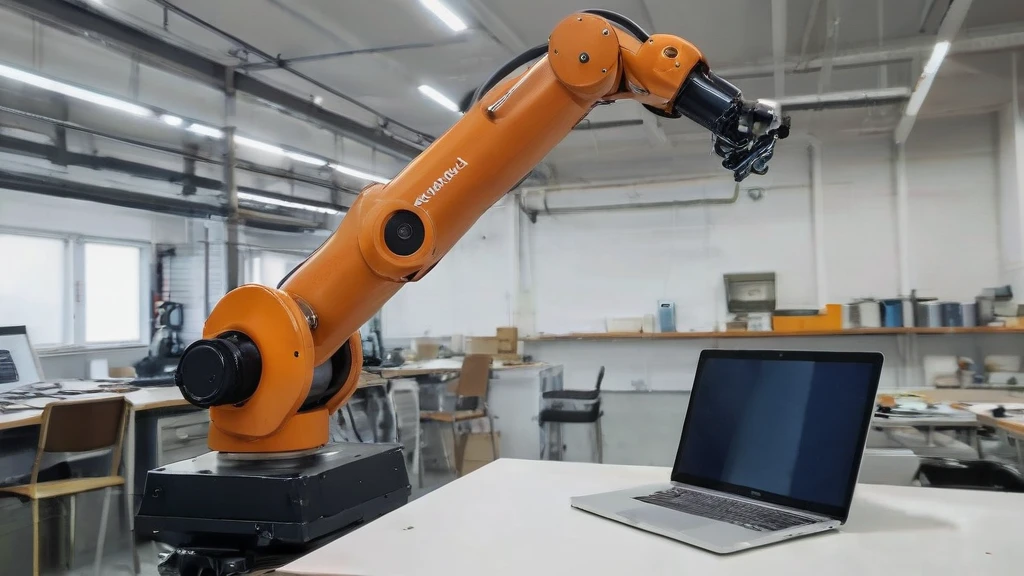
Studies conducted on a seven-degree-of-freedom heavy-duty manipulator, which includes two- and three-path closed loops, confirmed the high effectiveness of the method. Compared to Simscape Multibody, PACDM achieved mean square trajectory errors below 8.5 × 10⁻¹⁰ rad - a level that can be considered practically zero in an engineering context.
In addition, the method showed a significant advantage in terms of computational speed: the predictor-corrector procedure was approximately 45.8 times faster than applying defect homotopy at each point on the trajectory. This means that PACDM not only offers higher accuracy but also significantly better computational performance, making it attractive for real-time applications and industrial simulations.
Significance and limitations of the method
The new PACDM method has the potential to change the approach to modeling closed-chain mechanisms in robotics, especially in the context of modularity and scalability. Thanks to the ability to break down the problem into independent modules, the system can be easily adapted to different configurations without having to redesign the entire system.
However, the method requires a precise definition and ordering of transformation paths. In the case of very complex systems, where the number of possible path combinations grows exponentially, there may be a problem with computational cost when creating all pairs. Furthermore, the method has only been tested on one type of manipulator - its universality in other fields (e.g., biomechanics, mobile robotics) requires further research.
It is worth emphasizing that although the PACDM method offers a significant advantage in precision and efficiency, its application requires careful design of transformation paths and an appropriate approach to analyzing local constraint independence. In practice, this means the need for a deeper understanding of the mechanism's topology, which may be a barrier for less experienced engineers. However, thanks to modularity and adaptability to different configurations, PACDM can become the basis for new design support tools industrial robots, such as complex manipulators or mobile systems with many degrees of freedom.
Further research in the field of biomechanics or medical robotics may confirm its universality and open up new possibilities in precise motion control under limited conditions. In the context of technological development, PACDM not only improves computational efficiency but also supports the development of autonomous systems that require fast and reliable kinematic solutions in real time. The aforementioned applications highlight the importance of this method as a key step forward in robotics engineering, especially in the context of scalability and stability.