
China's dominance in mobile robot production.
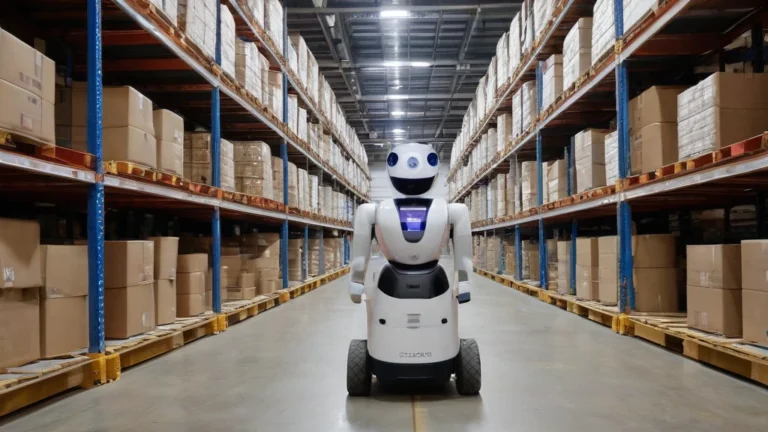
In 2025, Chinese companies accounted for almost 70% of global sales. mobile robots, which confirms their dominant position in the market. According to data from the China Mobile Robot Industry Alliance (CMRA) and the New Strategy Mobile Robot Industry Research Institute (NSRI), the number of units sold worldwide was 265,000 - an increase of 16.23% compared to the previous year. Of this, Chinese manufacturers achieved sales of approximately 182,000 units, which corresponds to a 68.68% share of sales volume.
This is not just a matter of quantity - the Chinese industry has also achieved significant revenue. In 2025, its value was 26.1 billion yuan, accounting for approximately 61.46% of the global market. The difference between the share of sales and the value of revenue indicates the strong position of Chinese companies in mass production and low costs, which enable price competitiveness in global markets.
Scaling production and international expansion.
 Enlarged imageClose zoomPrevious image
China's dominance is not limited to domestic sales. In 2025, exports of Chinese mobile robots generated revenue of 8.5 billion yuan - a 25% year-on-year increase. An example is Geekplus, which in the same year achieved total revenue of 3.171 billion yuan, of which 75.3% came from foreign markets.
The growth in exports is related to the intensification of international expansion by Chinese manufacturers. At the same time, there is a growing need to build local sales networks, technical support and meet regulatory requirements in different countries. This is changing the competition - from price competition to competing at the level of services, system integration and product life cycle value.
Moving from transportation to full automation
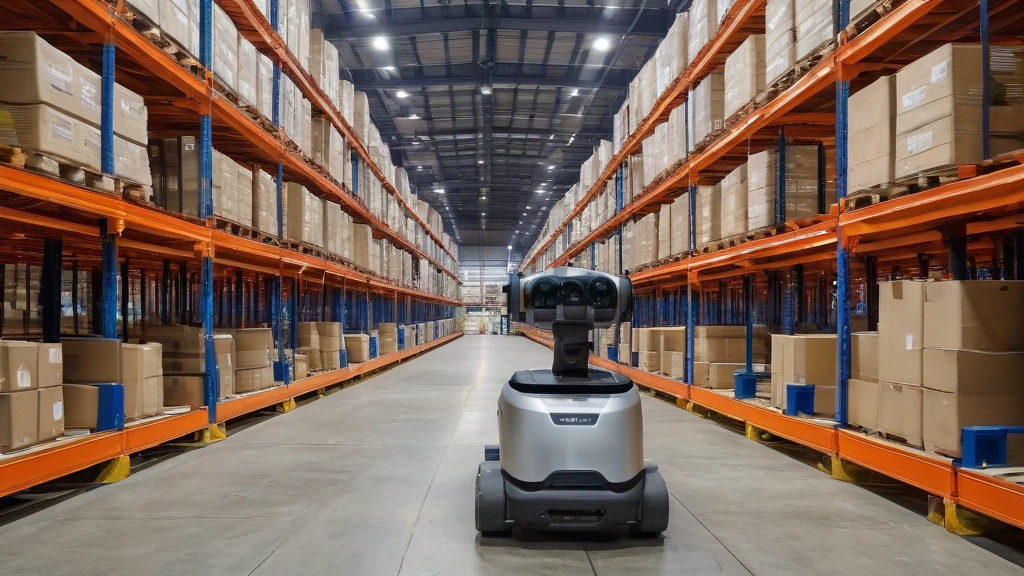
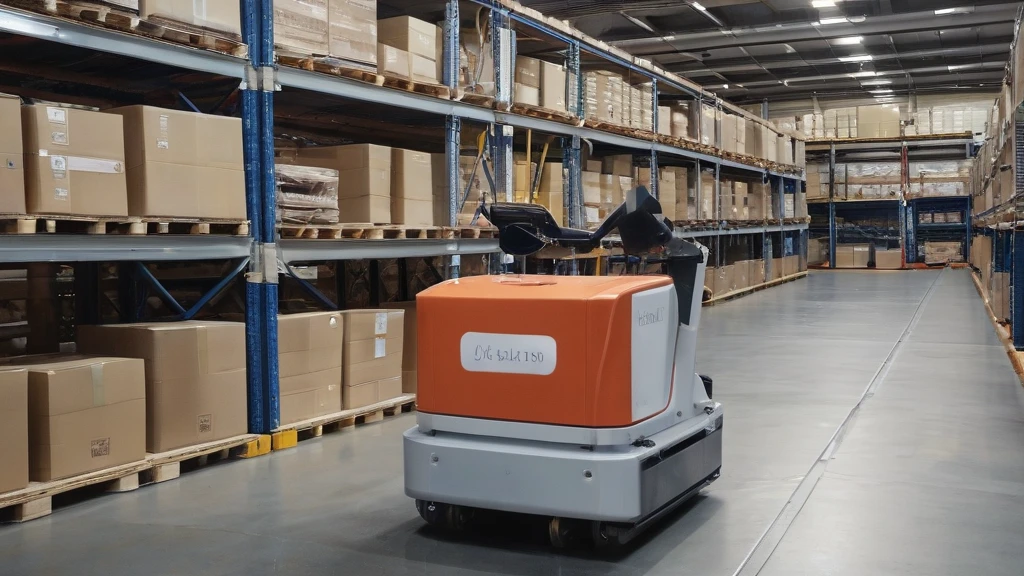
Chinese companies are no longer limited to producing basic mobile robots such as AGVs/AMRs. In 2025, they expanded their offer to include new classes of devices - including autonomous forklifts, pallet robots, CTUs, heavy AGVs and mobile manipulators. This allows them to move from transportation to full automation of logistics operations.
Integration with technologies such as computer vision, artificial intelligence and industrial robotics enables the development of applications beyond movement - e.g. in factory pick-and-place systems or packaging automation. This is changing the market: Chinese companies not only produce devices, but also create comprehensive integration solutions.
Challenges and the future of global competition
Although the Chinese have a strong position in production, their future depends on their ability to build global brands, develop advanced technology platforms and maintain stable international operations. This requires not only investment in software development, but also compliance with diverse legal requirements, data security and digital information transfer.
According to forecasts by CMRA and NSRI, the next step will be a shift from price-based competition to value-based competition - including service quality, system flexibility, and long-term customer relationships. This may be the key to survival in Western markets, where customers are increasingly looking not only for cheap equipment but also for comprehensive technological partnerships.
Challenges and the future of global competition
Although Chinese companies have a strong position in manufacturing, their future depends on their ability to build global brands, develop advanced technology platforms, and maintain stable international operations. This requires not only investment in software development but also compliance with various legal requirements, data security, and digital information transfer. According to forecasts by CMRA and NSRI, the next step will be a shift from price-based competition to value-based competition - including service quality, system flexibility, and long-term customer relationships. This may be the key to survival in Western markets, where customers are increasingly looking not only for cheap equipment but also for comprehensive technological partnerships. In the context of global competition, Chinese companies must not only maintain their advantage in mass production and costs but also invest in local service networks,
data security, and compliance with digital standards such as GDPR or local regulations regarding data storage. An example is the growing need to adapt systems to meet security requirements in the European Union, where data relating to logistics operations may be subject to additional controls. In this context, the future lies not only in the number of units sold but also in the ability to build lasting customer relationships by offering comprehensive integration solutions that include not only hardware but also software, data analysis, and technical support throughout the product lifecycle. This approach allows Chinese companies to move from being a supplier to a strategic partner in global automation processes.