
A new architecture for complex mobile manipulation tasks
MoPA is a new approach to mobile manipulation that addresses a key problem: current systems often use shared perceptual representations for both base motion and manipulation, even though these two aspects require different spatial scales. As a result, although actions are generated by separate streams, their conditioning remains unclear. MoPA solves this problem by introducing two separate perceptual streams - each based on a mutually masked query bank - that extract separate representations from a single visual-linguistic context. This allows the system to
An important element of the architecture is perceptual-action adaptation, which simultaneously updates the query bank and its corresponding action stream at each layer of the Mixture-of-Transformers decoder. This allows the system not only to distinguish between perception for mobility and manipulation but also ensures continuous information exchange between action streams, which is crucial for coordination. As a result, MoPA does not lose consistency in operation despite the complexity of the task.
Results in real-world conditions and benchmarks
 Enlarged imageClose zoomPrevious image
On the ManiSkill-HAB benchmark, MoPA achieved leading performance in all three sets of tasks. This is not just a result of tests in simulation - the system was also tested in four real-world tasks, where it achieved an average overall success rate of 76.3%. This result exceeds the best baseline model by 12.5 percentage points. These data confirm that the new architecture not only works in controlled conditions but also effectively copes with the instabilities and uncertainties of the real environment.
These results are particularly important because they show that separating perception does not mean losing coordination. On the contrary - thanks to the coupled conditional flow matching technique, the system learns to generate action fragments concurrently, creating a coherent action vector. This allows for smooth transitions between base movement and limb manipulation without the need for separate planning.
Significance and limitations of the new approach
MoPA represents a significant step forward in development mobile robots with a manipulation function. It enhances the ability to perform complex tasks, such as navigating unpredictable environments and simultaneously placing objects in hard-to-reach places. This may be important for logistics, manufacturing or even home assistance. However, the system is currently being tested only on specific tasks - its effectiveness in other contexts remains unknown.
It is also important to understand that MoPA is the result of academic research, not a ready-made commercial solution. Although the achievements are real and confirmed by tests, there is no information about its implementation in real industrial or commercial systems. A limitation is also the lack of data on computation time, resource consumption, or scalability to a larger number of robots.
The future of mobile manipulation
MoPA shows that the future of mobile manipulation may lie in separating perception while maintaining coordination at the action level. The new architecture opens the way for more flexible and intelligent systems that not only react to the environment but also plan actions as a whole. Research in this direction can lead to robots capable of independently performing tasks in dynamic environments - from warehouses to homes.
However, in order for MoPA to transform into a practical solution, further research is needed. It will be crucial to test its performance in real time, scalability, and the possibility of integration with existing control systems. For companies involved in robotics integration, such as NexaRob, MoPA may be an interesting starting point for creating solutions for specialized tasks - but not as a ready-made product.
The future of mobile manipulation that MoPA opens up requires not only further research on performance and scalability, but also consideration of the ethical and organizational consequences of such systems. Although MoPA is not yet ready for commercial implementation, its architecture may become the foundation for new generations of robots that will operate in complex environments without constant supervision.
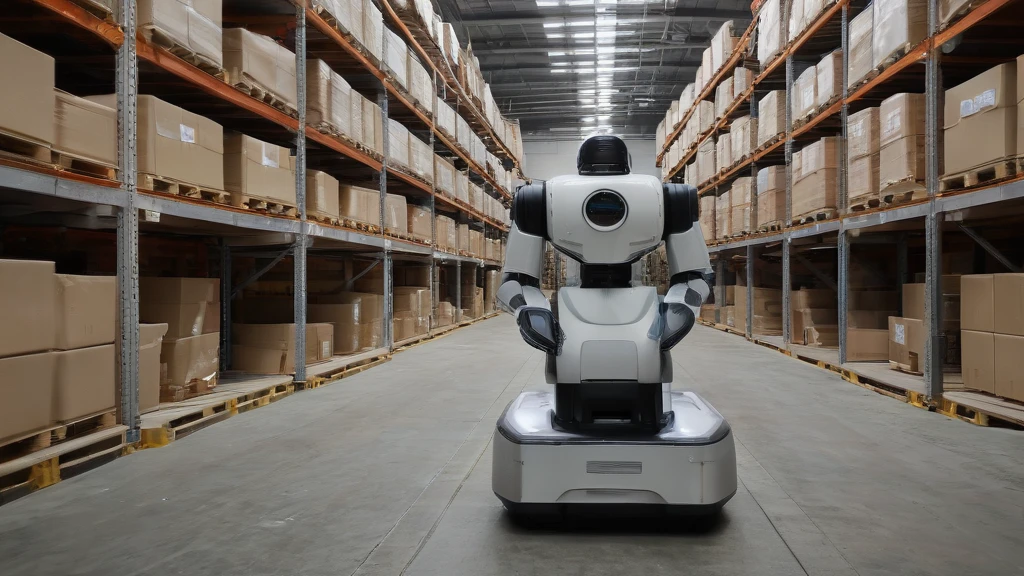
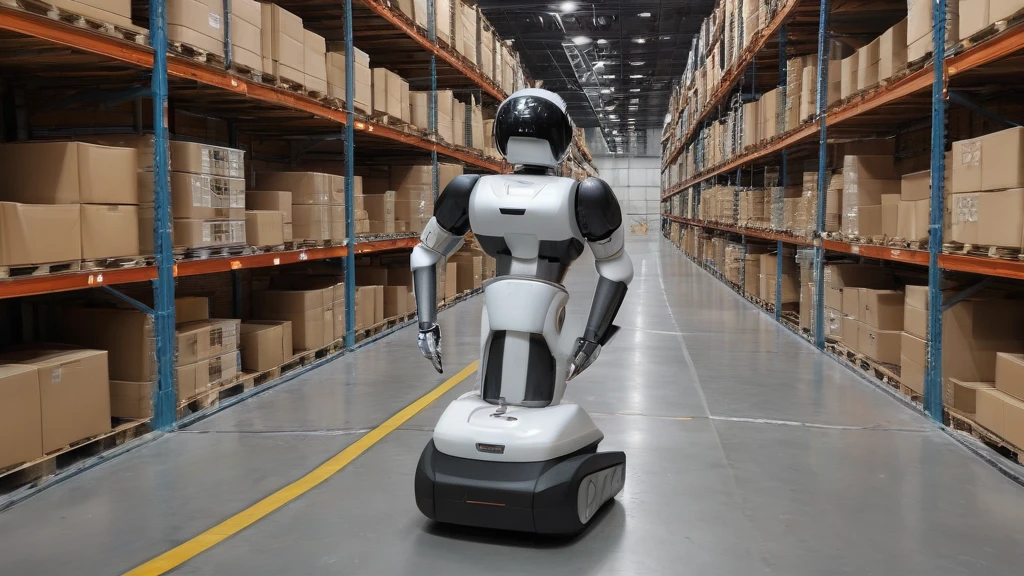
For companies involved in robotics integration, such as NexaRob, this type of approach means the ability to create solutions tailored to specific industrial or domestic needs - for example, in warehouse logistics, where a robot must not only move around the halls but also precisely place items on racks. However, in order for such systems to become widely available, research will need to be expanded to include aspects of response time, energy consumption and resilience to sensory errors. In this context, MoPA is not the end of the road, but an important step towards full autonomy in mobile manipulation.
MoPA not only improves the effectiveness of mobile manipulation, but also opens up new possibilities for integrating robots into complex industrial and logistics systems. By separating perception at the action level, the system can better cope with dynamic changes in the environment - for example, by moving through dense passageways while simultaneously manipulating objects of different masses and shapes.