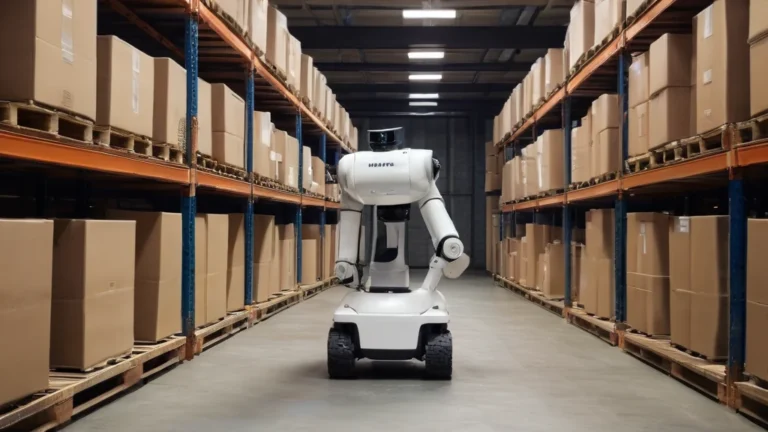


Pioneering achievement in factory logistics.
The IERA 2025 Award, awarded by the International Federation of Robotics (IFR), was presented to the OTTO solution for its groundbreaking approach to automation. material handling. in production environments. It is the first AMR system in the world that not only handles heavy loads but also manages a fleet of over 100 units in real time. Such scaling has so far been difficult to achieve due to limitations in synchronization, safety and integration with existing production systems.
OTTO's ability to operate in large fleets means not only a technological breakthrough, but also a shift in the approach to automation. Instead of limiting itself to individual robots supporting an operator, the new solution enables full autonomy of logistics processes at the level of the entire production hall. This changes the way companies think about efficiency and safety in production.
Advanced software as the key to scalability.
 Enlarged imageClose zoomPrevious image
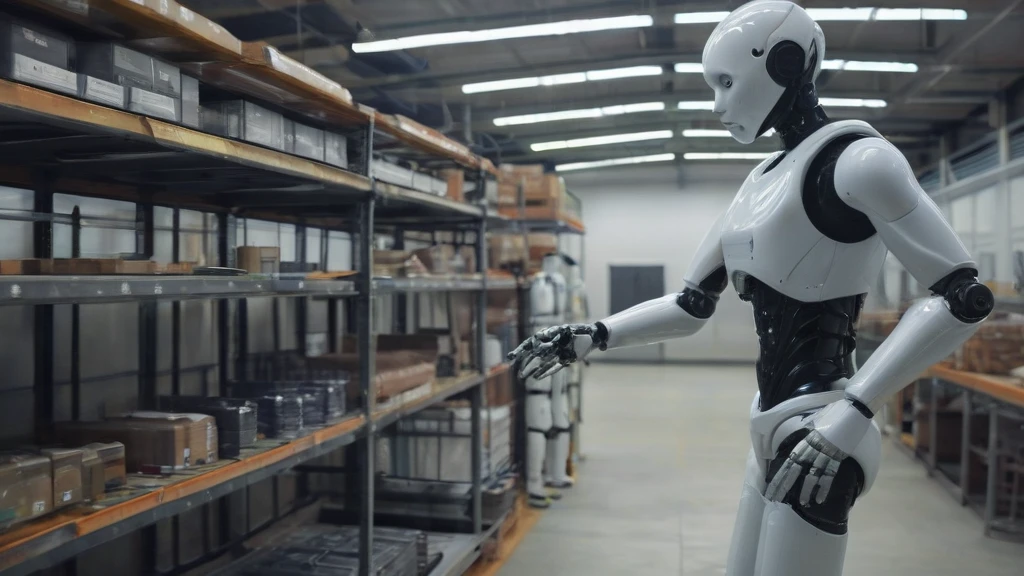
The OTTO solution is not just about hardware. The key to its success is integrated software that manages the fleet of robots, analyzes movements and delivers data remotely. The system was created specifically to support one of the largest AMR fleets in the world - which demonstrates its technological maturity and operational stability.
The software provides not only route optimization, but also maintains high safety standards. Robots are able to dynamically react to changing conditions on the floor - for example, avoid people, obstacles or change routes without conflict with other units. This allows robots and employees to work together smoothly in the same environment, which is crucial for the acceptance of technology in real-world conditions. production environments.
The importance of the award for the future of automation.
The IERA 2025 award is not just an honorary recognition - it is a signal to the entire industry. It indicates that innovations in robotics are no longer limited to experiments or small pilot projects. OTTO shows that AMRs can be not only functional, but also scalable and ready for mass deployment.
Although the award was given to Rockwell Automation as the owner of the solution, it is worth emphasizing that OTTO is not a product of the company in the traditional sense - it is an integration of technologies that can be used by various organizations. The award confirms that the development of AMRs goes beyond the demonstration and testing phase to reach a state of maturity that enables real-world deployment in many sectors.
Other finalists and industry context.
W in 2025 OTTO competed with other innovative projects. Among the finalists was Aldakin from Spain, which presented a robotic head for processing composite materials, reducing the emission of harmful dust. From China also came "ExoMotus M4" - a rehabilitation robot for patients with neurological and musculoskeletal disorders. The last finalist was the MAIC-X humanoid robot from Youibot, designed for industrial inspection.
In the industry context, it is worth noting that in the last year, the market for robots for transport and logistics has shown significant growth - it already accounts for 52% of all of robot installations services. This confirms the growing demand for automation solutions that not only increase efficiency but also reduce risks for employees.
In the industry context, the IERA 2025 award for OTTO signifies a breakthrough in the perception of logistics automation. Previous AMR solutions were often limited to small tasks supporting the operator or operated in isolated production areas. OTTO, on the other hand, shows that mobile robots can become an integral part of a comprehensive logistics system, operating independently and safely in dynamic factory conditions. This changes the way companies plan their production infrastructure - from now on, automation is not only about replacing manual labor but also about rebuilding the entire internal logistics at the hall level.
This approach accelerates the production cycle, reduces the risk of failures caused by human error, and enables faster adaptation to changing market needs. It is worth emphasizing that the scale of implementation - a fleet of over 100 robots - is not only a technical achievement but also evidence of investors' and customers' trust in the new generation of robotics. The IERA award confirms that the future of factory logistics lies in scalable, intelligent, and integrated solutions that not only work but also learn and adapt to real-world conditions.