

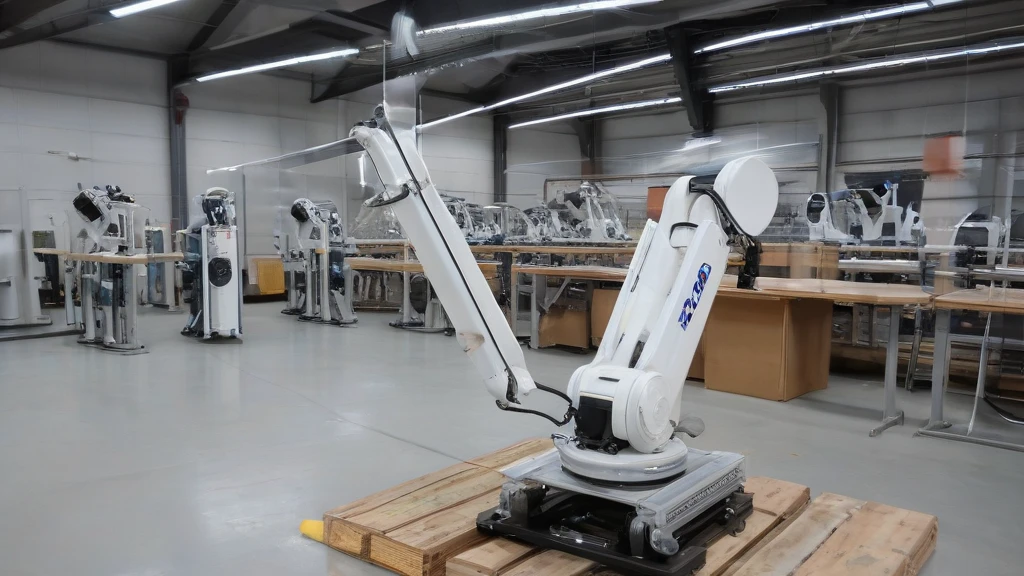
Robots as an engine of economic recovery
Almost 4 million expected by 2022 industrial robots operating in factories around the world. This is not just a number - it is a signal that automation is becoming the foundation of economic recovery after the coronavirus crisis. Robots not only increase efficiency, but also help companies strengthen their resilience to disruptive situations, such as the pandemic. Their role in automating production is becoming crucial for a faster return to a stable growth rate.
The increase in the number of robots announced by the International Federation of Robotics (IFR) is not accidental. It is a consequence of changes in production models, which now treat automation as a long-term strategy, and not just as a way to reduce costs. In this context, the growing demand for employees with technical and digital skills becomes a natural effect of technological development.
Education facing the automation challenge
 Enlarged imageClose zoomPrevious image
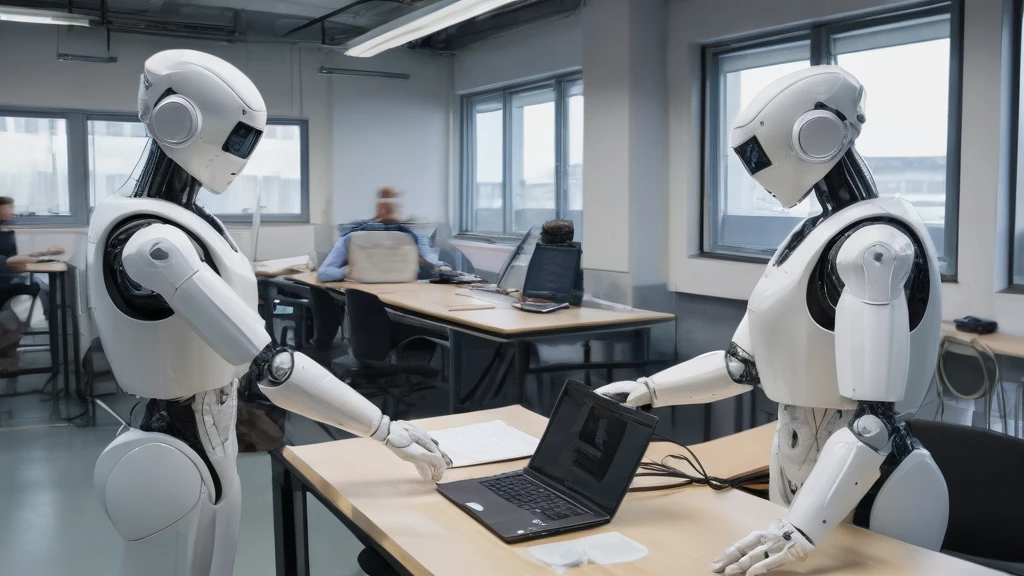
Modern education systems must effectively adapt to the growing demand for robotics-related skills. This is not only a matter of technical competence, but also about the ability to solve problems, think critically and adapt to changing working conditions. As Dr. Susanne Bieller, Secretary General of IFR, emphasizes, "Economies must embrace automation and build the skills required to profit - otherwise they will be at a competitive disadvantage."}}
In this context, the criticism applies not only to educational systems but also to recruitment strategies. Companies are beginning to change their approach to hiring: instead of looking for people with specific professional qualifications, they are increasingly assessing potential and the ability to learn. This is a short-term strategy that can help fill gaps in the labor market, but it does not solve the long-term problem - the lack of appropriate school programs and universities.
Leading countries and those that are still adapting
A study by the Economist Intelligence Unit (EIU) entitled "Automation Readiness Index" shows that only four countries - South Korea, Estonia, Singapore, and Germany - have mature educational policies in place to address the challenges of automation. These are the countries with the highest readiness for digital transformation. Among other countries, Japan, the USA, and France are considered developed, while China is considered a country with developing readiness.
These differences show that not all economies are equally prepared for the future. Countries that do not invest in technical and digital education risk losing competitiveness. In this context, IFR emphasizes the need for multilateral dialogue and international knowledge exchange - this is not only a matter for one country but a global responsibility for the future of work.
Practical consequences for companies and employees
For companies, the growing demand for robotics skills means the need to invest in training, not just equipment. First and foremost, it is necessary to transform the approach to recruitment - from professional qualifications to specific competencies and the potential to learn. This may be the only way to fill gaps in the labor market, especially when there is a shortage of experienced staff.
For employees, this is both a challenge and an opportunity. People who are willing to continuously learn and adapt can find new career opportunities even without a traditional degree. However, without systemic change in education, this opportunity will remain inaccessible to most. Therefore, it is important not only to develop skills but also to build a culture of lifelong learning.
In the context of practical consequences for employees, it is worth emphasizing that the growing demand for robotics skills does not only mean technical requirements - it is also a change in professional culture. Employees must be prepared for continuous learning, and companies - to invest in human capital development. Without systematic educational and political actions, even the most advanced technologies will not bring the expected benefits. Therefore, it is crucial to combine practical training with curricula in schools and universities to prepare future generations for work in an automated world. This approach not only supports economic recovery after the pandemic but also ensures a balance between innovation and social justice.