

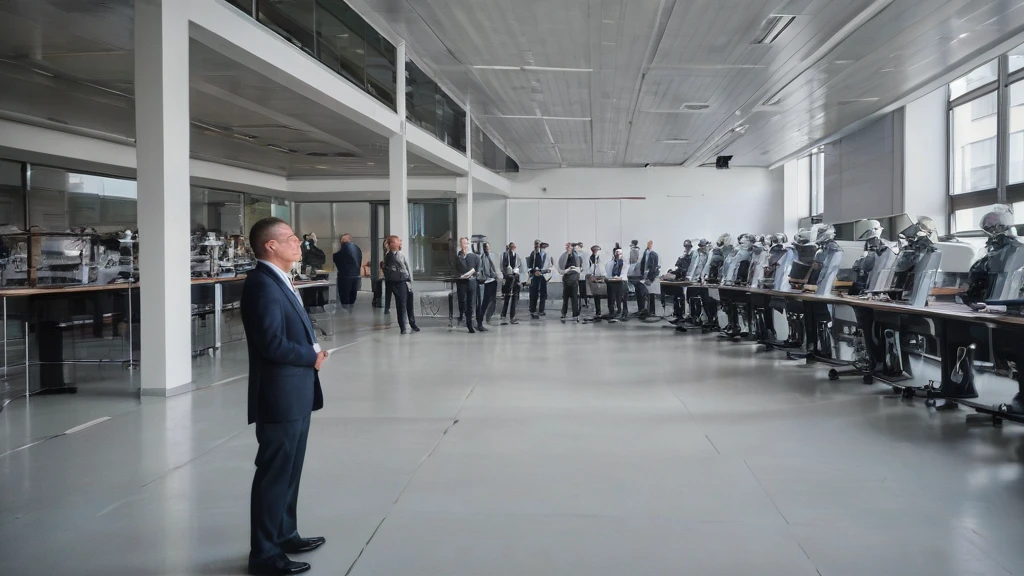
On October 21, 2026, at the Institute for Robotics and Intelligent Machines This, a lecture from the IRIM Fall 2026 seminar series will be held, focusing on a key challenge in robotics: achieving seamless physical interaction between humans and machines. The speaker will be Nadia Figueroa from the University of Pennsylvania, who will present a new approach based on dynamic systems, enabling robots to have safe, adaptive, and compliant behavior in real time - even under uncertainty.
Seamlessness as a new standard in human-robot interaction
This event is part of the IRIM Fall 2026 series and will be held on October 21, 2026, in Klaus 1116 E&W Institute for Robotics and Intelligent Machines. It focuses on one of the most ambitious goals of modern robotics: achieving seamless physical interaction. The goal is to enable robots not only to perform tasks but also to react to human movements, forces, and intentions in a natural way - just like a human would. The speaker will be Nadia Figueroa, an assistant professor at the University of Pennsylvania, who has been researching the integration of machine learning, control, and estimation in the context of safe human-robot collaboration for many years.
Instead of treating robots as static data processing systems, the new approach is based on modeling their behavior as dynamic systems - where movement, force, and intention are constantly co-regulated. This allows for the creation of motion policies that are not only safe but also flexible and predictable even in uncertain conditions. Research shows that this approach enables robots to generalize complex behaviors based on minimal demonstrations - which means that they do not have to be taught each task separately.
Dynamic systems as a foundation for safe collaboration
The key to achieving seamless interaction is the use of a dynamic systems perspective. Nadia Figueroa will present how shaping robot behavior through stable vector fields, confidence manifolds, and adaptive dynamics models allows for generating motion policies that are reactive, safe, and consistent. This is not just theory - research shows that this approach enables robots to avoid obstacles in real time, adapt to changes in the environment, and maintain safety over a long horizon during physical collaboration.
It is also important that this approach allows for formal safety guarantees - which is crucial in human environments. A robot cannot just be "pleasant to work with"; it must be predictable and safe, even in non-standard situations. The integration of control theory, machine learning, and perception makes it possible to build robotic intelligence that not only reacts but also "understands" the physical context - just like a human. This represents a breakthrough towards true collaboration, rather than just automation.
From simulation to real-world operation: the future of robotics aligned with human needs
 Enlarged imageClose zoomPrevious image
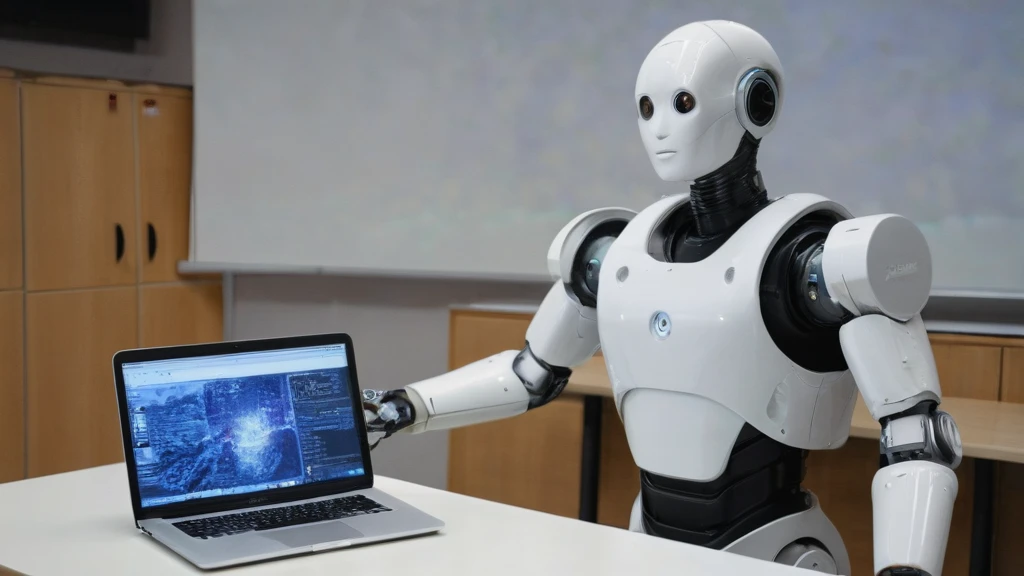
As part of Nadia Figueroa's research, work is also being done on combining the principles of dynamic systems with vision-motor learning, based on data from simulations. The goal is to achieve stable, compliant, and force-aware robot behavior - even without direct interaction with humans during learning. This means that a robot can "learn" the appropriate approach to a task in simulation and then transfer it to reality, while maintaining safety and smoothness. Research shows that this approach allows for faster and more efficient learning of complex tasks.
An important aspect is also that the robot does not have to be "perfect" - it may be somewhat uncertain or imprecise, but its behavior will still be safe and compliant. This changes the way we think about robots: not as ideal machines, but as partners that can learn, adapt, and collaborate in a natural way. This approach has the potential to transform sectors where physical interaction with humans is key - from rehabilitation to logistics.
Significance and limitations: what does it really mean for the future?
The IRIM Fall 2026 event is not just a presentation of research - it is a signal that robotics is moving towards a new stage. Instead of focusing solely on precision and speed, more and more attention is being paid to fluidity, safety, and adaptability. This is important for many areas: from assisting the elderly at home, through auxiliary robots in factories, to therapeutic interactions. However, it is worth remembering that this is not yet mass implementation - the research is at the experimental and demonstration stage.
The approach based on dynamic systems has the potential to change the way robots are designed, but its effectiveness depends on the quality of models, data, and environmental conditions. The lack of full compliance with human expectations or unpredictable behavior in unusual situations may still pose a challenge. Therefore, further research, testing, and development of formal safety guarantees is crucial - which is what Nadia Figueroa promotes.