

The problem of delays in models supporting autonomous drones
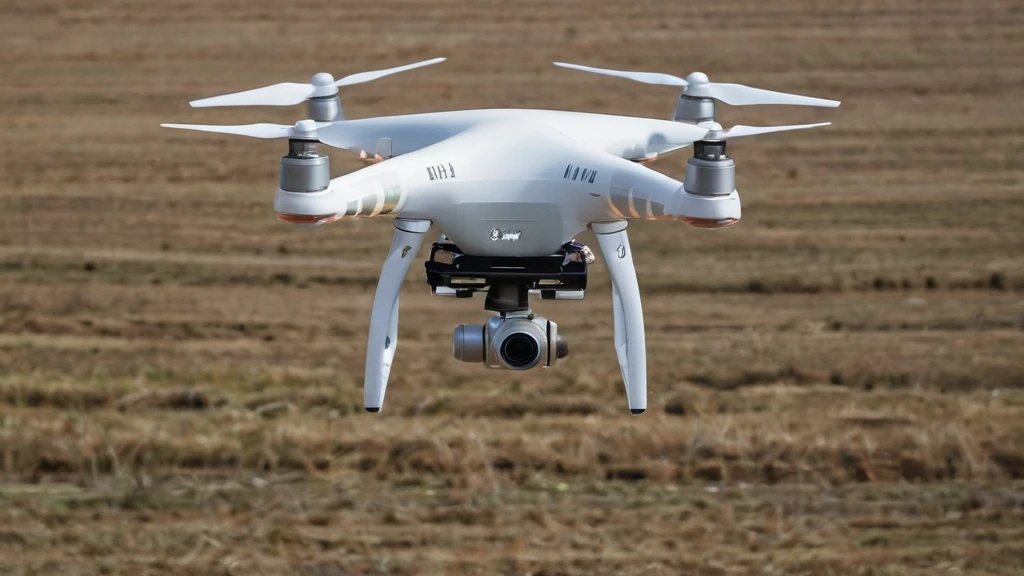
A study conducted by a research team involving authors from various institutions showed that the integration of vision-language models (VLMs) into the navigation of autonomous drones, although enabling advanced semantic reasoning, carries a significant risk of destabilizing flight control. The key problem turned out to be inference delays - the time needed to process visual data and generate a language response. These delays, especially when unpredictable, can disrupt the synchronization between the decision-making system and the drone's motion control, leading to an unstable flight path.
Researchers conducted tests on two different hardware platforms: a high-performance workstation and a laptop with limited graphics. This approach made it possible to assess the impact of computational power on model performance in real-world conditions, where hardware may be limited. The results showed that even small delays can have a significant impact on control decisions, especially when the system operates in environments with variable structure or high levels of noise.
The phenomenon of dichotomy: from interpretational errors to excessive trajectory correction
The study revealed a significant difference in the behavior of models with different sizes. Models with low computational power, although faster, were prone to structural interpretive errors - for example, they incorrectly identified obstacles or failed to recognize changes in the environment. Such errors led to non-standard decisions that could violate the deterministic state of the control machine, which in turn caused flight instability. In contrast, models with high computational power, although more precise in reasoning, exhibited significant inference delays.
As a result of these delays, the decision-making system received information with a delay, which led to excessive correction of the flight path. The drones reacted to data that was no longer current, causing vibrations and movement instability. Researchers found that this effect was particularly noticeable in dynamic environments, where the speed of change required an immediate response from the decision-making system. As a result, heavy models, despite their greater accuracy, were less useful in practice.
 Enlarged imageClose zoomPrevious image
Optimal compromise: medium computational power architecture
Research results showed that an architecture with medium computational power provides the best compromise between reasoning accuracy and real-time stability. Researchers found that such a model can effectively rehabilitate navigation in degraded environments - for example, with limited visibility or changed obstacle structure - without violating real-time stability. This means that the system can still make correct decisions even when conditions are difficult, while also avoiding unstable movement corrections.
Finding this compromise is crucial for the development of autonomous drones in real-world applications - from terrain monitoring to logistics. In practice, this means that it is not necessarily necessary to use the most powerful models to achieve high decision quality. It is enough to have a properly selected solution that works effectively under limited hardware and time constraints. The study was accepted at the Latin American Robotics Symposium LARS 2026, which confirms its importance for the scientific community.
Significance and limitations of research
The research is significant for designing systems supporting autonomous drones, especially in the context of integrating language models into decisions separate from physical factors. It shows that simply increasing computing power is not enough - the key is a balance between speed and accuracy. This leads to specific conclusions: system designers should consider inference delays already at the stage of model and hardware selection.
At the same time, the research has limitations. The tests were conducted under controlled conditions, and the results may vary in real-world environments with high noise, changing light levels, or dynamic obstacles. Furthermore, the study does not include an analysis of the impact of models on energy consumption, which is important for long-term missions. Therefore, the results should be treated as a starting point for further research, rather than as a definitive solution.
The conclusions from the research have significant implications for the design of autonomous systems in other areas where temporal synchronization between data analysis and physical action is critical. An example would be medical robotswhich must respond to changes in the patient's condition without delay, or autonomous transport vehicles operating in dense urban areas. All these applications require not only accurate decisions but also their rapid execution.
The study shows that the choice of a model cannot be based solely on its performance in laboratory tests - it is crucial to check its operation in real-world conditions, taking into account hardware limitations and time constraints. It is also worth noting that a trajectory prediction model for autonomous vehicles in construction zones can use a similar compromise strategy between speed and precision, which confirms the universality of these principles. Therefore, further research should focus on optimizing model architectures in the context of specific usage scenarios, rather than just scaling them.