
A new era of mobility and robotics in the US.
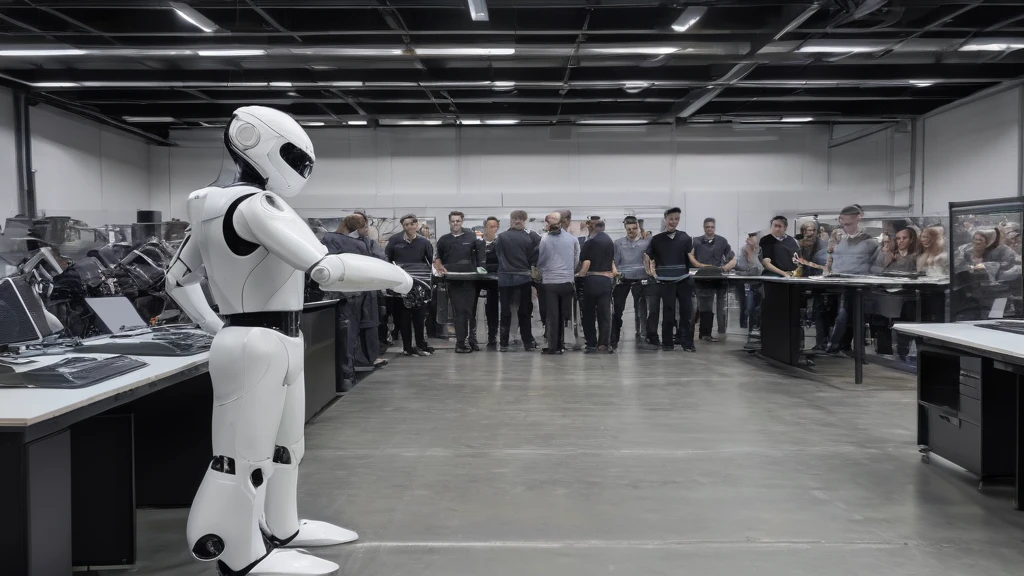
Faraday Future, initially known as an electric vehicle manufacturer, has announced its transition to a new phase of development. The company plans to launch a robot factory in the United States by the end of 2026. This is not only an expansion of its business but also a strategic step towards creating a physical AI ecosystem - the so-called "Physical AI ecosystem." The new investment includes both the modernization of the existing factory in Hanford, California, and the consideration of new locations. The decision on the location has not yet been made, but the company clearly emphasizes that the goal is to fully localize production in the US.
According to the plan, the first robot from the "Built in USA" program will be available on the market as early as February 2027. This will not be the only product - the company plans to develop three to five new or next-generation robotic devices each year. As part of a three-stage strategy, robots will initially be assembled in the US, and then production of key components will begin in the country. By the fourth quarter of 2028, the company aims to achieve full "Made in USA" production for its physical AI devices.
AI ecosystem and new business models.
 Enlarged imageClose zoomPrevious image
Faraday Future is not limited to production - the company is building a comprehensive ecosystem that combines mobility with robotics. As part of its so-called "Four-Core Full-Stack AI," the company supports the development of four key areas: EAI Brain (intelligent brain), EAI Devices (devices), Industry Productivity Solutions, and Developer Platform and EAI Data Factory. This architecture is designed to enable the joint development of AI models, developer tools, and data collection infrastructure across various products - from cars to humanoid robots.
As part of the ecosystem's development, the company organized its first EAI Robotics partner conference. During this event, it announced the launch of recruitment for distributors, industrial solution providers, developers, and educational partners. Collaboration with two public school systems in California - Lynwood Unified and El Segundo Unified - includes approximately 22 elementary and secondary schools. In addition, the company is developing another 11 potential educational partnerships in ten US states.
RoboShare - a new form of access to robots
One of the most innovative elements of the strategy is the RoboShare platform, operating under the control of AIxC, in which Faraday Future holds a majority stake. The platform operates according to the "Uber + Turo" model - it enables the rental and sharing of robots as production assets. This is not only a new way to access technology but also a new approach to the economics of ownership. The company confirmed that RoboShare has already completed its first paid commercial order and entered into a one-year lease agreement for $33,000.
This indicates a growing demand for robots in sectors where full ownership is not necessary - for example, in education, inspection, or security. The platform can accelerate the adoption of technology by small and medium-sized enterprises that cannot afford to purchase expensive equipment. In this context, Faraday Future's role as an integrator and ecosystem supporter becomes key - the company does not produce robots but creates conditions for their widespread development.
Perspectives and limitations
Faraday Future's plan includes an investment of at least $5 billion in the United States over the next ten years. This confirms its commitment to developing local production and a technological ecosystem. However, it should be remembered that most of the information comes from company statements - there is no confirmed data on project implementation, testing or industrial-scale deployment yet. All dates, such as the launch of the factory by the end of 2026 or "Made in USA" production by 2028, are forecasts.
In addition, although the company mentions two initial products - the Next Futurist humanoid and the Next Aegis quadruped - no technical details or data on their functionality have been provided. There is no information on whether the robots are already in the demonstration, testing or fully production-ready phase. Therefore, although the strategy is clear and ambitious, its implementation remains uncertain. The ultimate success depends on the company's ability to translate statements into concrete implementations.