

The B-Human team: from a student project to world champions
The story of the B-Human team began more than twenty-six years ago, when Tim Laue, as a student, tried to teach robots to play soccer as part of the RoboCup project. Today, this project has evolved into one of the most advanced robotic teams in the world - B-Human, which represents the University of Bremen and the German Research Center for Artificial Intelligence (DFKI). Their recent successes include winning the RoboCup World Championship in Korea and taking home two titles at the World Humanoid Robot Games in Beijing, confirming their position as a leader in robotic soccer.
The team not only wins but also develops new technologies and shapes the future of robotics. In Beijing, they competed against eight Chinese teams in the middleweight class - one of the most challenging tournaments in the world. Their success is not accidental, but the result of systematic work on algorithms, perception, and strategy, which are tested by students and researchers as part of the project.
How does a team of robots work? The technology behind the scenes.
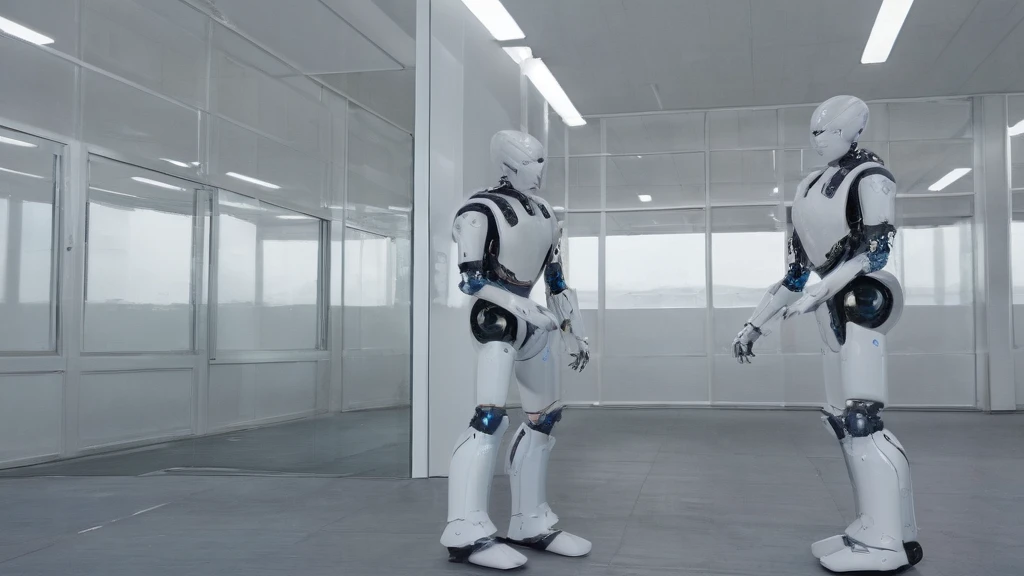
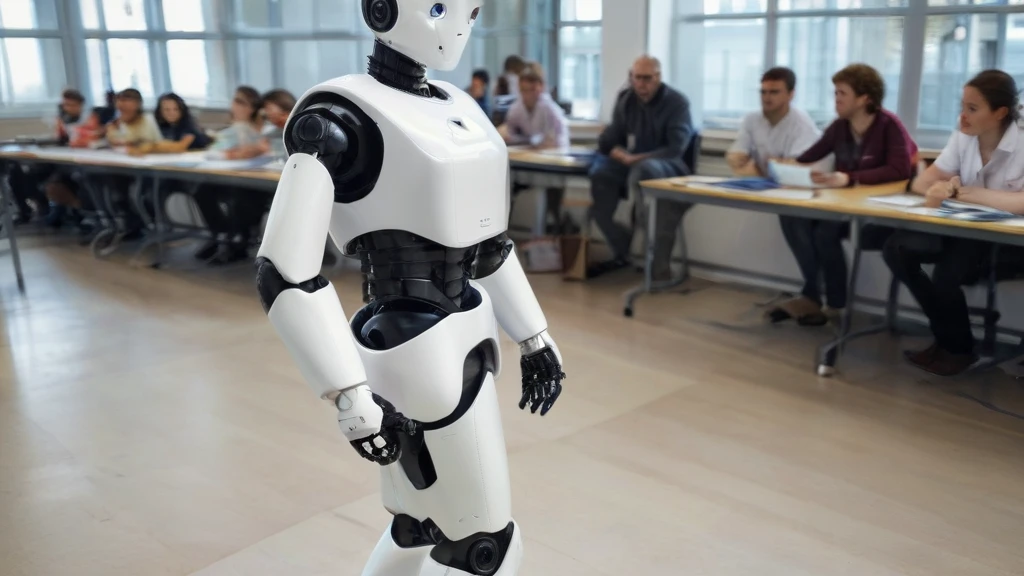
In matches, B-Human uses seven Booster K1 robots - units weighing approximately 20 kilograms that can be easily transported in the trunk of a car or even in a suitcase. Two of them are backups, which prevents failures during tournaments. Although smaller robots such as Sony Aibo or NAO were previously used, the new Booster K1 models provide a realistic look and functionality that resembles real soccer matches.
Each match generates approximately 20 gigabytes of data - recorded at a frequency of 16 milliseconds. This data is analyzed after each match: what did the robot see, what did it miss, or did it misinterpret the white coach as the ball? Such detailed control allows for precise adjustment of behaviors - for example, when should the goalkeeper leave the goal and when should they stay inside.
 Enlarged imageClose zoomPrevious image
Learning from mistakes: how robots develop strategy.
The success of B-Human is not only due to hardware. Data analysis and machine learning are key. After each match, the team conducts a detailed review to identify perception errors - for example, when a robot mistook the white coach for the ball and moved in the wrong direction. These cases are used to adjust the learning models, which allows for improved performance in the future.
Several solutions have already been developed as part of a student and scientific project: one master's thesis concerned the goalkeeper strategy - when to leave the goal and when to stay. Another focused on image processing and the integration of different visual perspectives. One of the projects created the basis for team strategy. This shows how robotics not only develops technology but also shapes new generations of engineers.
Why should people let robots play soccer?
Tim Laue, one of the team's main coaches, admitted that he doesn't play soccer. "I can't do it. I'd rather leave that to the robots." This statement is not a joke - it is an expression of awareness that robotics has reached a level where it can transform even the most dynamic and demanding games in a more precise way than humans. It is not about replacing humans, but about using their intelligence to build systems that operate flawlessly, analyze data in real time, and learn from every situation.
This is not just a sport. It is a demonstration of advanced perception, cooperation between multiple units, and learning through data - all in a real-world environment. For the future of robotics, this is a key step: not only to perform tasks but also to understand context, make decisions, and cooperate in real time.
What B-Human has achieved is not just a matter of technical precision - it is primarily a demonstration of the potential of autonomous systems in a dynamic environment. Each match is not only a test of robot performance but also an opportunity to understand the limits of cooperation between humans and machines. For the scientists and students who are working on this project, it is a real laboratory of innovation: where mistakes are not the end, but the beginning of a new cycle of learning. In the future, this approach can be applied in other areas - from logistics and medicine to public safety.
When robots learn from mistakes, analyze data in real time, and cooperate without conflict, they not only play soccer better than humans - but also show how artificial intelligence can support human goals without replacing them. It is this belief - that robots do not have to be competition to be valuable - that is the key to a new era of cooperation between humans and machines. In the context of global challenges, such as climate change or health crises, systems like B-Human can become the foundation for data-driven and collective intelligence solutions. After all, if robotics