
Automation of returns as the first step towards physical AI in practice.
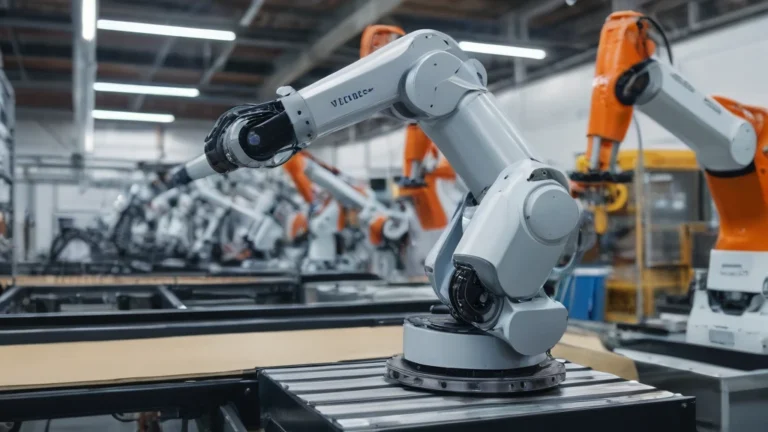
In Zalando's logistics center in Greven, Germany, and Świebodzin, Poland, robots from the UR12e-1300 series by Universal Robots are already processing clothing returns without human intervention. This is not an experiment - it is the first phase of a scalable initiative to implement physical AI in European logistics. The solution based on the Cortex platform from Sereact allows robots to handle various forms, orientations and packaging of goods, which never come in a uniform arrangement. This is a key problem in processing returns - and this is what the new generation of robotics with intelligent AI focuses on.
Zalando, a technology platform for fashion and lifestyle connecting over 7,000 brands with 62 million customers in 29 markets, must process hundreds of thousands of returns each month. Traditional automation systems could not cope with the diversity of goods - but now, thanks to the integration of Cortex with Teradyne Robotics robots, the process is not only automated, but also complies with new EU regulations prohibiting the destruction of returns. This means that physical AI not only increases efficiency - it also helps to meet legal requirements.
One AI, many tasks - without retraining.
A key advantage of the Cortex platform is its ability to operate on a single model for many different tasks. As Dr. Ralf Gulde, CEO of Sereact, points out: "What one robot learns, all other robots benefit from." This means that there is no need to train a separate model for each new product or type of packaging. In practice, this translates into the ability to quickly deploy solutions in different locations - without long training cycles. The platform works on tasks such as pick-and-place, sorting, kitting, and Machine tending robots or order fulfillment.
This is not just about accelerating processes - it is a change in approach to automation. Instead of designing specialized systems for each task, the company can now invest in one AI that will learn and adapt in real time. Collaboration with Teradyne Robotics enables the use of a global distribution and integrator network, which accelerates the scaling of solutions to new markets - Sereact has also been operating in the USA since 2026 through its headquarters in Boston.
Physical AI in practice: from simulation to operation on the line
 Enlarged imageClose zoomPrevious image
The Cortex solution was not created from scratch - its development is based on advanced NVIDIA tools. The model is trained in the Isaac Sim environment using open-world Cosmos models, which allows for the simulation of infinite scenarios before deployment. Then, the model is further trained using reinforcement learning within the Isaac Lab framework and tested on Teradyne Robotics hardware before deployment.
In the production environment, Cortex operates on the NVIDIA Jetson Thor platform, where processing must occur at the speed of the production line. The developer version and model updates are managed by NVIDIA DGX Spark at the logistics center level. This ensures continuity, scalability, and rapid adaptation to changing operational conditions - key for applications in dynamic logistics and retail.
What does this mean for the future of automation?
The fact that physical AI is already in use at Zalando's centers is not a random experiment - it is the first step towards a new era of automation. Previously, robots were configured only for specific tasks and products. Now, thanks to the integration of AI with open robotic platforms, the robot can learn in real time and adapt to changing conditions without human intervention. This changes the way companies think about automation - not as a cost, but as flexible capitalization.
However, it should be remembered that this solution works in well-controlled conditions: in logistics centers with established workflows and access to data. In the case of more unpredictable environments - such as retail stores or on the streets - the technology may encounter difficulties. Currently, its application is limited to structural tasks, but the development of VLA (Vision-Language-Action) models and the availability of more powerful computing platforms are opening the way for even more advanced applications.