

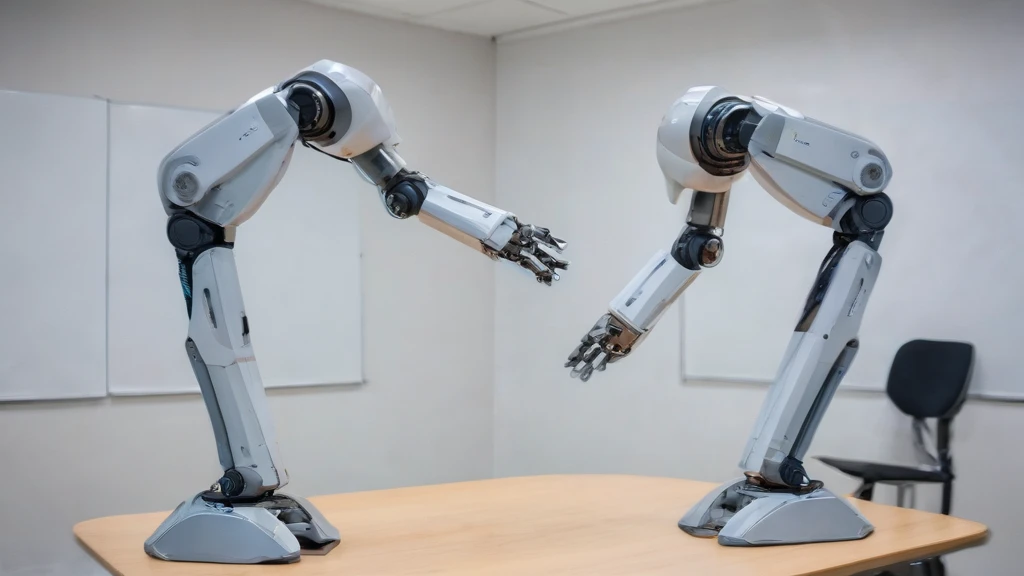
Experiment: comparison of stiffness and flexibility in human-robot interaction
The study, published on arXiv in 2026, focuses on one of the most natural human gestures - a handshake - and its implementation in robot interactions. The research team led by Luigi Miranda conducted an experiment with 10 volunteers who performed a handshake with two versions of the same robot: one with rigid joints and the other equipped with flexible elements based on series elastic actuators (SEA). The goal was to compare the parameters of safety, comfort, and naturalness of interaction as perceived by people.
During the experiment, objective data regarding the trajectory of the robot's end effector was recorded, and subjective information was collected using a questionnaire. The questionnaire focused on assessing safety, naturalness, and confidence levels during the handshake. The results show that the version with flexible elements was perceived as safer and more comfortable, which suggests the potential importance of such solutions for robots designed to collaborate with humans in social environments.
Why can flexibility affect the perception of safety?
 Enlarged imageClose zoomPrevious image
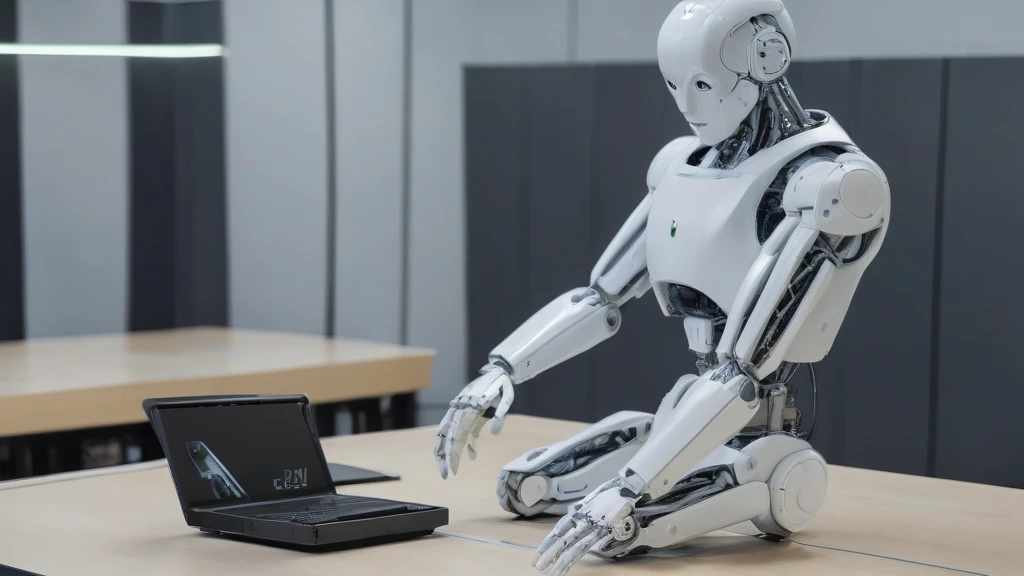
In the context of physical interactions between humans and robots, joint stiffness can lead to unpleasant contact or a risk of injury, especially if the movement is inconsistent or unpredictable. Introducing flexibility through a series of spring-actuated actuators (SEA) allows for energy absorption during contact, which reduces the forces acting on the human. This can be crucial in situations where the robot cannot accurately predict human movement - e.g., during a spontaneous handshake.
The study does not confirm, however, that flexibility increases physical safety in a technical sense (e.g., reduces forces to a safe level), but it shows that people feel more comfortable and confident during interaction. This means that the effect is primarily psychological - flexibility "resembles" human movement patterns, which increases trust in the robot.
Significance for the development of social robots and human-robot interaction
The results of the study are significant for the design of robots intended to collaborate with humans in everyday environments - such as healthcare, education, or customer service. If people perceive interactions with a robot as more natural and safe, acceptance of the technology may increase. Flexibility not only improves the user experience but can also support the development of social robots that are designed to operate in close contact with humans.
It is worth emphasizing, however, that the study concerned one type of interaction - a handshake - and it is not possible to infer from it the effectiveness of flexible elements in other situations, such as moving around a room or lifting objects. Therefore, the results are limited to the context of physical contact and cannot be automatically extended to other applications.
Limitations of the study and prospects for further research
The study was conducted on a small group of volunteers - 10 people - which limits its representativeness. The lack of data on gender differences in the assessment of safety or comfort does not allow for deeper analysis, although the study included both women and men. In addition, the experiment concerned only one interaction - a handshake - which makes it impossible to generalize the results to other types of physical contact.
Further research should include a larger number of participants, diverse age groups, and application contexts. It is also worth investigating how flexibility affects the long-term acceptance of robots in everyday use - whether users still feel more comfortable after a few days of interaction, or whether the effect disappears.
It is worth emphasizing that although the study did not show significant differences in physical safety parameters, such as maximum forces acting on the hand, its importance lies in understanding the psychological dynamics of trust. Flexibility, even if it does not reduce the risk of injury in a technical way, creates an illusion of controllability and predictability of robot movement - features that people associate with natural human interactions. This may be key to further developments in the field of social robotics, where user acceptance often depends not on technical parameters, but on the quality of experience.
In the future, research may focus on analyzing the impact of flexibility in other types of physical interaction - for example, when touching a hand or supporting the body - which will allow for the creation of more comprehensive models of perceived safety. Such an approach can also support the development of design standards for collaborative robotswhich consider not only technical aspects, but also psychological and social aspects of interaction.