

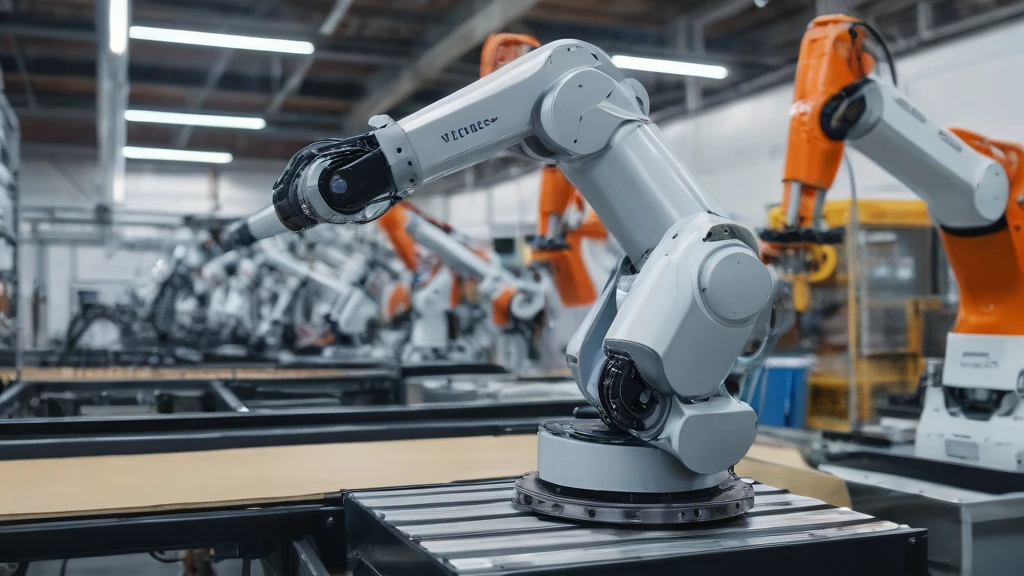
What is Physical AI and why now?
Physical AI is not only artificial intelligence in robots - it is their ability to perceive, adapt and act in dynamic, physical environments. Unlike classic automation, which operates on pre-programmed sequences, Physical AI allows machines to react to changes in real time: for example, adjust the force during assembly, avoid obstacles or correct the trajectory while working with unpredictable materials.
In today's factories, where production variability is increasing and there is a shortage of skilled workers, such solutions are becoming crucial. Instead of forcing uniformity of processes, Physical AI allows robots to operate in real-world conditions - without the need for complete reprogramming.
Platform as a foundation: how Universal Robots builds Physical AI
Universal Robots it does not create robots with AI from scratch, but offers a platform on which solutions can be developed and implemented. The key is that AI integrates above the control layer - it does not overwrite it. This means that basic motion control, safety and stability remain preserved, and intelligence acts as an addition that only comes into play in specific situations.
Thanks to integration with NVIDIA technologies, ROS 2 and tools such as AI Accelerator or UR Trainer, developers can train models on real robots, not simulations. This reduces the risk of the "lab-to-factory gap" - that is, a situation where something works in the laboratory but fails in production.
Safety and scalability: essential conditions for real-world operation
AI cannot operate outside of safety limits. Universal Robots ensures that even in the case of AI-based decisions, all safety rules are maintained - both hardware and software. The systems operate within certified safety limits, which allows them to be used safely in production environments.
Scalability is another key element. The platform supports the implementation not only of a single robot, but of entire fleets - from individual workstations to global production networks. Thanks to an ecosystem of over 1200 partners and integration with companies such as Siemens or Microsoft, solutions can be implemented quickly and without having to build them from scratch.
From experiment to production: seeing is believing
 Enlarged imageClose zoomPrevious image
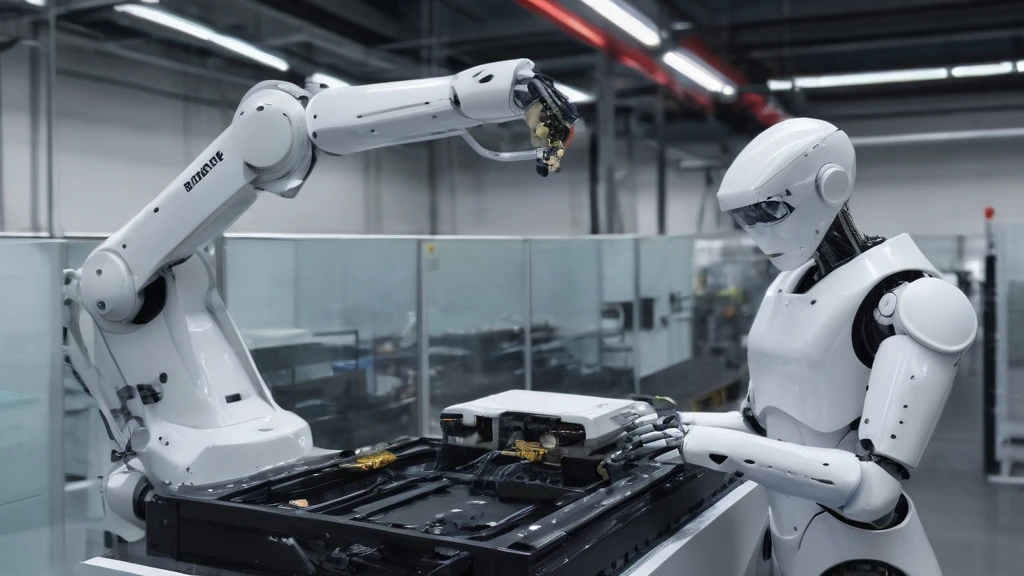
Many AI projects in robotics stall in the experimental phase. Why? Because the laboratory environment does not reflect real-world conditions: vibrations, material variability, slight deviations in assembly. Universal Robots solves this by enabling developers to work on the same robots that are used in factories.
This allows for earlier detection of problems - e.g., when the model cannot cope with a small displacement of a part - and only then implementation in production. As a result, AI becomes not only intelligent but also durable and reliable.
The fact that AI can operate in a production environment does not automatically guarantee its effectiveness. It is crucial to ensure that the models are tested under real-world conditions - with machine vibrations, material variability, and minor assembly deviations. Universal Robots enables this by allowing users to create and train models on the same robots that are used in production. This allows developers to identify problems early on, for example, when AI cannot handle a slight misalignment of a part or a change in its surface. This reduces the risk of failures after implementation and ensures that the solution is not only intelligent but also durable and resistant to factory conditions. This approach eliminates the classic "lab-to-factory gap" problem, where something works in the laboratory but fails in actual production - which often leads to project failures.
What does this mean for the industry?
Physical AI is not just a new feature; it's a change in approach to automation. Instead of enforcing uniformity, it allows for flexibility in production: quickly switching between different products, adapting to changing conditions, and reducing the need for human intervention.
For companies, this means greater resilience to market changes, lower implementation costs, and faster return on investment. For employees, it means the opportunity to collaborate with robots that not only perform tasks but also learn to do them better.