

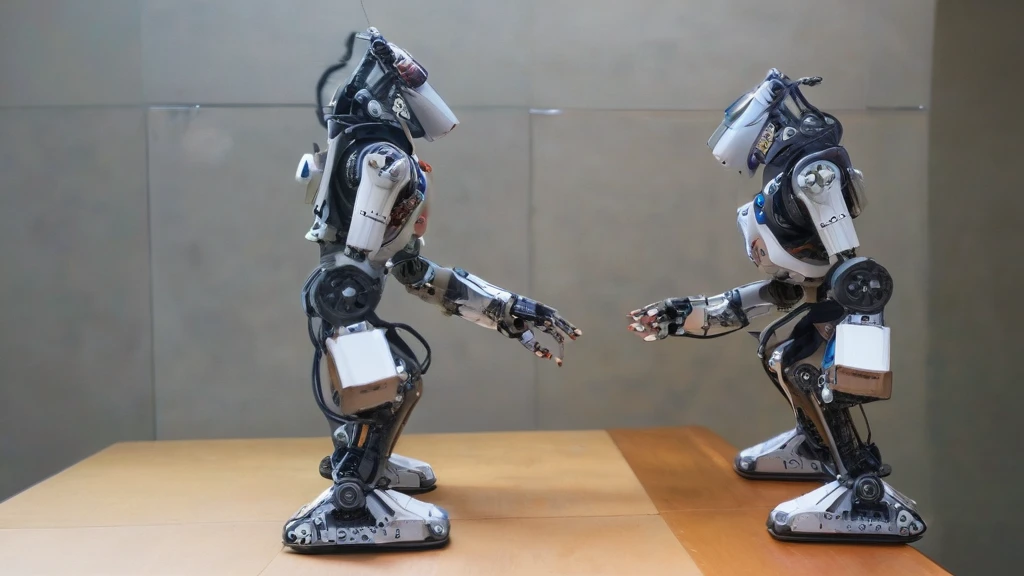
Autonomy and precision in solving the puzzle.
The demonstration from ETH Zurich shows how modern robotic systems can perform complex manipulation tasks without direct operator support. The robot, equipped with cameras and onboard vision systems, independently analyzed the state of the cube, planned movements, and executed them with an accuracy of single degrees of rotation. This is not just a matter of strength - it is about the ability to process sensory data in real time and react to changing conditions, which is crucial for robots operating in dynamic environments.
The team from ETH Zurich emphasizes that such tasks require not only precise motion control but also the ability to predict object dynamics. In this context, the robot did not just "move" the colored walls - it solved the cube in a way consistent with mathematical algorithms, which suggests the integration of decision logic with the physics of motion. This represents a significant step forward towards robots capable of operating in unpredictable conditions, such as rescue or logistics.
Onboard vision and overall control.
The key to success was the use of onboard vision - a system that allows the robot to analyze its surroundings directly from its perspective. Unlike traditional solutions based on external cameras or precisely programmed trajectories, this robot reacted to changes in real time. An example of this is its ability to predict how the movement of one wall will affect the position of others - which required not only calculations but also modeling of physical dynamics.
This approach is especially important for mobile robots that need to move on uneven surfaces and manipulate objects of different shapes and sizes. The demonstration shows that even a quadruped robot can perform tasks requiring whole-body precision, which opens up new possibilities in the field of of industrial robotics, medical, and exploratory robotics. It is worth emphasizing that this is not just an artificial effect - the task was performed without human intervention.
The Reflex system and the future of reactive robotics
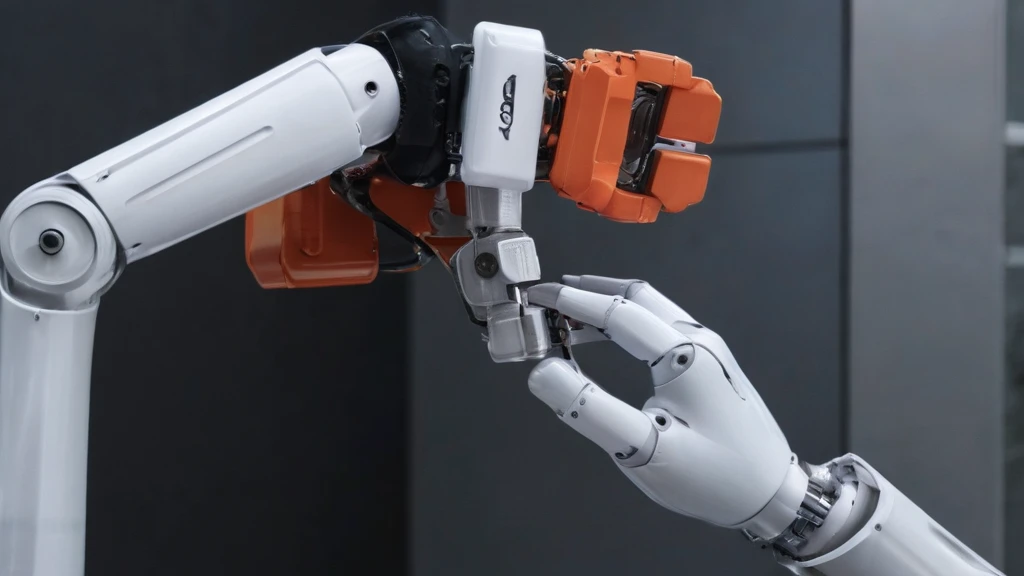 Enlarged imageClose zoomPrevious image
The team at ETH Zurich is working on a system called Reflex, which aims to make it easier for robots to learn how to react to changing conditions in real time. This framework is based on three stages: object detection, prediction of its movement, and planning of the response. The key is a compact representation of object dynamics, which allows for fast data processing without the need for full physical simulation at every moment. This may be the key to building robots capable of operating in unpredictable environments - e.g., during rescue operations after a disaster or in complex industrial conditions.
Although the Reflex system has not yet been published as a complete report, its existence indicates the direction of robotics development: from programmed sequences to autonomous, adaptive systems. The demonstration with the Rubik's Cube is one of the first examples of the practical application of such an approach - not only in theory but also in real time and on a specific mobile device. This shows that the future of robotics may lie in motion intelligence, rather than just strength or precision.
Significance for technological development
The demonstration from ETH Zurich is not just a curiosity - it represents an important step towards robots capable of operating in complex, changing environments. If a quadruped robot can independently solve a Rubik's Cube, it means that it can also analyze the state of an object, plan its movements, and execute them with precision. This opens up possibilities in logistics (e.g., handling goods on pallets), medicine (assisting in rehabilitation), or exploring hard-to-reach areas.
At the same time, it is worth emphasizing that this is not yet an industrial implementation - the demonstration was carried out in a laboratory, and there is no information about scaling or commercialization. Therefore, despite significant progress, robotics is still at the experimental stage. However, it is projects like these that show what the integration of onboard vision, autonomous planning, and overall control can lead to - and the future may be much more flexible than it seems.