

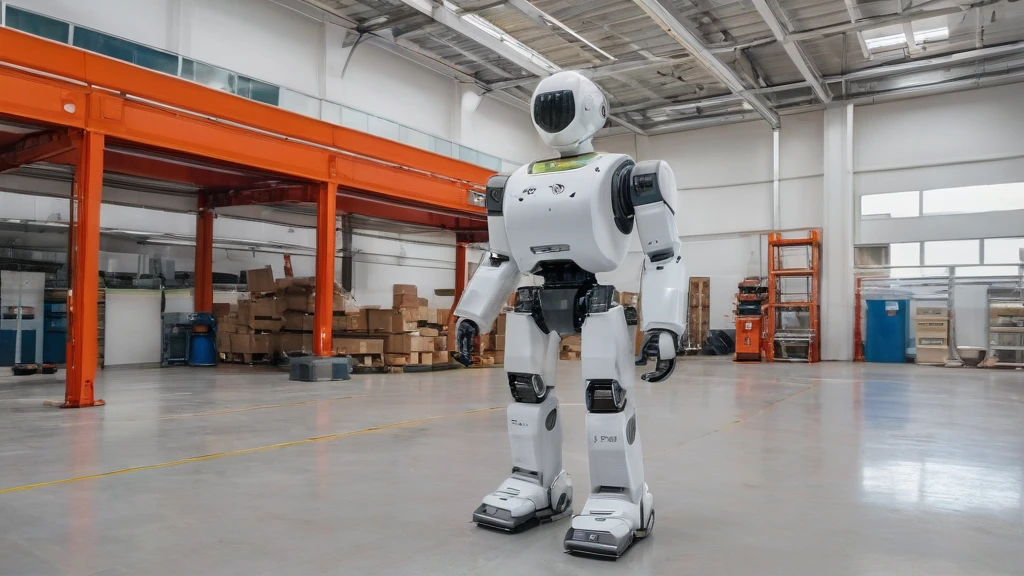
Structure and mission of ARRC in the context of global innovation.
ARRC operates as part of the Technology Innovation Institute (TII), which is one of the main research centers of the Emirate of Abu Dhabi. TII, under the Advanced Technology Research Council (ATRC), focuses on developing technologies of the future - from artificial intelligence to autonomous robotics and quantum communication. This environment enables ARRC to collaborate with international experts from leading universities and research institutions.
ARRC's mission is to create solutions that are completely independent of human intervention, but can still interact with humans and other biological systems. Research focuses on key areas: perception, communication, control, decision-making, and bioinspiration - which allows for the creation of more flexible and resilient systems in complex conditions.
Applications in real-world environments: from rescue to nature conservation.
ARRC tests its solutions in various environments - air, land, sea and underwater. This multi-environment capability allows for the development of systems capable of operating in extreme conditions where human access is limited or dangerous. The research focuses on practical applications: searching for and rescuing missing persons, monitoring environmental conditions, and restoring ecosystems damaged by disasters or human activity.
In particular, ARRC is working on technologies to recover marine pollutants, such as oil spills, and restore ecosystems after disasters. These projects are not just theoretical - they are part of real research initiatives conducted within TII, which aim to create solutions for the future.
Technological context and research limitations
ARRC's research is part of a broader innovation program in the UAE, which includes areas such as cryptography, quantum communication and advanced materials. This allows for the integration of autonomous robotics with other technologies of the future. However, it is worth noting that the available information does not contain data on specific implementations, tests or field demonstrations - everything is based on the organization's statements.
The lack of detailed information about test results, system operating time or scale of applications means that ARRC currently functions as a research center, and not as a provider of commercial solutions. This does not diminish the importance of its work - but it emphasizes that the technologies are in the development and testing phase, and not in mass deployment.
Structure and mission of ARRC in the context of global innovation.
The research conducted by ARRC is integrated with the emirate of Abu Dhabi's broad technology development program, which aims to position the UAE as a global innovation hub. Through collaboration with universities and research institutions around the world, ARRC not only develops new technologies but also contributes to building an international scientific community focused on autonomous robotics. This collaboration enables the exchange of knowledge and adaptation of solutions to different environmental conditions, increasing their versatility and scalability. In the context of global challenges - such as climate change or the growing risk of natural disasters - ARRC's work is crucial for creating systems that can operate in extreme conditions without direct human control. This allows for faster response and more effective resource management in crisis situations.
The significance of ARRC's mission extends beyond technical aspects - it also concerns the ethical and social consequences of developing autonomous systems. The research focuses on ensuring that robots can not only operate independently but also adhere to safety, transparency, and accountability principles. In this context, ARRC is working on algorithms that enable systems to make decisions autonomously in a manner consistent with ethical and legal-practical standards. This approach is crucial for building public trust in autonomous technology, which is essential before its widespread deployment in real-world environments.