

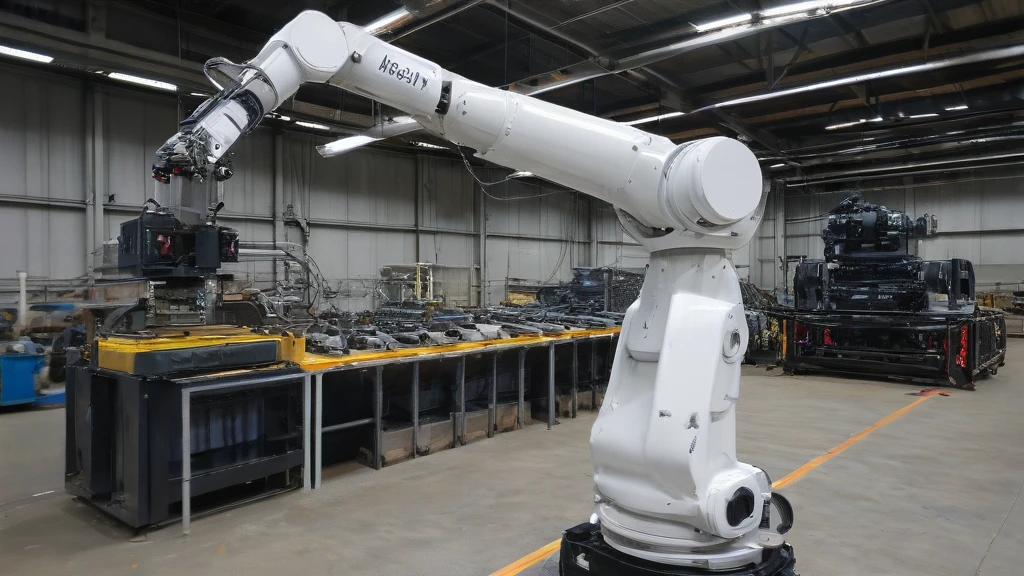
RIG: A research cluster for the future of factories
Robotics Institute Germany (RIG) is not a company that manufactures robots, but a network of research institutions connecting science with industry. Its main goal is to accelerate the implementation of AI-based robotics in German industry. The cluster acts as a bridge between new technologies and real production needs, focusing on the development of systems that are not only advanced but also durable and easy to maintain.
Unlike many initiatives that focus solely on new algorithms, RIG emphasizes the importance of resilience and scalability. The research conducted within its framework aims to create solutions that meet the requirements of real production lines - where downtime is costly and reliability is key.
Programming by "skills" - a new era of robotics without expertise
One of RIG's most important areas of work is the development of so-called skill-based robotics - an approach that allows for robot programming through abstract "skills". Instead of writing code for each specific operation, engineers can assign ready-made, reusable tasks to robots - e.g., "move an object from the conveyor belt to a box." This enables faster implementation and changes in production without the need to involve programming specialists.
As part of this approach, RIG supports the standardization of these skills, their integration with machine learning models, and utilizes large language models and knowledge graphs to improve not only flexibility but also the safety and reliability of systems. This is not just about simplification - it's about changing the work culture in a factory.
Integration of AI with traditional technologies - the key to resilience
RIG does not treat artificial intelligence as an alternative to classical robotic systems, but as their complement. Its main goal is to combine modern AI technologies - such as language models or deep learning - with well-proven, stable engineering approaches.
This is intended to prevent problems such as "too much data, too little control" or "unexplained AI decisions." Research focuses on increasing the resilience of systems, their ease of maintenance, and their ability to adapt to changing production conditions - which is crucial in industry, where there is no room for experimentation.
Collaboration with industry - from theory to practice
 Enlarged imageClose zoomPrevious image
RIG operates not only in laboratories. It organizes a series of workshops and conferences that bring together researchers and representatives from the industry - from robot manufacturers to production line operators. Examples include the "AASBarcamp" series or the ROS Industrial Conference, where participants share practical experiences and jointly develop solutions.
These activities show that RIG is not only about research - it is an active knowledge transfer platform. Collaboration with industry allows for faster testing of new approaches and prevents situations where technology "gets stuck" at the prototype stage.
The collaboration with industry within the framework of RIG is not limited to one-off meetings, but also includes long-term pilot projects that test new approaches in real production conditions. An example is initiatives supporting the integration of skill-based systems into an assembly line at a company producing automotive components, where robots learn new tasks without having to be completely reprogrammed from scratch. These projects show that technology does not have to be perfect at the implementation stage - it only needs to be flexible and ready for iterative improvement along with user needs. Thanks to this, RIG contributes to building trust between researchers and manufacturers, which is crucial for the widespread adoption of AI-based robotics.
What does this mean for the future of manufacturing?
RIG research shows that the future of industrial robotics does not lie in increasingly complex algorithms, but in the intelligent combination of new technologies with engineering experience. The key is not only what a robot can do, but how long and without downtime it will operate in real conditions.
The skill-based approach, the integration of AI with traditional systems, and strong collaboration with industry can become a model for other countries. However, it should be remembered that these are not mass implementations, but demonstrations and pilots - which means that the effects will only be visible after several years.