
Training in the factory - a new stage of industrial automation
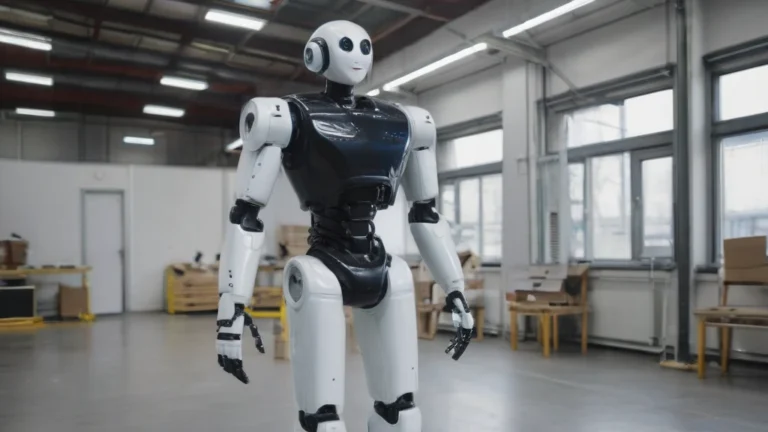
Schaeffler, a manufacturer of motion technology, has launched a joint initiative with Hexagon Robotics to accelerate the integration of humanoids into production processes. In Germany, Humanoid Gym was launched - a dedicated industrial environment where AEON humanoids learn new tasks. This is not a demonstration at a trade fair or a test in a laboratory, but a real stage of preparation for deployment in factory conditions.
The Train-Validate-Deploy model allows for the systematic improvement of robot skills. Each new function is first tested, then validated under conditions similar to real ones, and only then introduced into production. This minimizes the risk of disruptions and ensures that the robot will operate not only correctly but also in accordance with quality requirements.
How does the AEON humanoid learn?
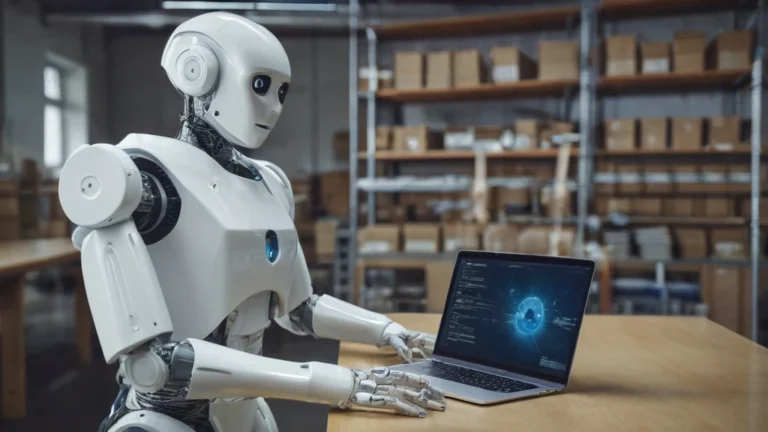
AEON is not manually programmed for each task. Instead, it learns through imitation - it observes how a person performs certain actions and then repeats them in an automated way. This process, called imitation learning, allows for the rapid acquisition of new skills without the need to detail-code each action.
During the training, the robot performs the same tasks repeatedly, which allows it to optimize movements and improve precision. Each iteration is analyzed by a system that adjusts its operating policies - i.e., how it makes decisions in different situations. This ensures not only effectiveness but also resilience to changes in conditions in real time.
Schaeffler as a user and supplier - a unique role
The collaboration with Schaeffler is unique. The company will not only be a user of the humanoids, but it will also supply key components - advanced actuators. This allows for direct integration of technology and adaptation of the robot's performance to specific production needs.
This dual role - as both a user and a supplier - gives Schaeffler the opportunity to shape not only the way the humanoid operates, but also its physical parameters. As a result, the robot can be optimized for specific tasks, rather than just generally adapted to the factory.
The future of deployments - what is changing?
According to company statements, training in the Humanoid Gym is intended to accelerate the deployment of AEON at several production stations at Schaeffler within six months. This does not yet mean a mass introduction, but it is a real step towards scaling.
It is important that this is not only about technology - it is also about building internal competencies. Schaeffler is developing an ecosystem that will be able to independently train, monitor and integrate humanoids in the future. This is key to long-term automation that does not depend on an external supplier.
What does this mean for the industry?
Training humanoids in a factory environment is a signal that humanoid robots are no longer just a concept. They are getting closer to actual use in production - but not as a replacement for humans, but as partners in the process.
The key is that the initiative is not based on a single use case. During training, the robot's capabilities are expanded - from moving materials to assembly and quality control. This means that the humanoid can be flexible and adapted to different tasks in real time.