
How Realtime Robotics' tool is changing the way production cells operate.
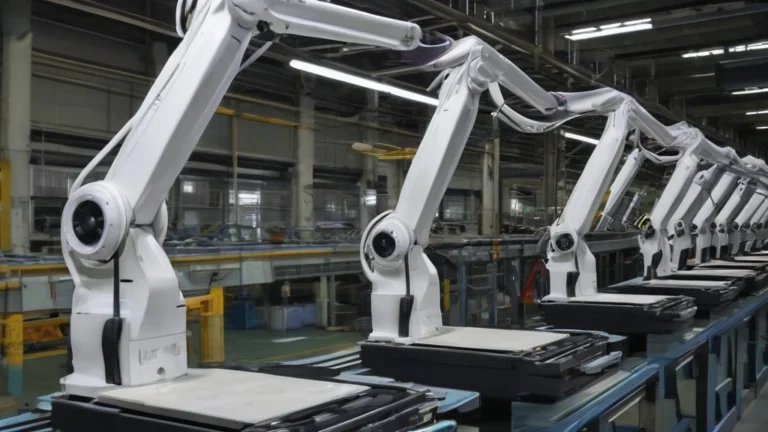
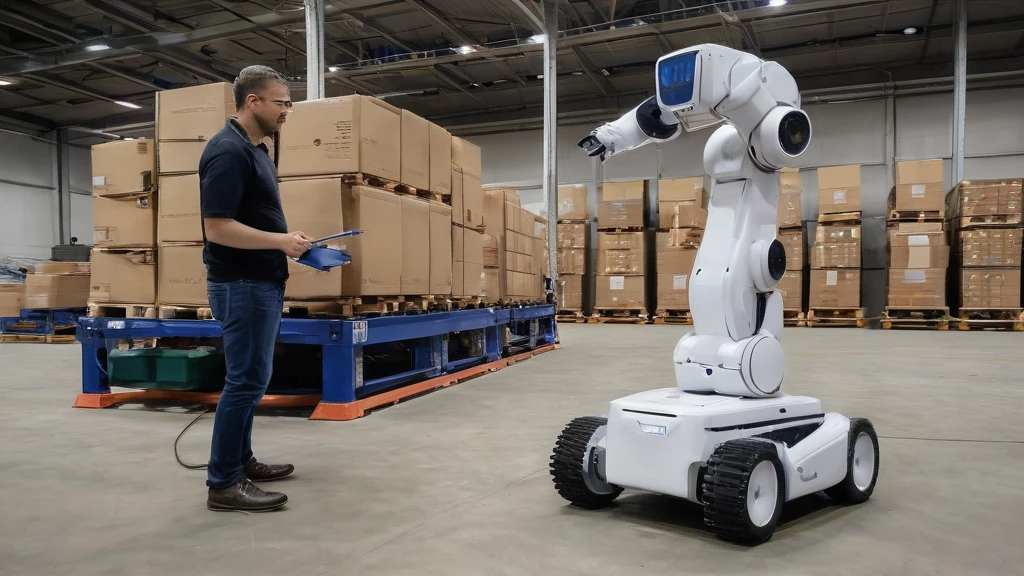
Traditional robot programming in production cells is a time-consuming task for engineers, often limited by the need to manually adjust motion paths. Each change in task requires replanning - which leads to downtime and production losses. Realtime Robotics solves this problem with a tool that analyzes hundreds of thousands of possible motion combinations in real time and selects the optimal path for each robot. The result is a collision-free "choreography" of several robots working simultaneously - without interrupting production.
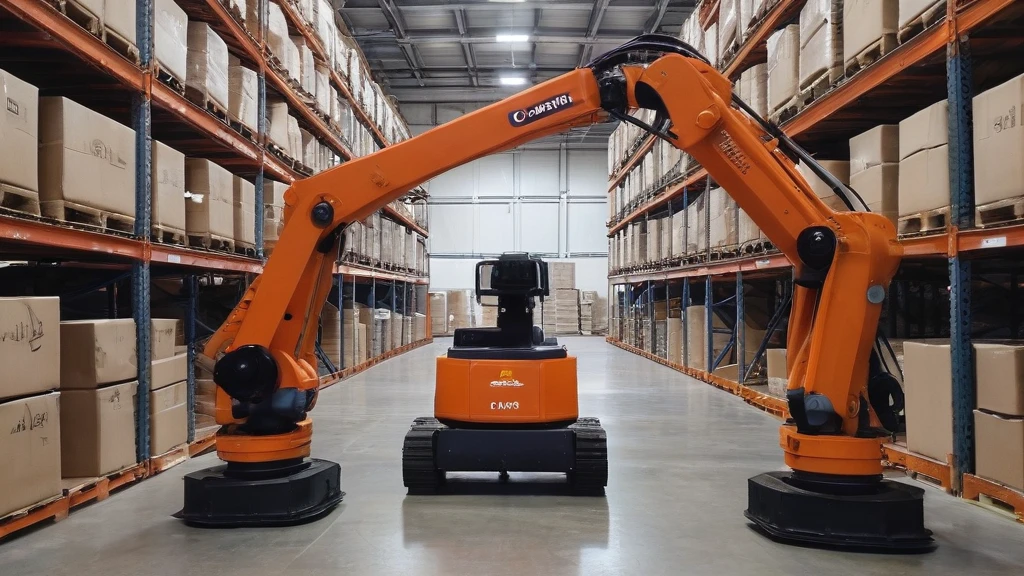
The tool does not require users to have a deep understanding of optimization algorithms. Simply define tasks and constraints, and the system will generate an action plan itself. This is especially useful in dynamic environments where changes in production are frequent - for example, in logistics or warehousing, where robots must adapt to changing orders.
The IERA 2024 Award as a signal for young companies in robotics.
 Enlarged imageClose zoomPrevious image
In 2024 IERA award The award was given to a company that was not yet well-known in the market - Realtime Robotics. Moreover, all four finalists were new entrants to the industry: from China, Germany and the USA. This is the first time in history that all finalists are young companies founded within the last ten years. Their total investments exceeded 500 million US dollars, and they employ over 1300 people.
This is not a coincidence - it indicates a profound change in the robotics ecosystem. Young companies are beginning to dominate thanks to modern approaches, AI and rapid iteration of solutions. The IERA award not only recognizes technology, but also highlights the future of the industry - where innovation is no longer the domain of large corporations, but also startups with new ideas.
The IERA 2024 award not only recognizes technological breakthroughs, but also points to the future of the robotics industry - where innovation becomes accessible to young companies from around the world. The fact that all finalists were new entrants indicates a change in market structure: it is no longer just large corporations that can drive technological development, but also startups with an innovative approach to automation problems. This opens up space for faster solutions that are more flexible and better suited to the needs of customers in dynamic production environments.
The award emphasizes that the future of robotics lies not only in greater computing power or larger machines, but in intelligent management of their operation - especially in conditions of close cooperation between several devices. Therefore, the Realtime Robotics tool, although awarded for motion optimization, is a symbol of a broader trend: automation based on AI and rapid adaptation to changing production conditions.
Applications and development prospects of the tool
Currently, the Realtime Robotics tool is used in production, warehousing and logistics. It can be installed both in new production cells and in existing systems - without the need for their reconstruction. In the future, the company plans to expand its functions to optimize energy consumption and utilize a smaller working area.
This means that the tool can not only increase efficiency, but also support ESG goals - by reducing energy consumption and limiting the need to expand production space. For companies that want to implement robotics without large investments, these are key advantages: quick integration, short implementation time, and scalability.
What the IERA award does not mean - limitations and context
The IERA 2024 award confirms the innovative nature of the solution, but it does not prove its effectiveness in every environment. The tool was awarded for technology, not for a specific implementation in production. There is a lack of data on actual effects in different companies - e.g., how much production cycles were actually shortened for a specific client.
In addition, the tool does not work independently - it requires integration with existing robot control systems and may be limited by the specifics of the hardware. It is also worth remembering that the award applies only to one aspect of automation: motion optimization. It does not cover other challenges, such as ERP integration or data management.